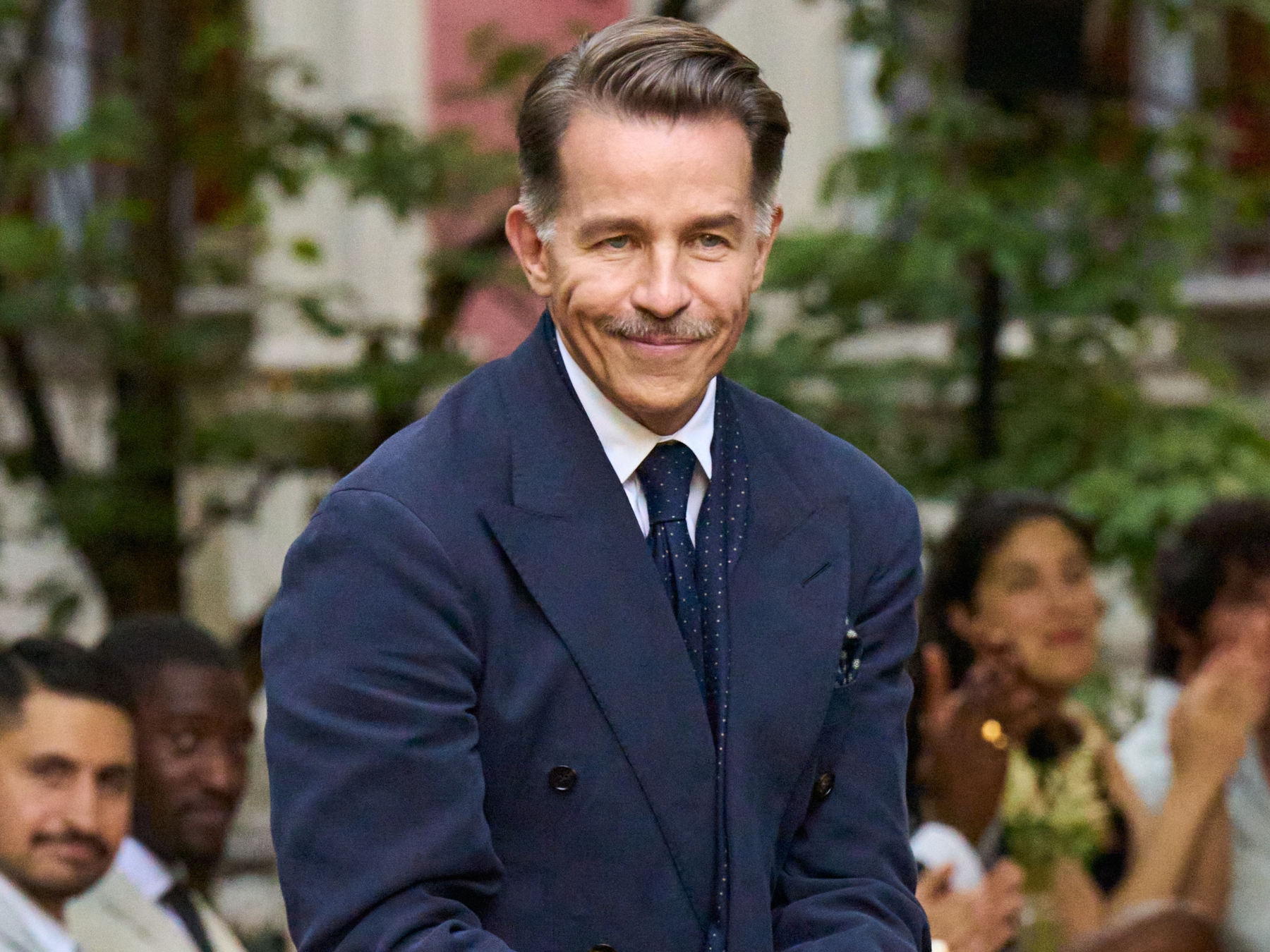
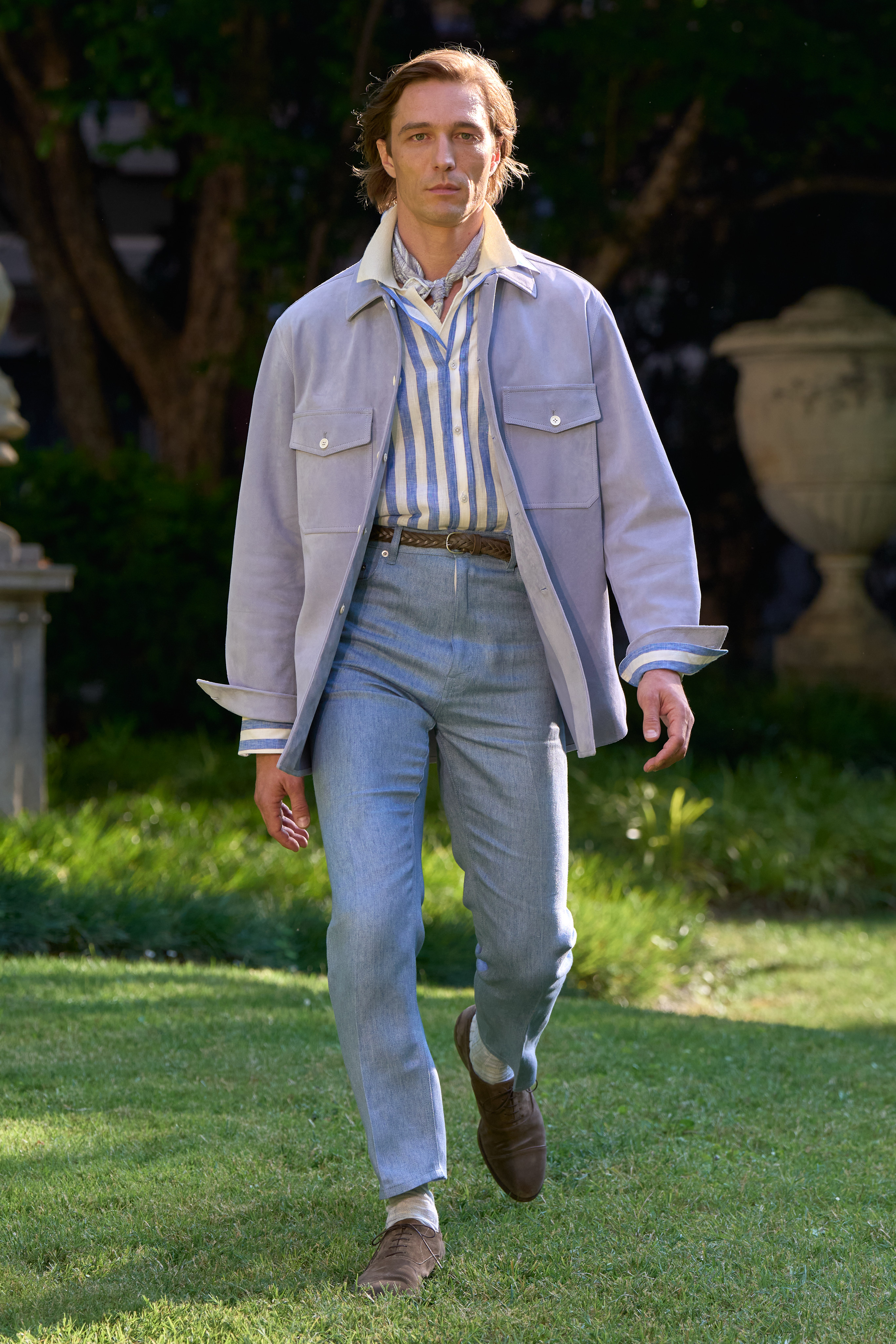
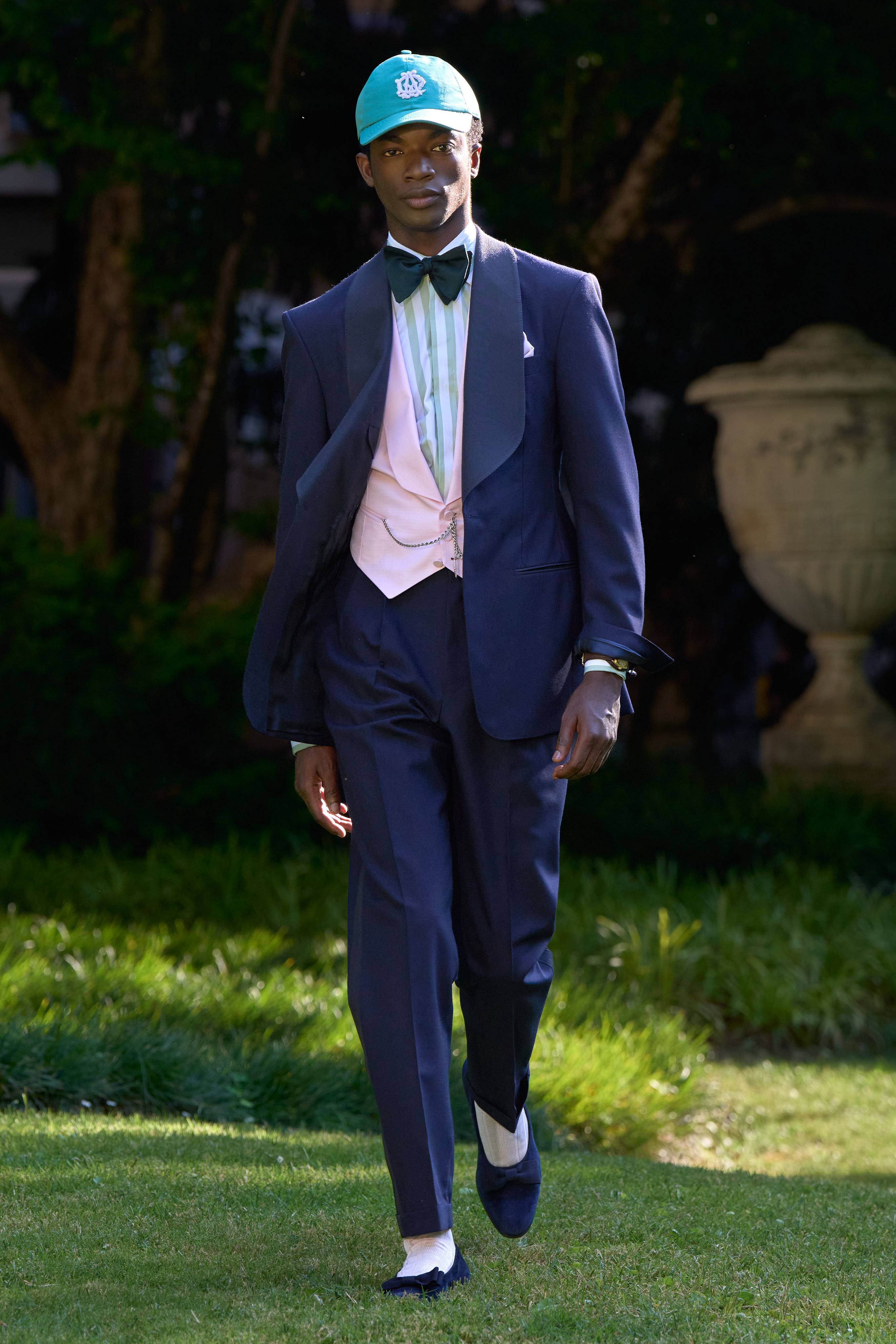
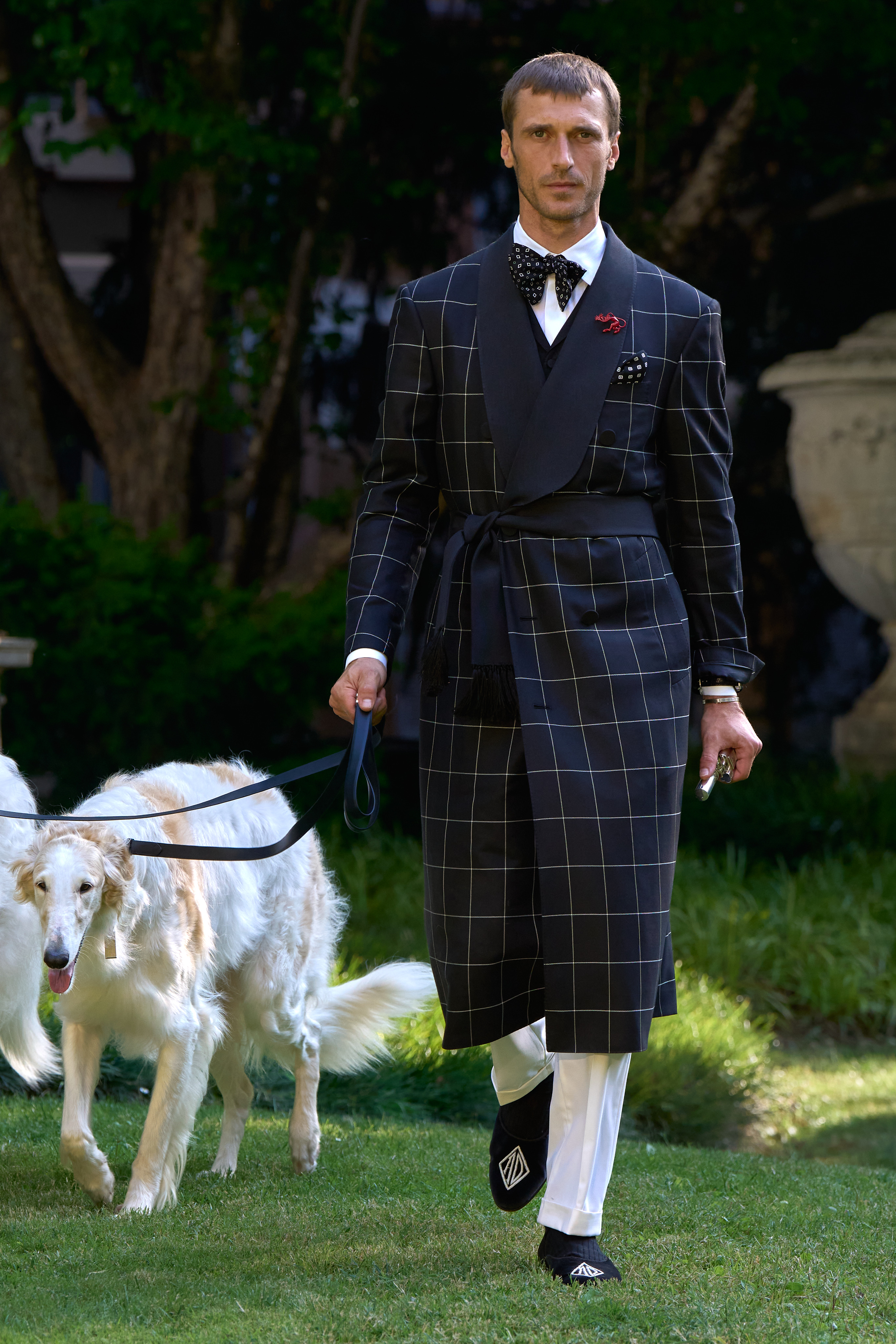
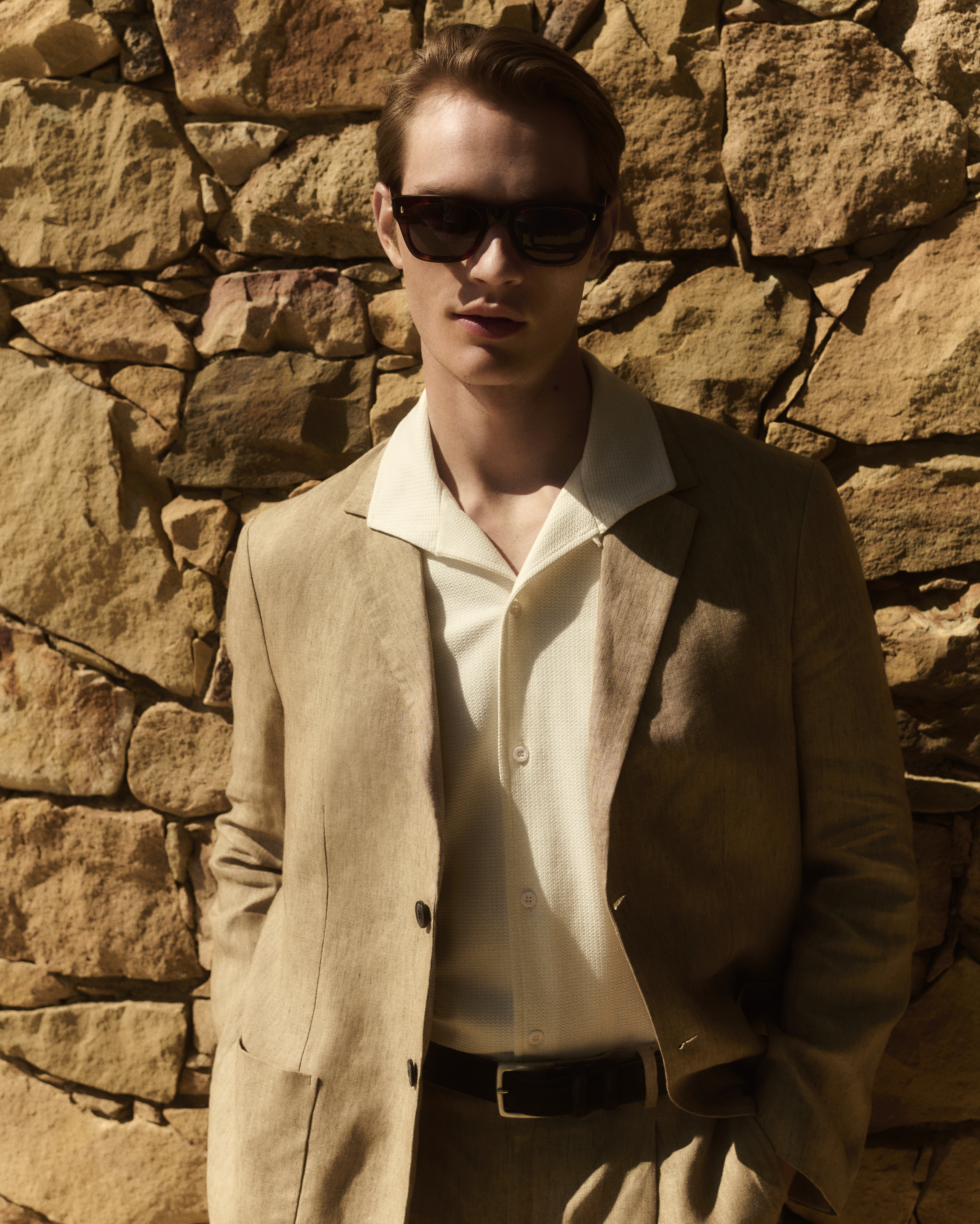
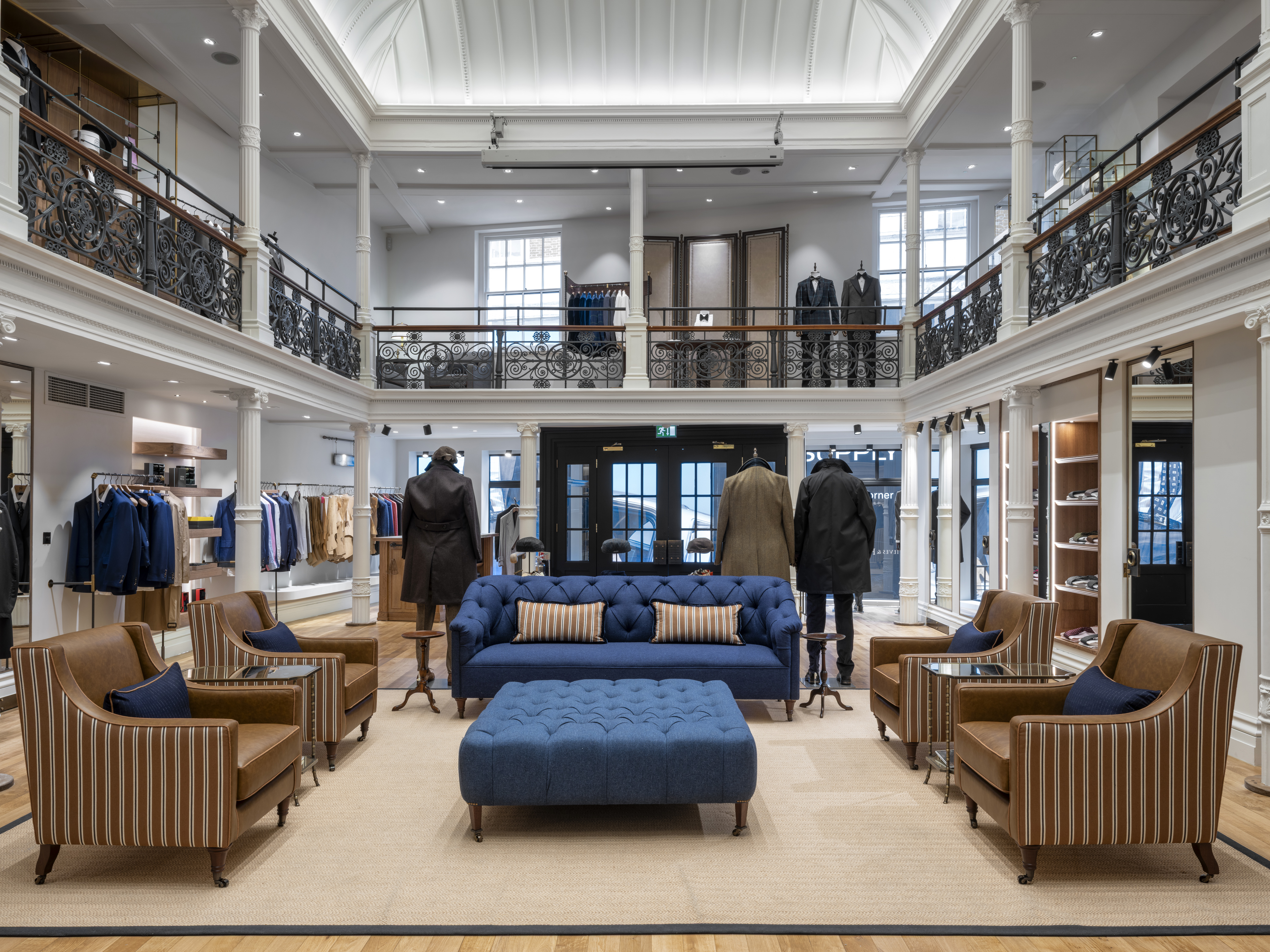
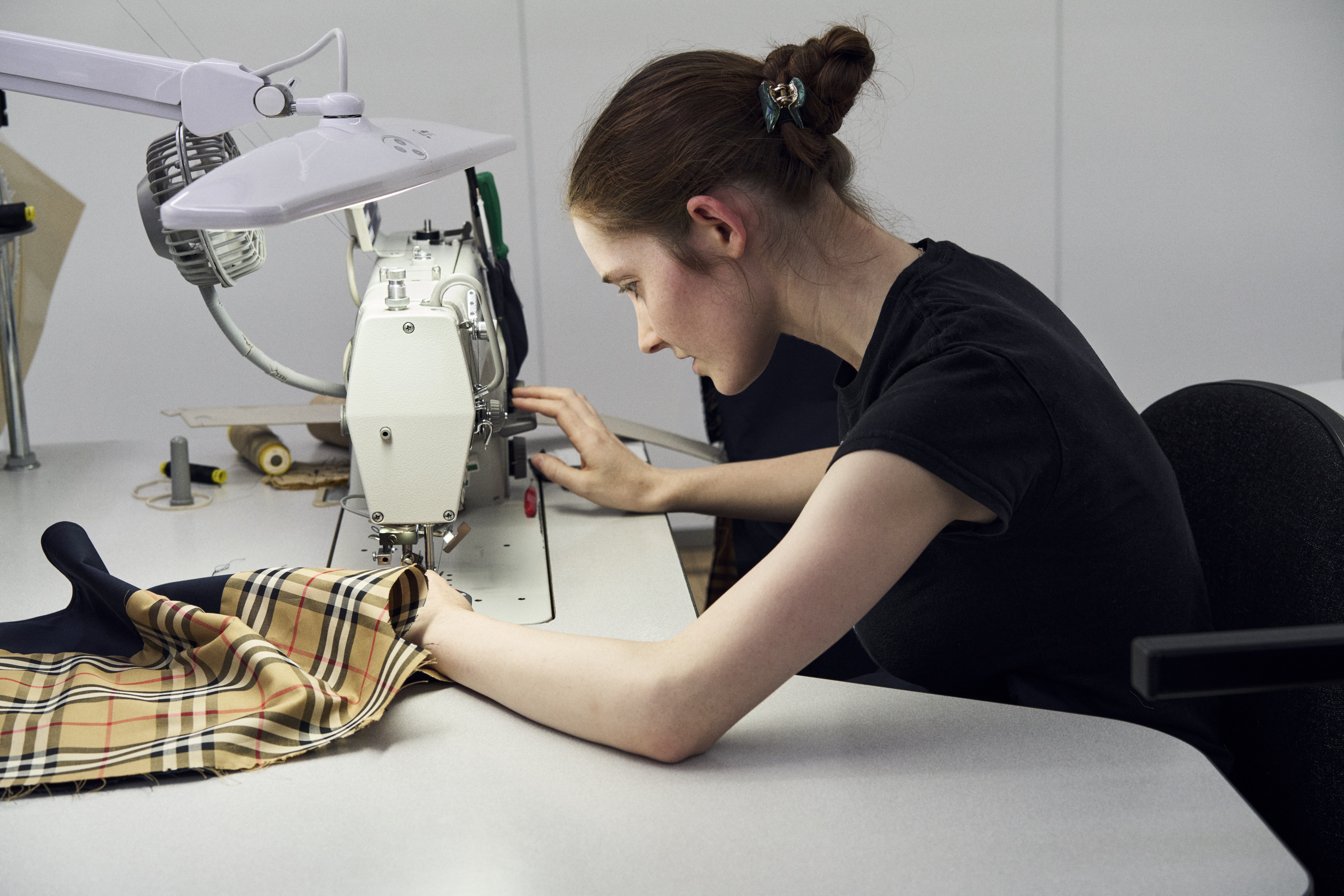
In the rarified environs of Bourdon House in London’s Mayfair, the former home of the Duke of Westminster, dunhill’s Creative Director, Simon Holloway [pictured above], moodboards for the historic house’s Spring/Summer 2026 collection – one that features British men’s style influences from King Charles III in immaculate tailoring to music icons like Bryan Ferry and Charlie Watts. In the less salubrious Victoria Station, the glossy new Belmond Britannic Explorer train announces its swaggering departure with a plume of steam, tables twinkling with lamplight, champagne frothing in glasses. Much further afield, in the sprawling factories of Johnstons of Elgin, nestled into a curve of Scotland’s River Lossie, cashmere destined for the grandest Paris fashion houses is being pumped through cylindrical tubes overhead in fantastical flurries. Meanwhile, in the sleepy town of Long Eaton, the finest T-shirts you ever did see, created by historic brand Sunspel, are being carefully stitched by hand, as images of James Bond in his Sunspel attire look over the factory floor.
This is luxury in Britain circa 2025, a dynamic mix of heritage and pulsing modernity that encompasses all parts of industry across the United Kingdom. It’s all the more remarkable – and a show of staggering resilience – given how challenging the climate has been over the past decade, thanks to monumental shifts in trading since Brexit, the ‘tourist tax’ introduced by Rishi Sunak’s Conservative government that has had such a detrimental effect on UK luxury goods and an ever shifting political landscape. What defined British ‘luxury’ in eras gone by – synonymous with an occasionally rather ‘twee’ sense of quaintness, all chinaware, tea, scones and Launer handbags – has seen a changing of the guard as subtle and precise as anything you’ll see outside Buckingham Palace. But it’s a lot more contemporary than soldiers in bearskins.
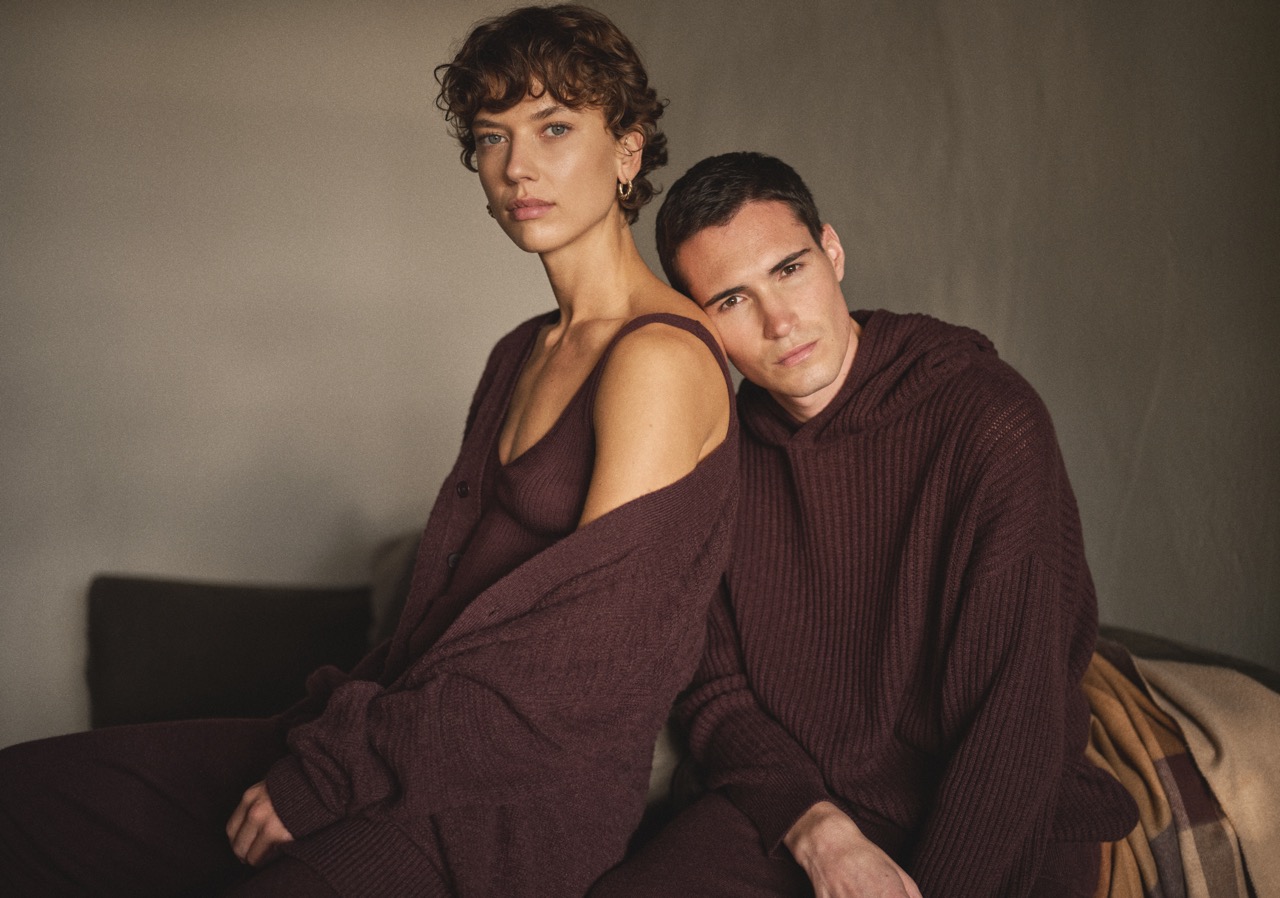
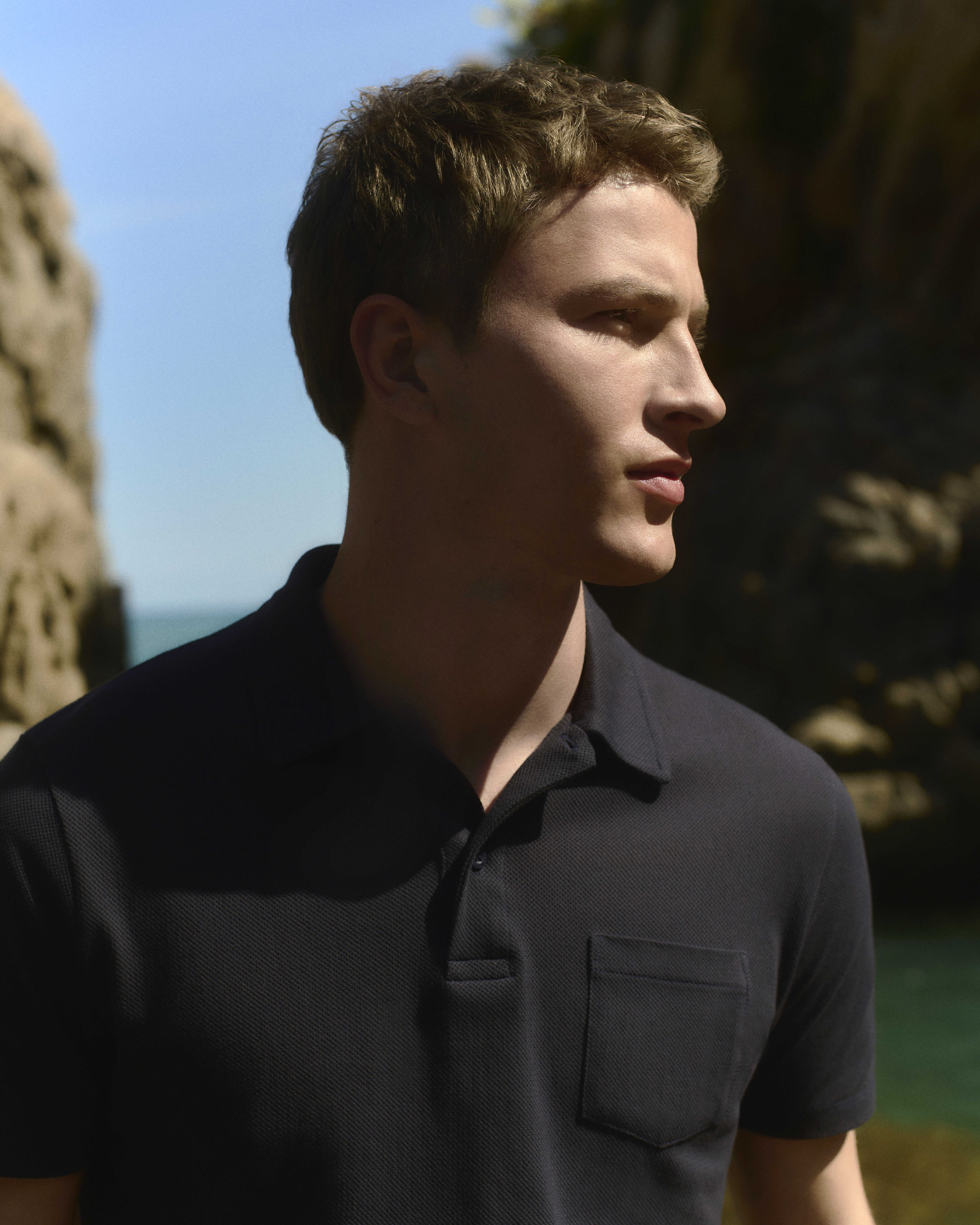
“British luxury today is defined by authenticity, understated elegance and a deep respect for heritage craftsmanship,” says Raul Verdicchi, CEO of Sunspel, the Derby-based brand that began life as an underwear specialist and today makes the most sought after T-shirts and elevated ‘basics’ in the market – all crafted at its factory in Long Eaton, where it has been based since 1937. “British luxury stands for integrity; it values provenance, sustainability and design that endures. It’s an ethos more on quiet confidence and functionality than ostentation.” Sunspel began life in 1860 after textile industrialist Thomas Hill sought to harness the might of the local skillset and corner the cotton market for elevated undies. It’s something they still do now, but the modus operandi in 2025 is also about creating a 360-degree menswear brand offering tailoring and shirting. It’s expansive, rather than a cottage industry, and focused on an international market – and urbane mode of man – rather than specialising in a niche.
“British luxury now is, of course, rooted in a deep reverence for heritage and craft, but it’s unmistakably future facing, too,” says Julie Branham, Managing Director of Johnnie Walker, who this spring announced a new initiative in Edinburgh whereby guests can sample the rarest ‘nips’ on the planet in a special tasting ‘vault’ beneath the Scottish city’s gothic streets. It’s that sense of modernity – a curated experience beyond the whisky tours so prevalent in the Highlands. “The Johnnie Walker Vault is a hidden ‘atelier’ deep beneath Princes Street, with our master blender Dr Emma Walker drawing on an exceptional library of 500 rare, aged and ghost whiskies,” she adds. These are rotated by the master blender, and guests can opt for packages that include stays at Gleneagles hotel. The brand, rather than adhering to the dusky romance of the heather and the skirl of the pipes, also recently collaborated with Balmain Creative Director Olivier Rousteing, pushing an outward-looking, international agenda.
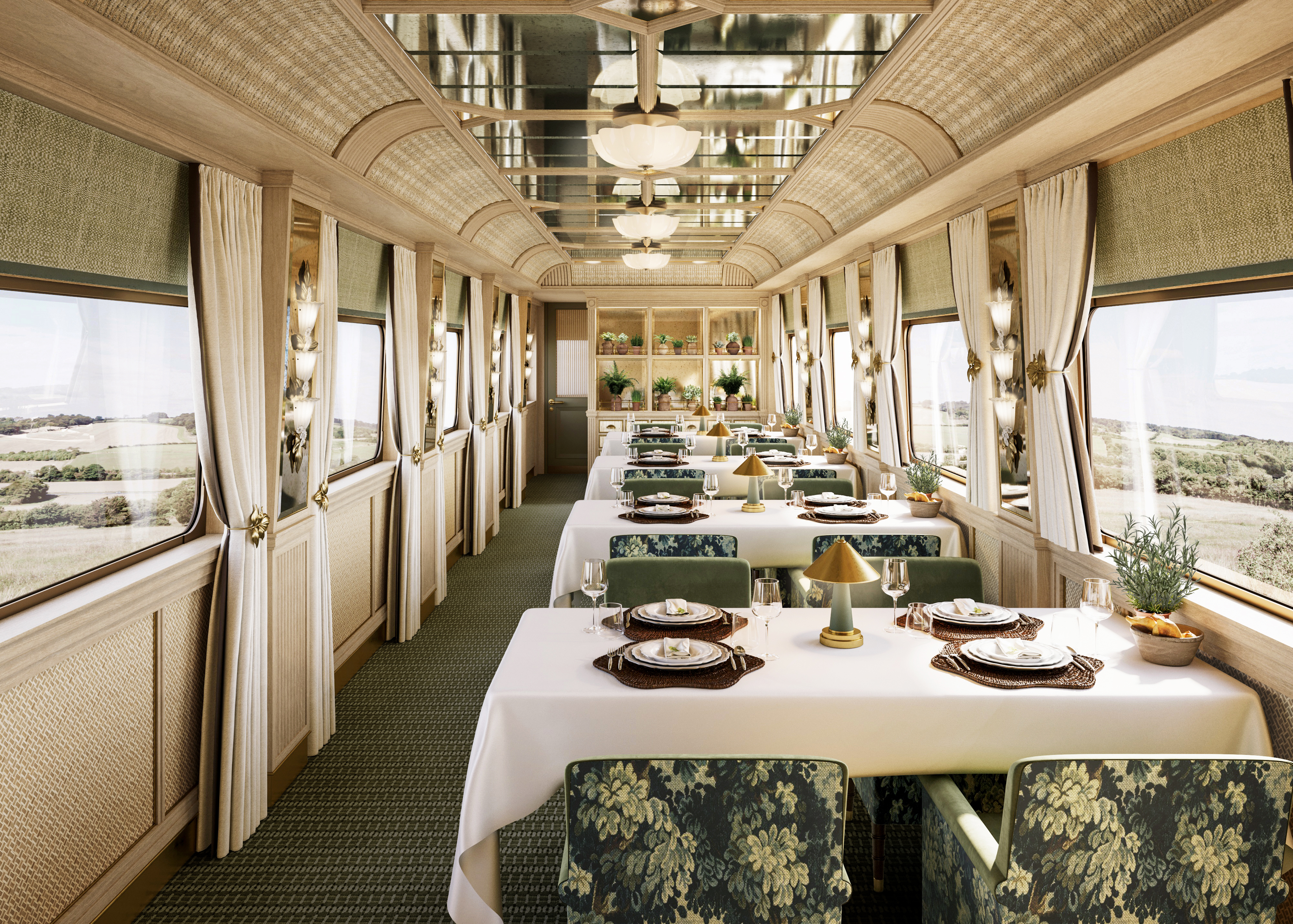
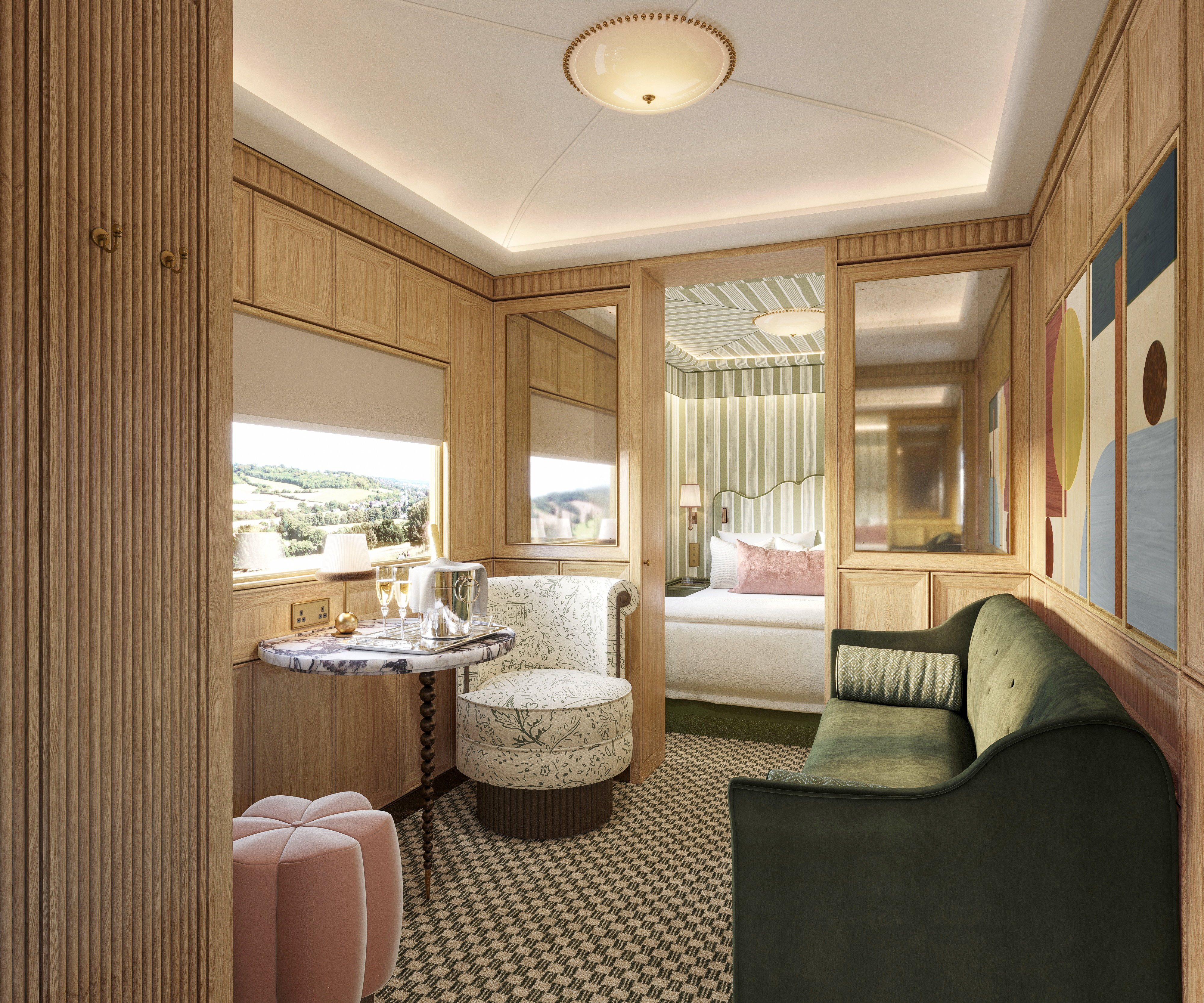
It’s a sentiment that parlays into how Belmond operates in the UK. The luxury travel behemoth – which was bought by LVMH in 2019 – has recently launched one of its beautifully ornate sleeper trains in England and Wales, as part of a ‘slow luxury’ initiative to celebrate the British Isles. Three train routes sweep through both countries, and while the experience harks back to the golden age of travel – with a dash of Agatha Christie thrown in – the aesthetic is archly directional, with suites created by groundbreaking design collective Albion Nord. The result is a less lavishly decorative approach; calm, blonde woods and neutrals as opposed to heavy duty chintz. All the better for allowing the glorious British landscape to take the starring role as you sweep by.
This idea of retelling classic codes in a contemporary way is becoming a key thought across the luxury sector right now, from trains to tailoring. Heritage is priceless, but its relevance needs to be recontextualised for today. “I think British luxury today is about bringing the tradition that’s so engrained in our culture into the modern sphere,” says dunhill’s Holloway. Since taking over the house in 2023, he’s been curatorial in how he approaches ‘Britishness’, looking at blue blood dress codes from Ascot to country attire, supporting British mills and industry in doing so, but applying a sense of dynamism lest it look too mannered. Take the tweed checks, herringbones and windowpane patterns, for example, which for his Spring/Summer 2025 collection were rendered in lightweight versions of the traditionally heavier wools. “It’s about a forward-thinking approach to the idea of ‘classic’,” says Holloway of how to make this quintessentially British brand appeal to a broad, international audience.
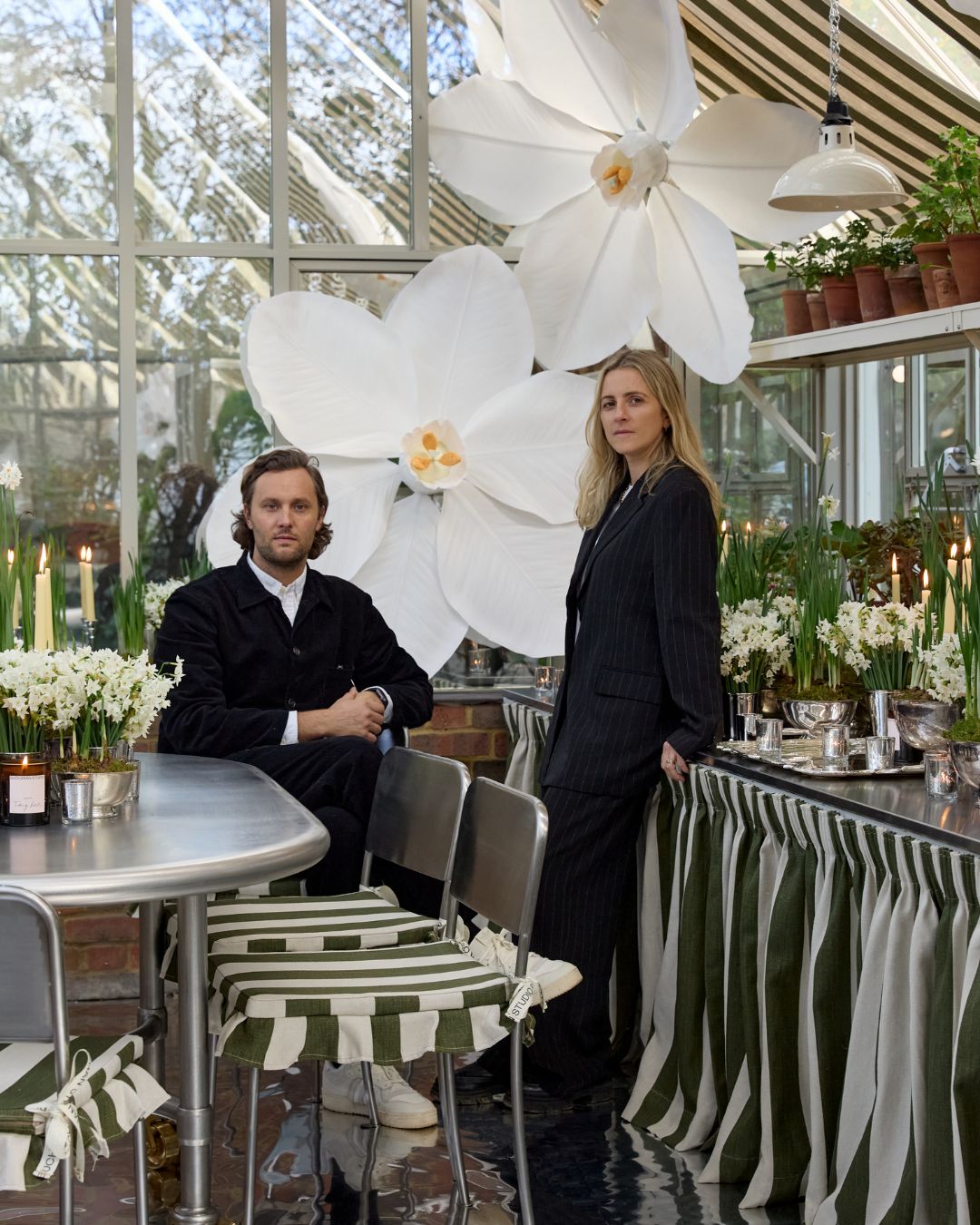
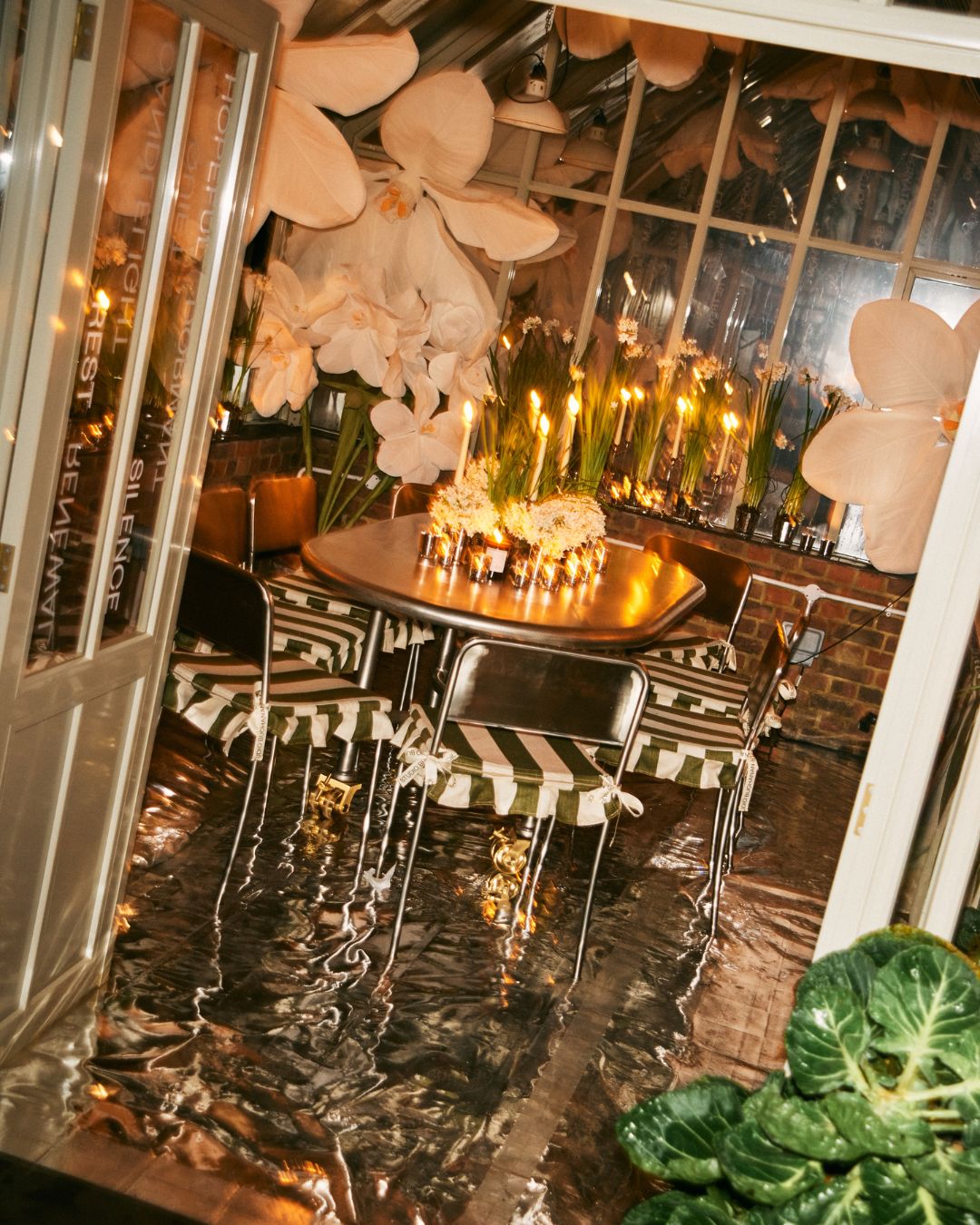
For Buchanan Studio, the interiors brand run by design duo Angus and Charlotte Buchanan [pictured below], it’s a potent ingredient specific to Britain that sets us apart in a world of homogenised design; our humour, and a sense of whimsy and eccentricity that’s a refreshing antidote to the straight backed and upright American or archly serious Italian design worlds. “In luxury in Britain, there’s a certain irreverence to British design that we love. It’s a willingness to mix the refined with the ridiculous, the historical with the eccentric. It’s bold and unexpected, and that gives longevity and distinctiveness in standing out on a world stage.”
There’s no conversation about British luxury design codes today without the importance of, and respect for, all things craft. Our artisans are bastions of generation-upon-generation of skill, and in a world of fast fashion and ever-faster production, it’s that soulful, handcrafted element that’s intrinsic to what Britain has to offer on a global stage.
“British luxury now is absolutely defined by heritage skills; craftsmanship that’s been passed down from generations,” says Natasha Wightman, Founder of independent jewellery house NVW Jewellery. “Thousands of years of culture and craftsmanship are integral and unique to Britain, and can’t be found anywhere else. From native materials such as boxwood or jet to the craftspeople who cut and carve them, the goldsmiths who frame them with precious metals and velvet-lined boxes made to present them, it’s all done in Britain. It’s crucial that we continue this. The world is fragile, and the same goes for the preservation of craft,” says the designer.
“It’s about shared values,” says Buchanan Studio of the USP of handcraft as a selling point in Britain’s luxury offering. “We believe that the people behind the product matter, and that resonates with a consumer. Whether it’s metalworkers in Sheffield, upholsterers in Long Eaton, seamstresses in Dorset or printers in London, it’s about nurturing that skill,” say the pair, who recently collaborated with Belmond’s Oxfordshire hotel Le Manoir aux Quat’Saisons on an interiors project.
It’s also about responding to the zeitgeist, rather than staying steadfastly welded to tradition and what has worked before. Margaret Thatcher might not have been for turning, but in Britain in 2025 it’s about pivoting to fit the mood of the moment. “There is a definite bubbling of Scottish luxury happening right now,” says Branham. “It’s a confident, homegrown movement that coincides with Scotland becoming an aspirational travel destination; climate change is accelerating a shift towards ‘coolcationing’ and the country has been identified by trend forecasters as top in this respect. A ‘Scandi Scot’ aesthetic is emerging focused on stripped back, functional design with Scottish roots.”
The British sense of grit and backbone is what’s steered us through trying times in the past, and it – plus a dash of ingenuity – is what’s piloting our luxury sector today.
Daily Luxury Digest
Sent every working day, the Daily Luxury Digest is your essential news source for the latest developments in the luxury sector both in the UK and around the world.