How did this collaboration come about between Boodles and Historic Royal Palaces?
James Amos: When it comes to Boodles collaborations, sometimes we seek them out and that might mean there's a long-range process of the two organisations becoming friends. However, in this case it was nice and simple: Historic Royal Palaces asked Walpole to introduce them to us. When that happened, it was like the touch-paper had been lit, and we went from there. So it's entirely thanks to Walpole that this collaboration happened.
Why was it important for Historic Royal Palaces to work with Boodles on this project – and what was the brief?
Jenny Smyth: I manage the Historic Royal Palaces licensing programme for fashion, accessories and jewellery, and wanted to work with Boodles because I felt they had the skill, creativity and sensitivity to show what our palaces can offer as inspiration. We have such a rich mix of interiors, architecture, gardens and archives, and I wanted a partner who could translate that beautifully into product, while also showing other brands the scope of our growing licensing portfolio. I had seen the Boodles’ collection with the National Gallery and loved how they brought some of the paintings to life through jewellery, so I felt there was a real opportunity to do something similar with the palaces. I approached James through Walpole and, thankfully, he agreed to meet me for tea at Kensington Palace. From there I was introduced to Rebecca Hawkins, Boodles’ Director of Design, and the project began to take shape.
There wasn’t a very fixed brief at the start, which was part of the joy of it. I wanted to show Rebecca as much as possible across each of our London palaces so she could choose what felt right for the Boodles customer. We toured the Tower of London, Hampton Court Palace, Kensington Palace, Kew Palace, Queen Charlotte’s Cottage and Banqueting House, and visited the Royal Ceremonial Dress Collection, which holds over 10,000 items of clothing worn by royalty and to the royal court. Rebecca could then fine tune this research and I supported her with further assets from our image library and archives. Sometimes not having too tight a brief allows the collection to grow in a much more natural and exciting way.
James, how did the team approach this collaboration?
James Amos: One of my key responsibilities to the company is to look into the future and work out where we're going to land next year, in two years' time, in three years' time. When I have an idea, the first thing I do is talk it through with Rebecca Hawkins, our Director of Design. If she likes it, great; if she suggests a slightly different angle, that's fine too; but we alight on that initial seed of the idea, and then I don't hear anything more. I'm not involved in the creative process. That's when the design team do what they're brilliant at: acorns grow into saplings, then into oak trees. They get it to a point where they're happy to present it to our board of directors, and that's when we can move forward.
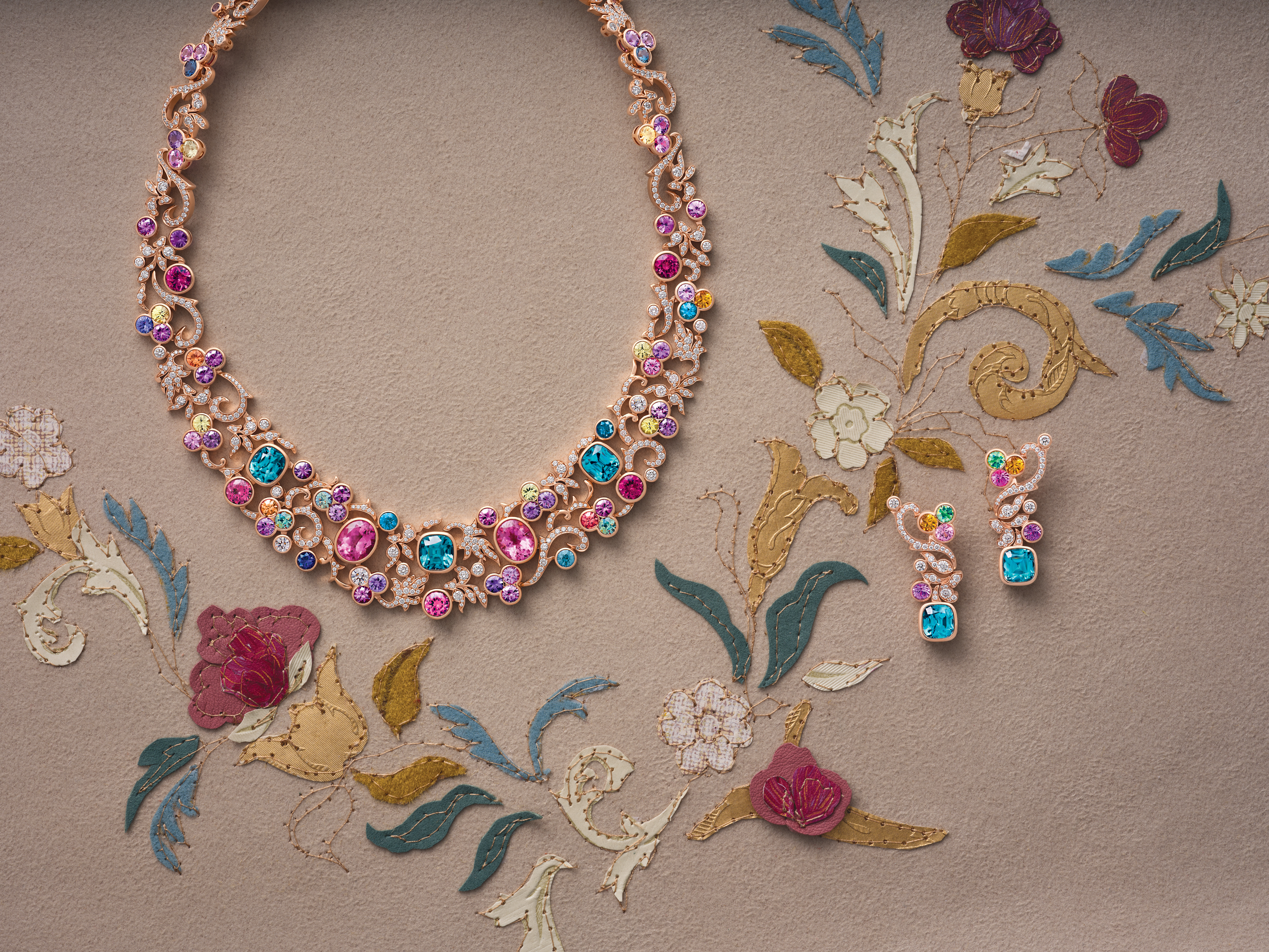
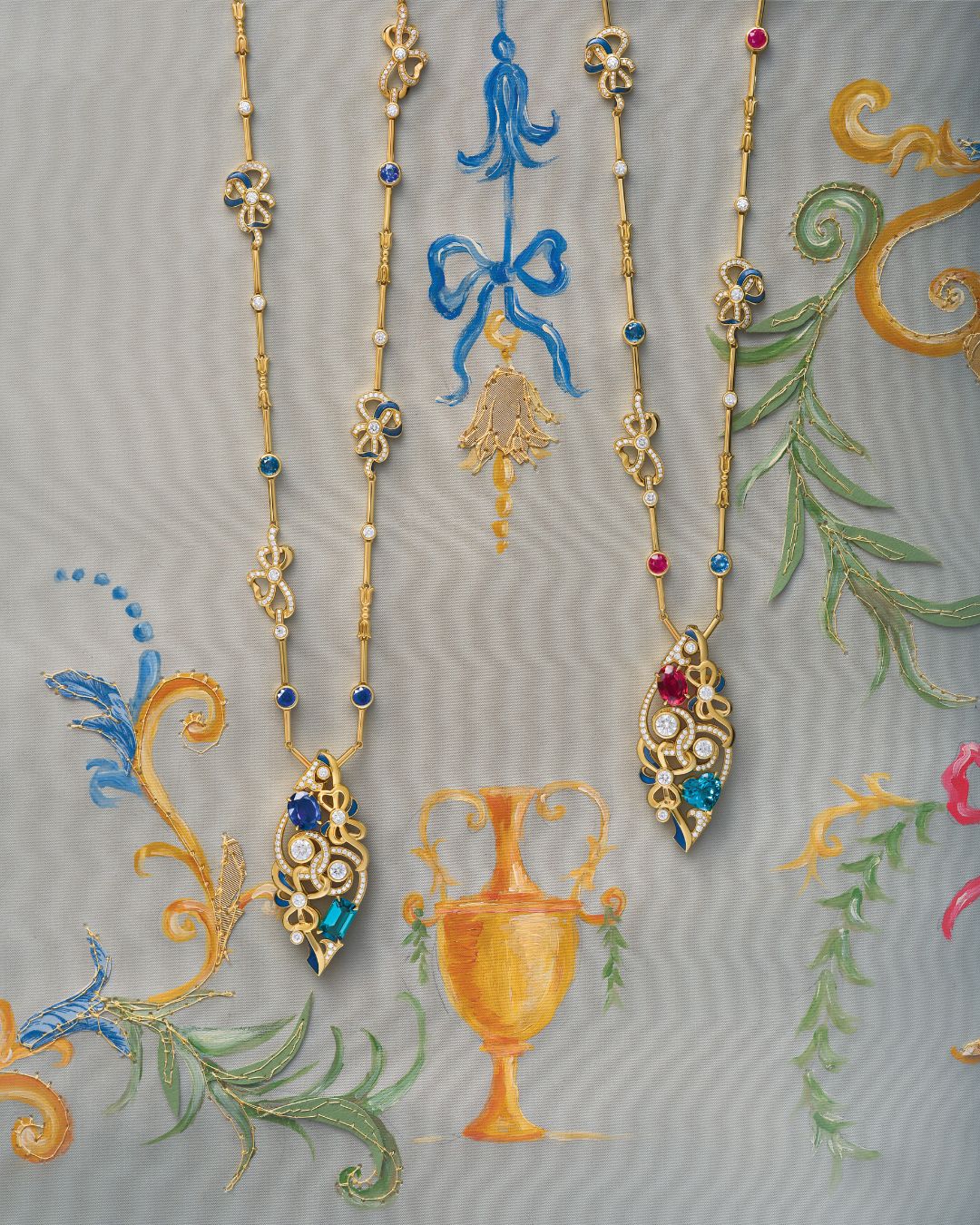
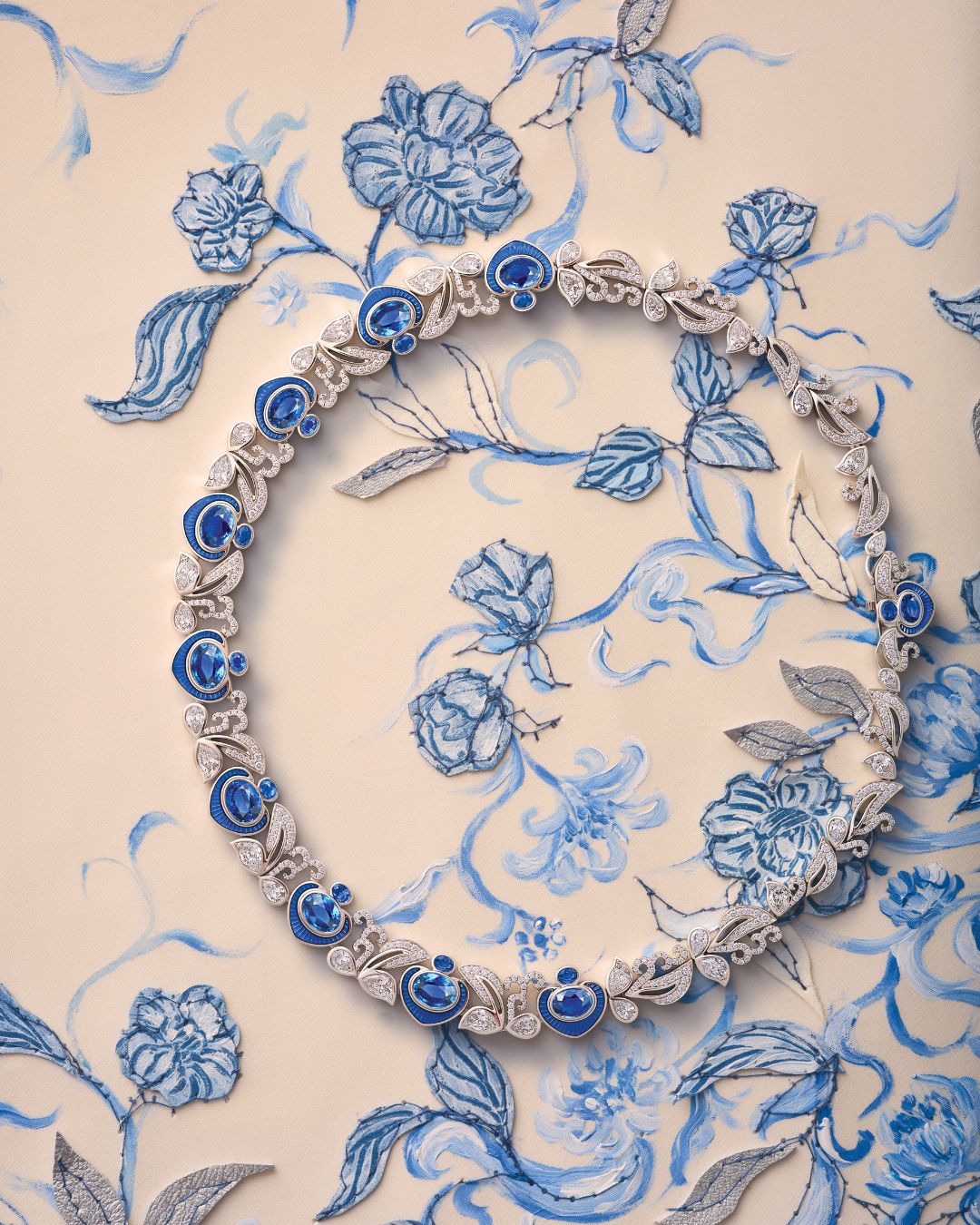
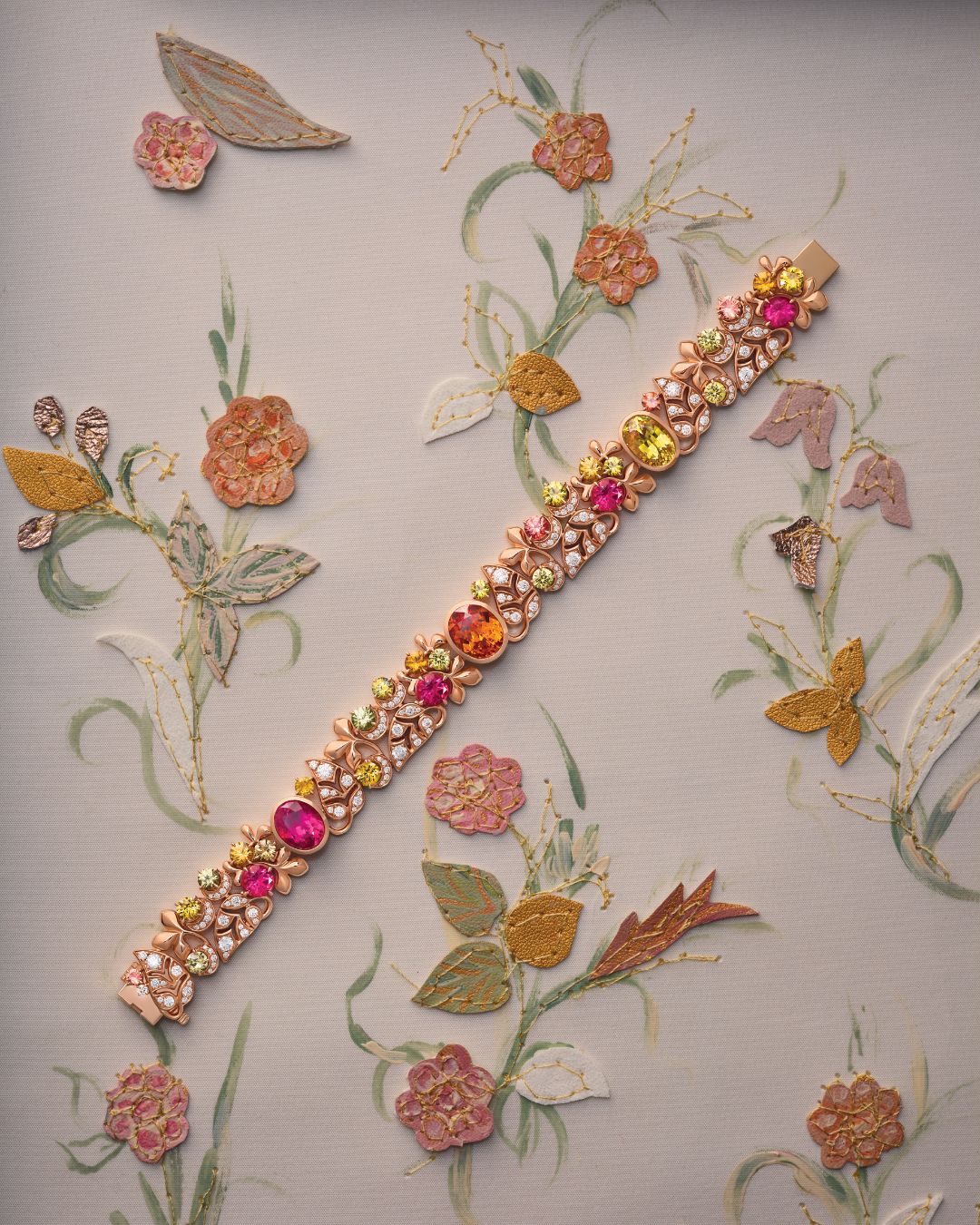
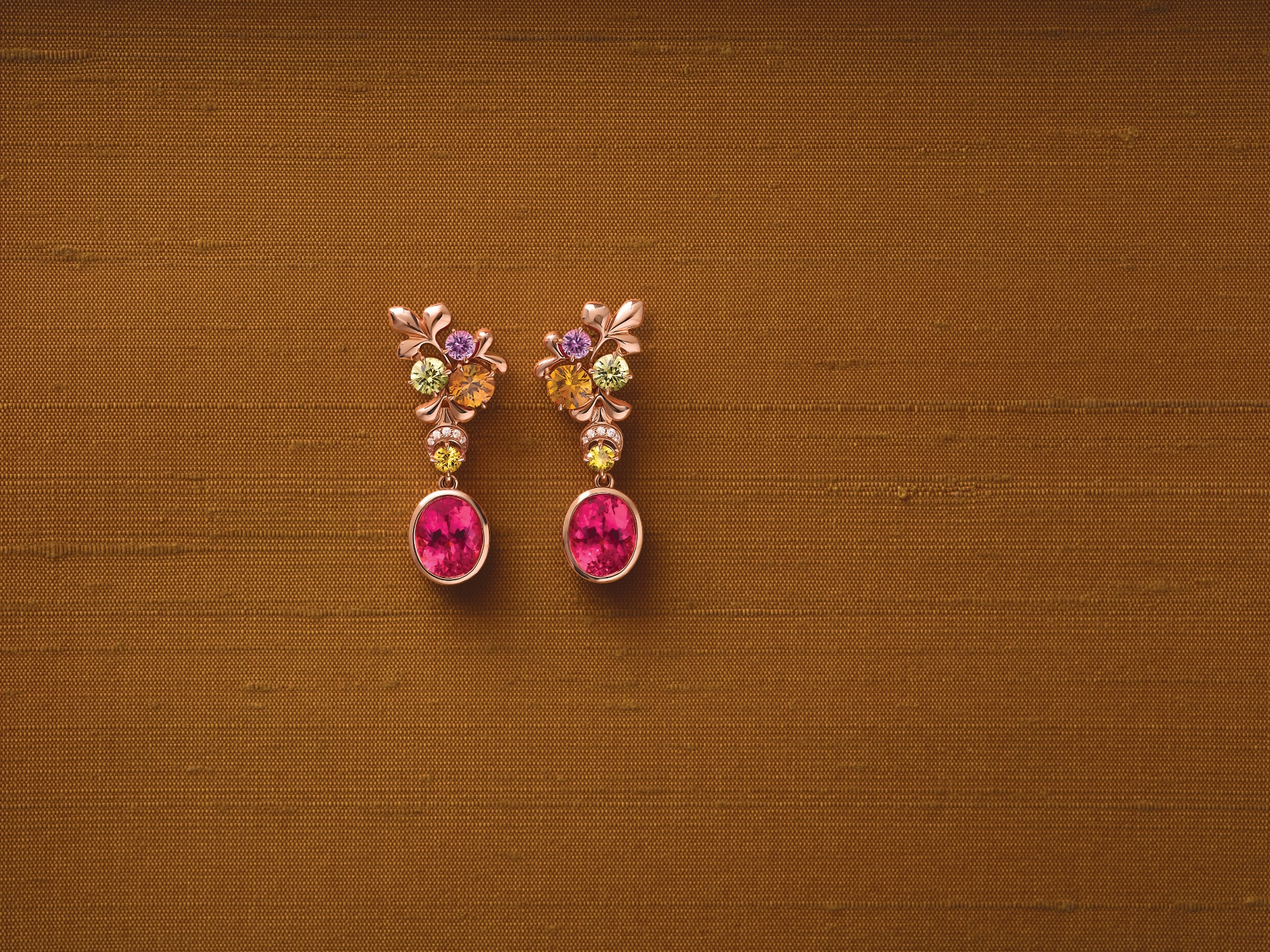
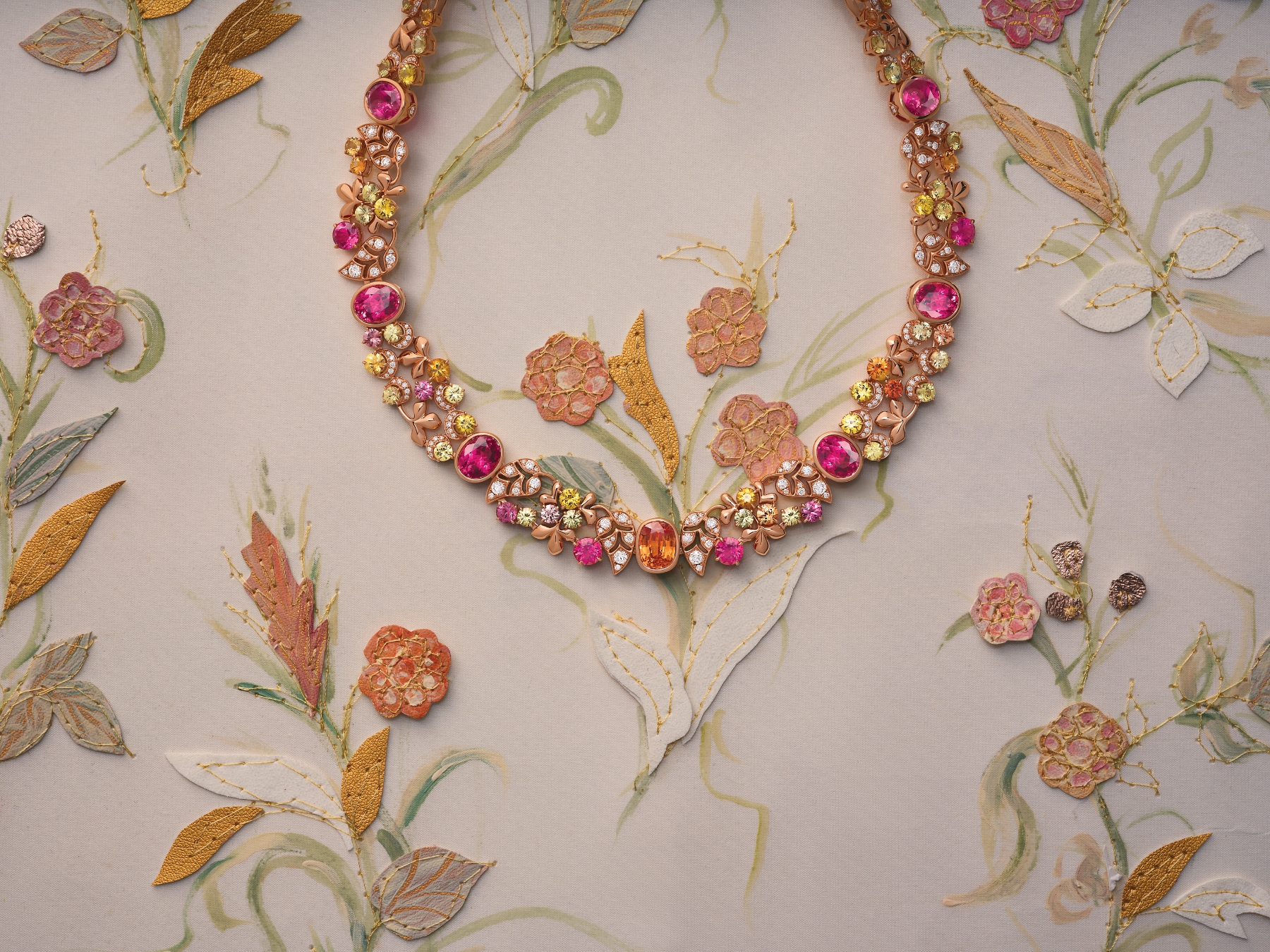
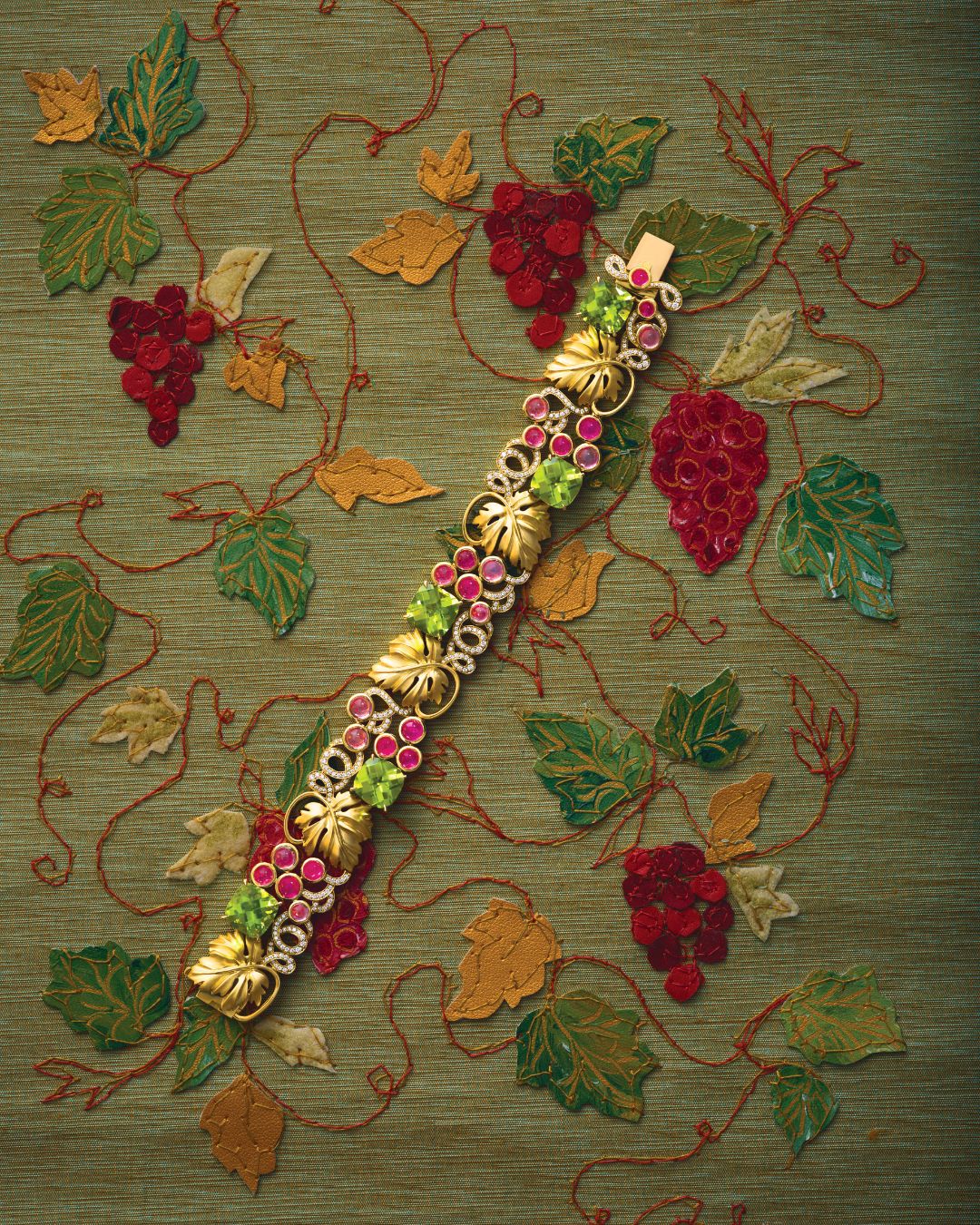
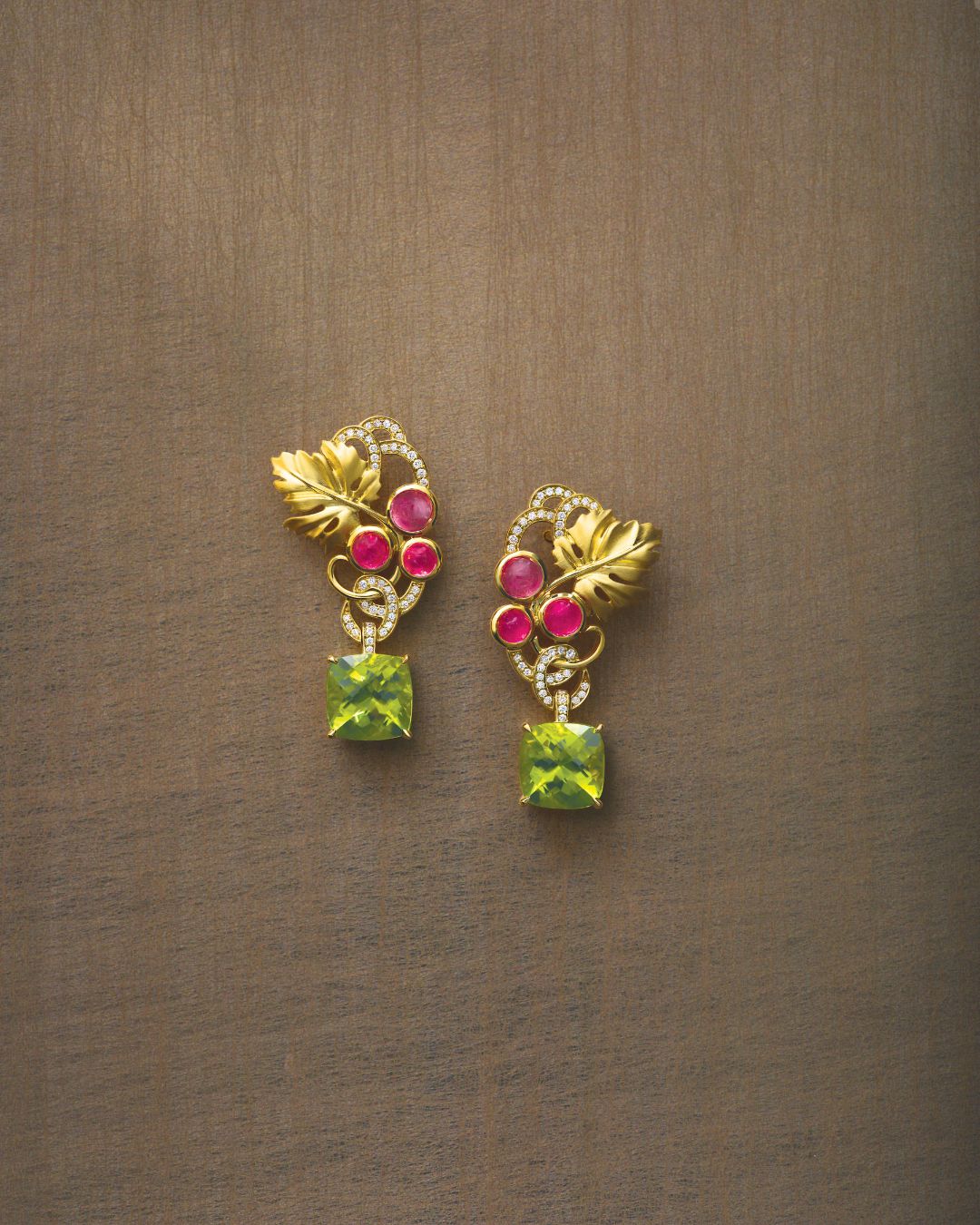
What I really loved about Rebecca's designs for The Palace Collection is that she picked out details I wouldn't have thought of. She went to the archives and saw silk dresses, found a section of embroidery in one, and brought that to life in a suite of jewellery. She picked the ravens from the Tower of London. At Hampton Court Palace, she picked the chimneys. She picked the Delft pottery that's in Kensington Palace and Hampton Court Palace. Proof that it's the little details you can only really see by truly getting immersed in the experience at the palaces.
What is your favourite part of the final collection?
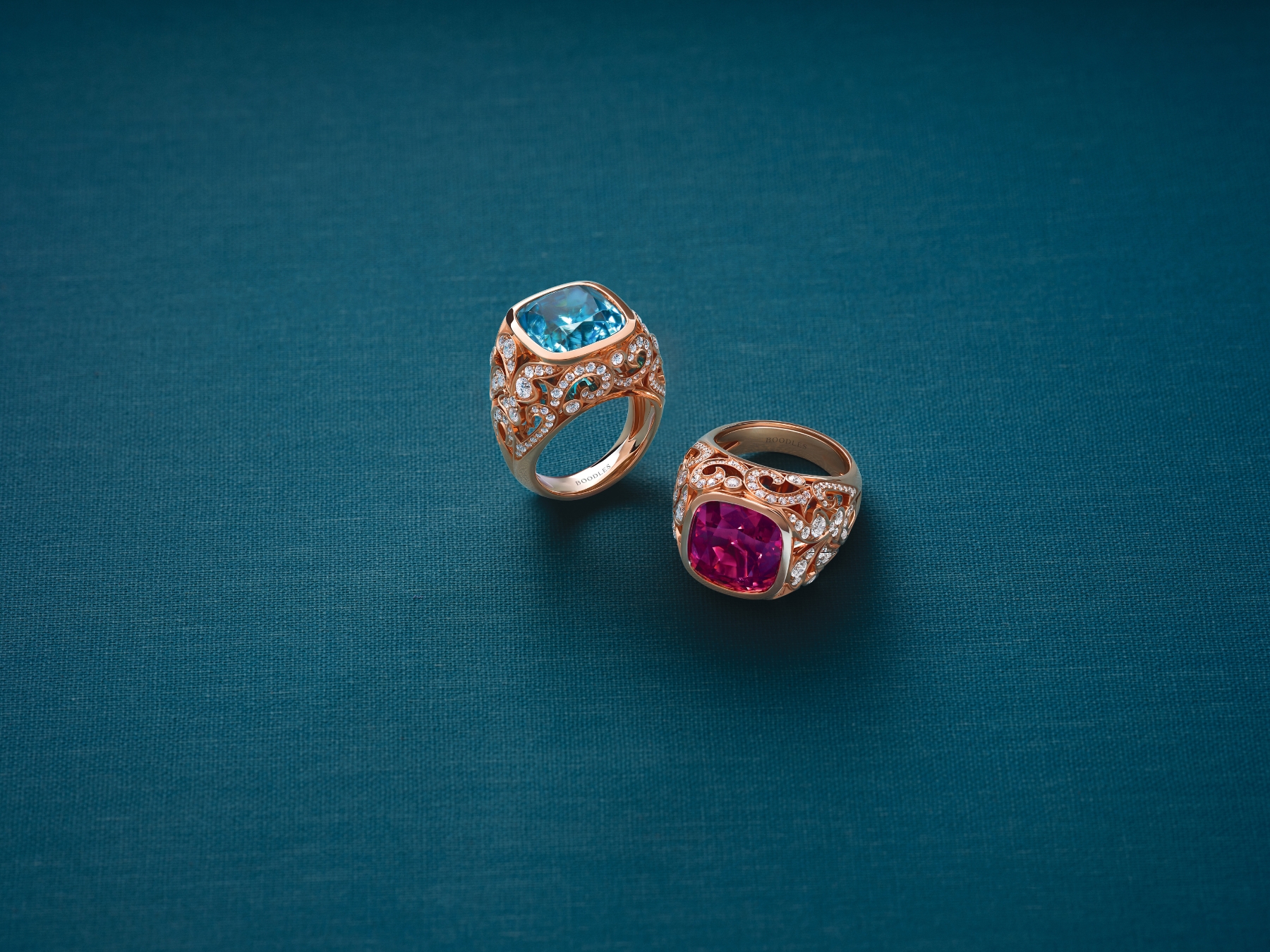
Jenny Smyth: It is very hard to choose one favourite part because I love how different each suite feels. The colours of the diamonds, garnets, sapphires and tourmalines are beautiful, and it's amazing how they reflect specific palace references, from the blue and white of Queen Mary II’s porcelain collection to the rich colours of the Queen’s ‘Genoa’ silk velvet bed at Kensington Palace. If I really had to choose, I think it might be the Raven’s Watch suite inspired by the ravens at the Tower of London. Ravens are such a popular theme for us, but I would never have immediately imagined them in a high-jewellery collection, which is what makes it so exciting.
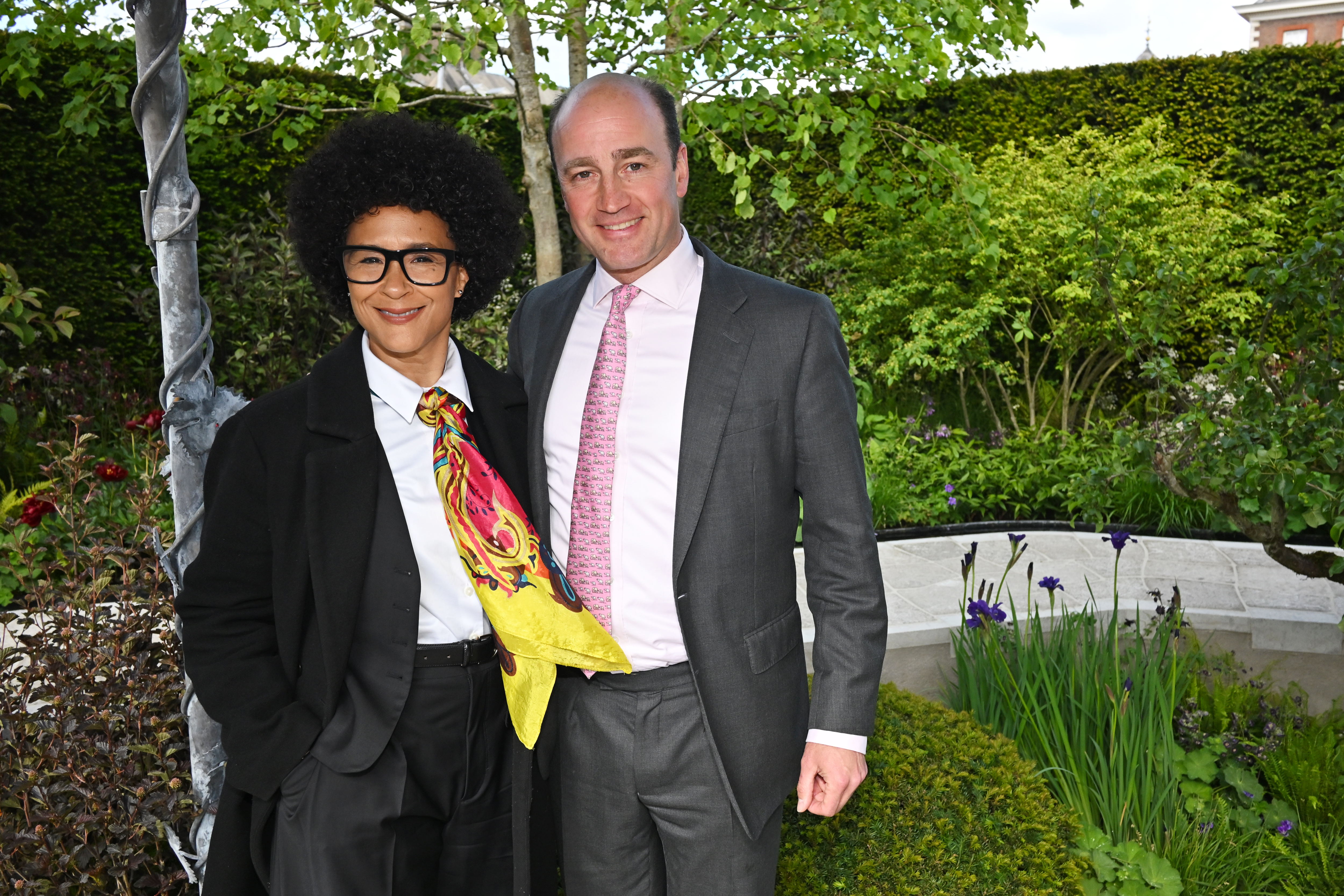
I was also lucky enough to meet Boodles customers first hand through launch events at the palaces and the Chelsea Flower Show. It was really rewarding to see how they engaged with the stories behind the pieces. These are unique pieces with a limited run, so I have been intrigued by what has proved popular and what has sold well. There is so much scope across the range that it is genuinely difficult to pick just one favourite.
What has been the most rewarding aspect of the project?
Jenny Smyth: The most rewarding aspect for me was the design process. I really enjoy taking designers around our palaces and collections because every time they notice something different, whether it is detail in a ceiling, a motif on a court suit, or architectural elements from the 1,000 years of changing royal styles and tastes that the palaces can offer.
I loved seeing how Rebecca interpreted the different areas that appealed to her and James, while working with our curatorial teams to develop the authentic stories behind each design. Boodles made excellent use of the opportunities we give licensees, from our palaces and specialist teams to enhancing their marketing collateral. They worked with Tracy Borman, our Chief Historian, to bring the history behind the collection to life at launch events and in press materials, and I took the Boodles filming team around Kensington Palace and Hampton Court Palace too. The resulting video is stunning: it really shows the connection between the craftsmanship of the jewellery and the craftsmanship of the palaces.
James Amos: As a business, the most rewarding thing for us is designing amazing jewellery and then seeing our customers want to buy it. On the client entertaining side, we're always looking for something we can invite clients to that they really want to attend or something they might not normally get to do, not just 'come and see our new jewellery'. Clearly the palaces were a major draw for our clients, which helped us entertain them, develop our relationships, and ultimately sell the jewellery, but also create memories that clients look back on. So far this year, we have entertained clients at the Tower of London and Hillsborough Castle, as well as hosted a press launch at Kensington Palace. Later this year, Boodles will host its Christmas events at Banqueting House: another opportunity to give our clients a special experience, made possible through this partnership.
It remains to be seen how we'll continue to develop our relationship with Historic Royal Palaces, but I don't think we'll get to the end of the year and just say, "that was nice". I believe the organisation will become an important part of our wider business network. And we haven't done a client event in Hampton Court Palace yet!
What was a challenge you came across during the project and how did the other person or brand help you solve it?
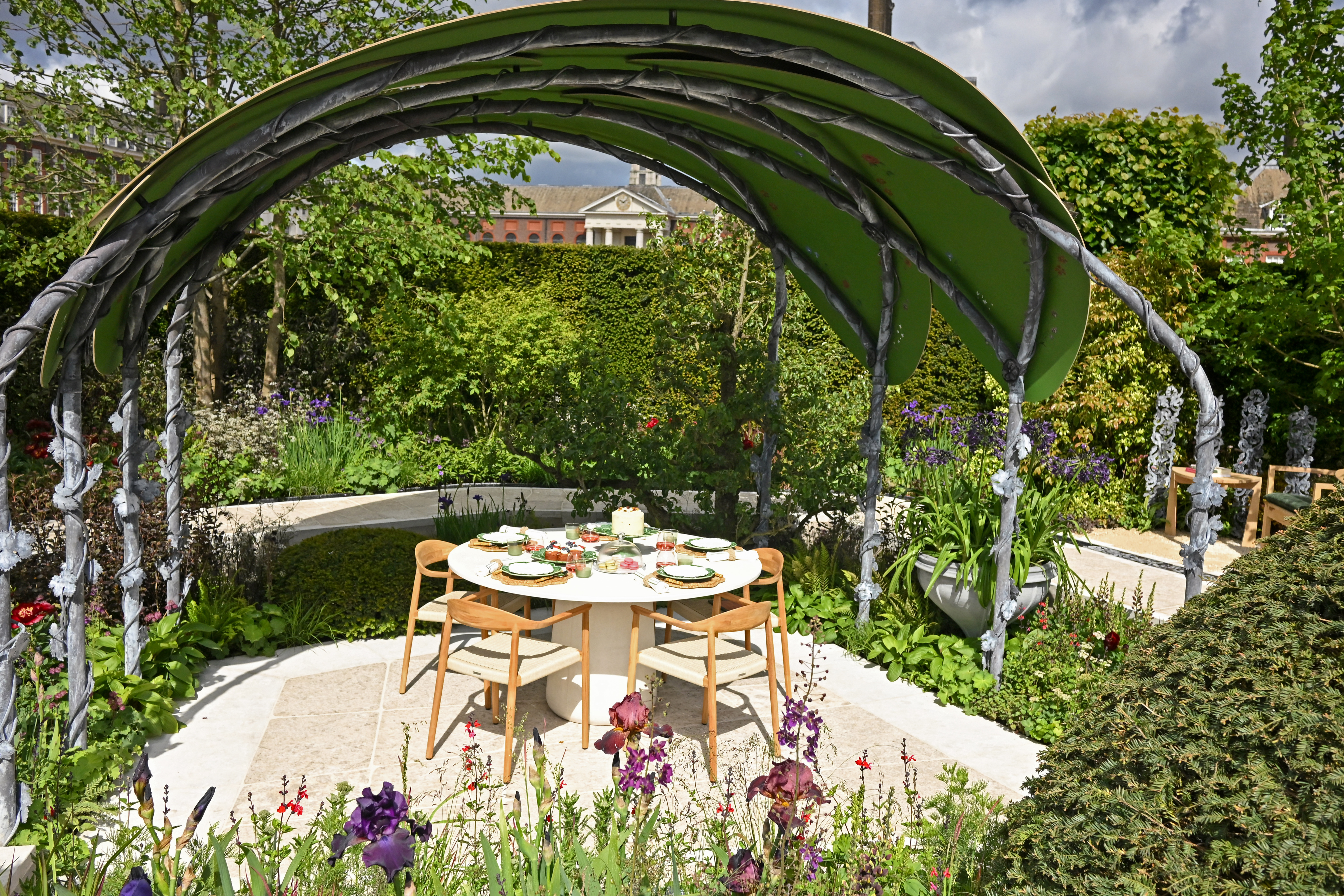
Jenny Smyth: It wasn’t really a challenge in the traditional sense, but featuring a Boodles and Historic Royal Palaces garden at Chelsea Flower Show was a very new experience for us. As part of Boodles’ marketing campaign, they created a garden inspired by each of our palaces that was connected to the jewellery collection. We had never worked on a project quite like that before, so it involved lots of new conversations. Boodles helped enormously by bringing in their brilliant garden designer, Catherine MacDonald, who I also took around the palaces. Working with Catherine and Rebecca, we shaped a design that reflected both the collection and wider aspects of the palaces. Once people could see how the palace references would appear in the stonework, hardware and planting, excitement for the project really grew.
What do you think are your brands’ shared values?
Smyth: Craftsmanship is a clear shared value. Boodles’ expertise in creating these exquisite jewellery pieces reflects the craft we see across our own collections and palaces, from an 18th century seamstress creating the Spitalfields Mantua to artists such as William Kent and Antonio Verrio, who painted the grand interiors at Kensington Palace and Hampton Court Palace.
Storytelling is another important one. Boodles believes each piece of jewellery has a story to tell, and a partnership with HRP could really support that. By working with our curators, we shared authentic stories behind the designs. That is key for us, because we want to bring the palaces and the lives of those who lived in them to new audiences including those who live abroad or may even never visit our sites.
Luxury also connects the two brands. These palaces were lived in by monarchs and their elaborate courts: so much of what we showcase reflects the wealth, status and artistry of those periods. In our Royal Ceremonial Dress Collection, we have garments that sparkle today as much as they did 300 years ago. I think that sense of beauty, longevity and significance is something the Boodles high-jewellery customer can really appreciate too.
What is a key piece of advice you’d give to other brands looking to collaborate on a project together in the future?
Jenny Smyth: My key piece of advice would be to make sure both brands are genuinely excited about the scope of the project, and everyone is clear from the beginning about what you each want to achieve. That clarity really helps everything run smoothly later on. From our first proper conversations in autumn 2024, I think we could all see the potential in connecting these two British brands and were excited about where we could go with the partnership. I was also so pleased to see how much the Boodles team enjoyed discovering what the palaces could offer, showcasing something from all six palaces in their final collection! And finally, I loved seeing their customers’ wonderful response at the various launch events to support the collection which were hosted at our sites.
James Amos: Look for a spirit of willingness. I think things evolve, so you don't want to be too definite about what you're trying to achieve at the beginning. You've got to be prepared to flex, to listen, and not be too prescriptive about knowing exactly what you're looking for. If you factor all of that in, you might find you get to a point which might be a different from the one you were planning, but it's usually a better one, because you've adapted along the way and remained open. That willingness to adapt and evolve along the way is key for all sides.
The Palace Collection is available now in Boodles shops and at boodles.com
Daily Luxury Digest
Sent every working day, the Daily Luxury Digest is your essential news source for the latest developments in the luxury sector both in the UK and around the world.