
According to Aston Martin Chief Creative Officer, Marek Reichman, "Luxury is always the 'best of'. It's the thing we absolutely do not need, but we desire.” Meanwhile, Tammy Smulders, Founder & CEO of Trends & Culture, argued, “True luxury is not about buying expensive things. It’s about living in a way where you appreciate things."
For brands looking to thrive, it is the advice of Andrea Steiner, Associate Partner at Bain & Company, that may prove most useful: “The brands that are growing sustainably are the ones that remain true to their DNA of exclusivity, of ultra-high quality, across the whole value proposition.”
This is certainly a playbook bearing fruit for Burberry CEO Joshua Schulman, who described his ‘Burberry Forward’ strategy as a move from “modern British luxury to timeless British luxury. Reconnecting with core customers and core categories – reminding people why they love Burberry.”
Steiner further highlighted the impact of dramatic price increases causing a reassessment of value citing “a broken price, value and creativity equation”. Or as Selfridges Group CEO, André Maeder, put it, “Many brands went too far with the price level. Only 25-30% of customers are extremely rich; the price ceiling matters enormously for the rest.” This, coupled with greater knowledge around quality and supply chains, and a growing desire for experiences, has led to a major re-evaluation of what value means at all levels of the luxury market.
As Christopher Sanderson, Founder & CEO of The Future Laboratory, explained, customers are now looking for “the brands, the organisations, the services that are delivering them opportunities to feel healthier, wealthier and happier”. Increasingly, this lies less in status symbols and more in meaningful moments and memories. The one thing money cannot buy, after all, is time. As Divia Thani, Global Editorial Director of Conde Nast Traveller, pointed out, in this context, “The value of the experience to the consumer is making more sense than the value of the product.”
The relationship between products and experiences has always been interwoven in luxury. However, recently the balance has shifted as clients, customers and guests seek value in terms of experiences, feelings, memories and connection. Knowing your customers, their interests, and the events and experiences that are going to connect with them on an emotional level is crucial to success. “If you think of the brand as a club, it’s about identity,” explained Tammy Smulders. “It used to be about what I have. Now it’s: who am I? What do these products or experiences say about me?”
Should your experience be brand-immersive, like Johnnie Walker’s exclusive whisky tasting experience in Edinburgh? Would your clients prefer money-can’t-buy access at events such as the F1? Or is it about expanding your existing offering, as in the case of Selfridges’ new members' club, 40 Duke, created for their top tier of clients? When designing experiences, Martin Kuczmarski, CEO & Founder of Difficult Name – who is behind two of London’s most in demand new restaurants, The Dover and Martino’s – offered a useful framework. “When you deliver an experience, you trigger three systems," advised Kuczmarski. "Sensory – the music, the smell, the touch. Emotional – how do you make me feel? And social – who is in the room?”
There is also a broader opportunity here in the UK. As Thani pointed out, “Britain is home to extraordinary experiences from Wimbledon to Ascot, from the Chelsea Flower Show to the West End.” These events are alive in the imaginations of wealthy consumers around the world, but we take them for granted. There is an opportunity to curate, package and story tell around British experiences which is largely untapped.
“L’Oréal reported [2025] sales up 7.6%, well above expectations, with growth strongest in Europe which they have attributed to the ‘lipstick effect’,” Jane Hamilton of The Times, told Summit attendees. The term refers to a retail trend that sees aspirational shoppers temper big purchases in favour of smaller, more affordable treats in times of economic uncertainty.
As the cost-of-living inflates – influenced by factors such as the wars in Ukraine and Iran, and as wealth continues to polarise across the globe – Innes McFee, CEO of Oxford Economics, pointed out that the wealthiest 10% of Americans are now responsible for 40% of the country’s luxury spending. Aspirational shoppers are gravitating towards to entry-level price points.
This is bad news for brands that have raised prices to levels that shoppers may now see as inaccessible. On the other hand, it represents an opportunity to bolster entry-level offerings in a way that may actually entice new clients. As Hamilton explained, “It’s not a drop off in the desire to buy, but the ability to buy. For brands with well-developed entry-level goods, that’s your opportunity to engage.”
Is AI the future of business success? For luxury brands, the answer is nuanced. While brands certainly can’t afford to ignore the opportunities promised by AI (more on which below), when it comes to creativity and craftsmanship, the backlash is already beginning. As Hamilton explained, “Gen Z have a phrase: ‘What in the ChatGPT is that?’ It’s basically a code word for anything mass-produced and low-end. The ‘no AI’ tag is beginning to be used to show quality and originality. This is a golden opportunity to show what British luxury really means.”
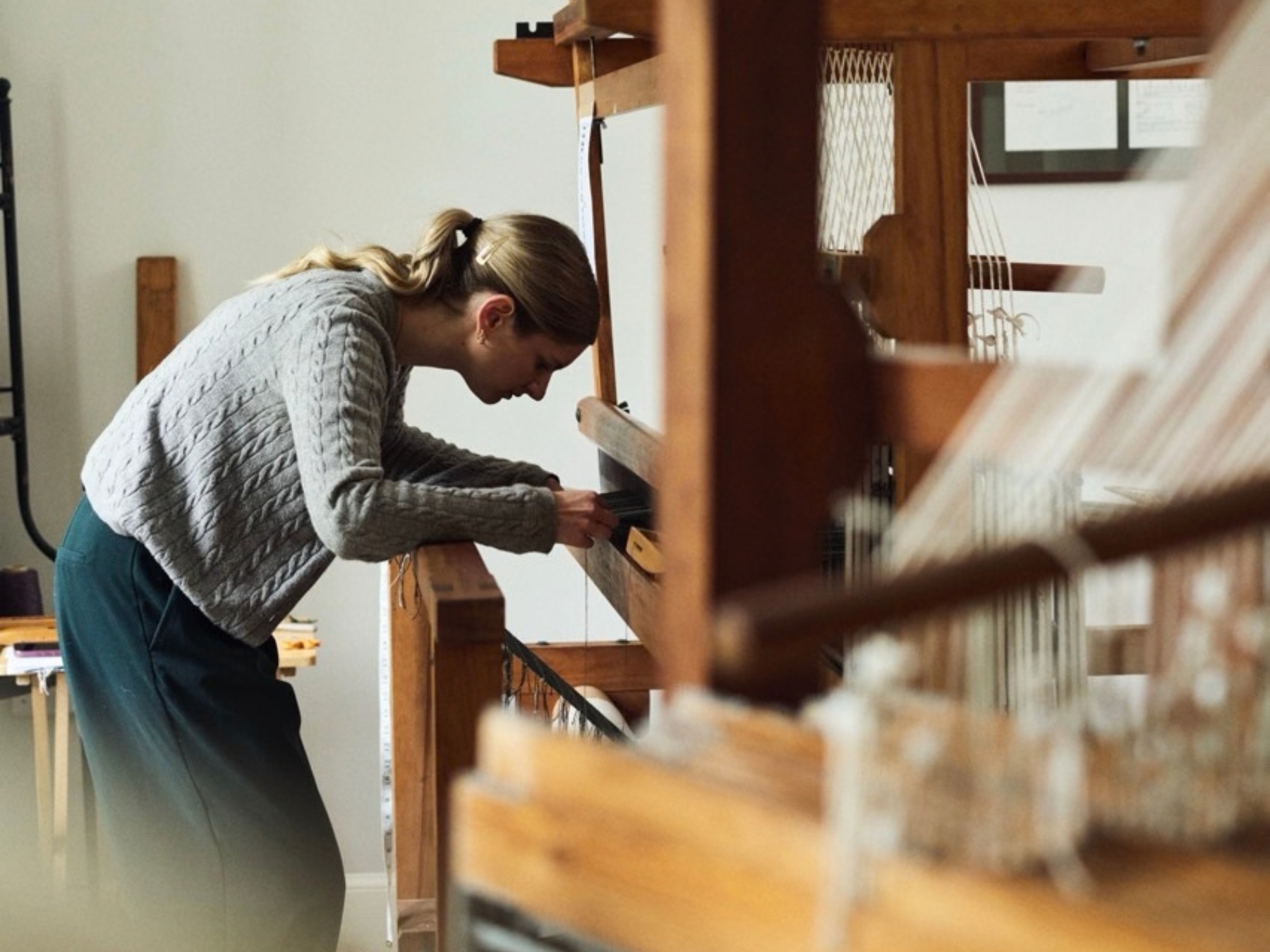
Key to this will be putting the real, human craftspeople behind your brand front and centre. At luxury leather goods brand Swaine, the team has opened up its Mayfair workshop, allowing customers to see goods being made in real time while also livestreaming its activities to boutiques around the globe. “We made the craftspeople the centre of the business, and we work around them,” said Brand Director, Monty Lowry Corry. “They engage with clients, and it gives them a huge amount of encouragement and reward for their craft.”
Finding craftspeople with the skill, or young people with the interest, to take on these jobs, however, is becoming increasingly difficult, with Corry lamenting the lack of political will to offer education in this area. “If young people are shown the opportunities to work with their hands and create beautiful things – as they are in other countries – we would have a much more interested pool of craftspeople,” he opined. If we want traditional British heritage and luxury to remain a source of pride for generations to come, we need to get serious about future-proofing these skills.
With HNWs re-evaluating the value inherent in the products and services they invest in, so too are they shifting away from instant gratification and towards long-term thinking when it comes to luxury spending. “They’ve acquired a lot of things in life. Success has been built. Now it’s about the legacy they’re going to leave behind and which brands align with that,” explained Amrita Banta, Managing Director at Agility Research & Strategy. “They’re seeking meaning. Is this Patek Philippe watch going to be something my granddaughter wears?”
But how does one become a brand that offers legacy? Marketing certainly plays a part, as does craftsmanship and quality. However, above all else, as explained by Smulders, “Legacy as a brand requires responsibility. What do you want to be known for? What are the things that are important and meaningful to you?” If you can align your brand values with those of the world’s top-tier consumers – family, quality time, emotional connection, exclusivity – you’ll create truly meaningful relationships that may last well a lifetime, and beyond.
Mathilde Haemmerle, Head of Luxury Practice at Bain & Company in France, offered up some statistics likely to startle: 82% of high luxury spenders (those spending £50,000 or more on luxury per year) use AI in their purchasing journeys, while 52% said AI helped them discover new brands they wouldn’t have otherwise considered. As she succinctly put it, “It’s here. It’s already happening.” Brands need to be visible, ensuring that when an AI agent is asked to recommend a brand, yours appears with the right consistent narrative from authoritative sources. You need to give customers a compelling reason to move from AI discovery into your own channels.
With top-down buy-in, a focused strategy and clear messaging to employees, implementing AI tools can reap dividends when it comes to operational efficiency, streamlining customer interactions and boosting productivity. “It’s not just about adding a tool. It’s about redesigning the full process to create value, and training employees to embrace AI as part of their daily lives,” adds Haemmerle. “AI will never replace the relationship with your customers. AI is just there to amplify what you do best.”
There was a broad consensus throughout the day that Gen Z consumers do not play by the same rules as previous generations. “Younger consumers show very high awareness across all brands,” explained Steiner. “They’re very open to experimenting, but that also means they are less loyal. They are more critical about what value is being delivered.”
Reaching them requires genuine presence in their world, from offering products on TikTok Shop and LLM search visibility, to curating pop-ups and collaborations with youth-friendly partners. Brands must actively seek out Gen Z customers in their own environments. This may mean free-to-join loyalty programmes like Selfridge's Unlocked, which boasts around one million members under the age of 30, or the introduction of Burberry's in-store scarf bars, which resulted in a huge boost in Gen Z engagement. “Gen Z is by far the fastest-growing cohort for us around the world,” said Schulman. “The Burberry scarf was the number four most searched item on the Lyst Index this festive season. We have never had an individual product in the top ten before.”
But presence alone isn’t enough. As Pernilla Nyberg, Senior Vice President & General Manager at the Estee Lauder Companies UK & Ireland reminds us, “Gen Z has clear expectations about transparency, responsibility and how to be in the world. We need to let them into the conversation.”
“Luxury is identity,” said Smulders. “When people buy luxury, they are buying into their own sense of identity. These are building the blocks of who they want to be.” This, of course, means that whether or not a person decides to buy into your brand depends entirely on the story you tell them about yourself – and what association with you will, in turn, say about them.
When arriving as the new CEO of Burberry in 2024, Schulman says this much was evident: “We can control our brand narrative. We can control the way we show up. We can control the product that we share with our customers.” His first move? Executing a new ‘It’s Always Burberry Weather’ campaign. This refocused on the brand’s signature designs, but presented it via fresh, contemporary faces (including Olivia Colman, Barry Keoghan, and Cole Palmer) to reinvigorate their image. “Our heritage outerwear and cashmere scarves are timeless – they’re forever pieces. But you have to keep reminding people why they became timeless in the first place.”
Leaning too heavily on the past is a risk for any luxury brand but so to is abandoning what made it distinctive. “There’s a real difference between being a heritage brand and a forward-thinking, innovative brand with a 100-year backstory,” suggested Paul Croughton, Editor-in-Chief of Elite Traveler. “You always need to be gripping hold of that distinction.”
"Heritage – is it a ball and chain around your neck or is it a support function and mechanism?” said Reichman, framing it as a question of brand direction. “You have to respect the history that a brand has, but it's really about a nod over the shoulder rather than looking backwards. Brands are about the future, they're about change." For Reichman, the answer is simply to let beauty be the through-line that connects every Aston Martin design, allowing new technologies to inform and contemporise each model without the need to adhere to strict house codes.
It’s a sentiment that chimed with Julie Bramham, Managing Director of Diageo Luxury, who explained, “Reinvention doesn’t break tradition. It’s actually how tradition survives. The art and the science of that is: what are the things that are most enduring about the brand that we want to keep, and where is the space for evolution?” Be it through new designs, unexpected collaborations, or bold campaigns, finding the balance between heritage and innovation is key to delighting and surprising customers – in other words, creating the ‘wow’ moments that keep them coming back.
Amid recent headwinds, it can be easy to overlook that being a British luxury brand is an inherent superpower. “When you buy British, you’re not simply buying a label or a high-quality product. You are buying into the story of British values,” said Hamilton. “Our country is still a byword for trust, for fair play, originality and quiet luxury.”
“The storytelling and the making-of, the justification for why luxury brands from the UK actually are luxury, it’s sitting there. We don’t have to make anything up,” added Thani. This, said Tom Athron, CEO of Fortnum & Mason, is especially true for brands looking to break into markets like the Americas: “There is a fascination with Britain and that gives British businesses an advantage.”
If you couldn't join us in-person, you can watch every talk, panel and keynote by purchasing access on-demand (priced at £230 for members and £385 for non-members, plus VAT and fees). Please email our team for more information.
Thanks to our event supporters: Agility Research & Strategy, Beyondly, London Packaging Week 2026, The Londoner, and The Times & The Sunday Times. Photographs by Philipp Ammon
Daily Luxury Digest
Sent every working day, the Daily Luxury Digest is your essential news source for the latest developments in the luxury sector both in the UK and around the world.