When writer and actor Colin Welland won the 1982 Oscar for best original screenplay for the film Chariots of Fire, he concluded his acceptance speech with the declaration: “The British are coming!” The general sentiment was correct, but the “coming” has been a protracted one and the characteristics of the arrival more surprising than anyone might have expected – certainly in terms of design and the creative industries.
So, what are the hallmarks of British design now, some 40-plus years since that bombastic statement? Who better to ask than Tom Dixon, a designer and entrepreneur who burst on to the global scene back in the mid 1980s and who is still experimenting, innovating and leading the way today.
“One of the hallmarks and key changes in the UK over the past 30 or 40 years is our true, cosmopolitan attitude, driven by the number of diverse nationalities and personalities working here – it’s a great place for global intermingling,” says Dixon. “What marks us out from the rest of the world is the breadth of different influences that make up the British design identity. It doesn’t matter whether you’re involved in product design, theatre-making, literature, cheffing, fashion or car design, we’ve got substantial and world-class practitioners in them all. What’s great about the landscape here is the cross- fertilisation that you get between all these different personalities and trades.
“What’s fabulous about the UK is that although we might not necessarily be number one at anything in particular, we’re number two, three and four in almost everything,” adds Dixon.
Combined with this eclectic breadth of global influence and appetite for cross- fertilisation is the strength of the UK’s design heritage. Think of Josiah Wedgwood in the 18th century, Christopher Dresser and William Morris during the 19th century, followed by William Lethaby and the Central School of Art (undoubtedly the primary influence and inspiration for the Bauhaus and all progressive art and design schools since), which spawned the stellar post-war generation including Terence Conran and Pentagram founders Alan Fletcher and Colin Forbes.
Fast forward to the late 1980s and early 1990s and we saw a new British wave including Dixon, Jasper Morrison and James Irvine taking Milan’s Salone del Mobile by storm. I ask Dixon what was it they offered then that caught the imagination?
“We had a very different point of view,” he replies immediately. “Up until then, the Italian companies had been using primarily Italian designers, and that had become quite self-referential. Then we came along with an iconoclastic, opposite point of view.
“It was a very different time then,” Dixon continues. “There were clear establishments. In the UK, for instance, it was still floral and chintz. In Italy it was post-modernism, in Germany it was still a kind of reiteration of the Bauhaus. So these design establishments existed, and we were offering a slightly homemade, more punky alternative.”
Embodied today by the likes of Thomas Heatherwick, Paul Cocksedge, Faye Toogood, Bethan Laura Wood and Yinka Ilori, it’s this alternative, intuitive, eclectic and often eccentric approach that characterises the British design identity and drives its resonance abroad.
And in terms of future-proofing, this unbridled individuality offers the perfect resilience to the bland threat of artificial intelligence.
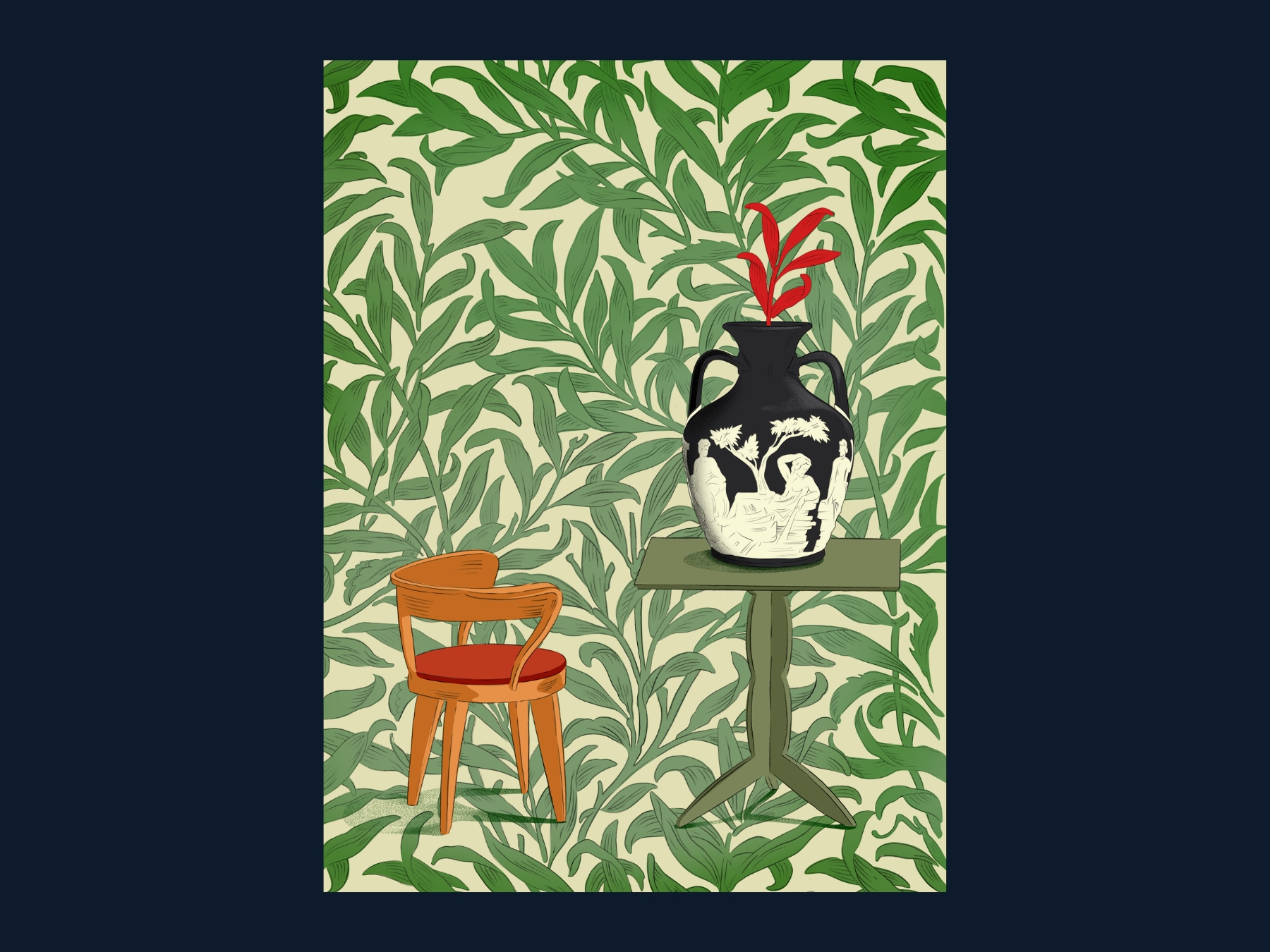
Illustration by Jo Ratcliffe