Walpole: What does your role entail, and how long have you been doing it?
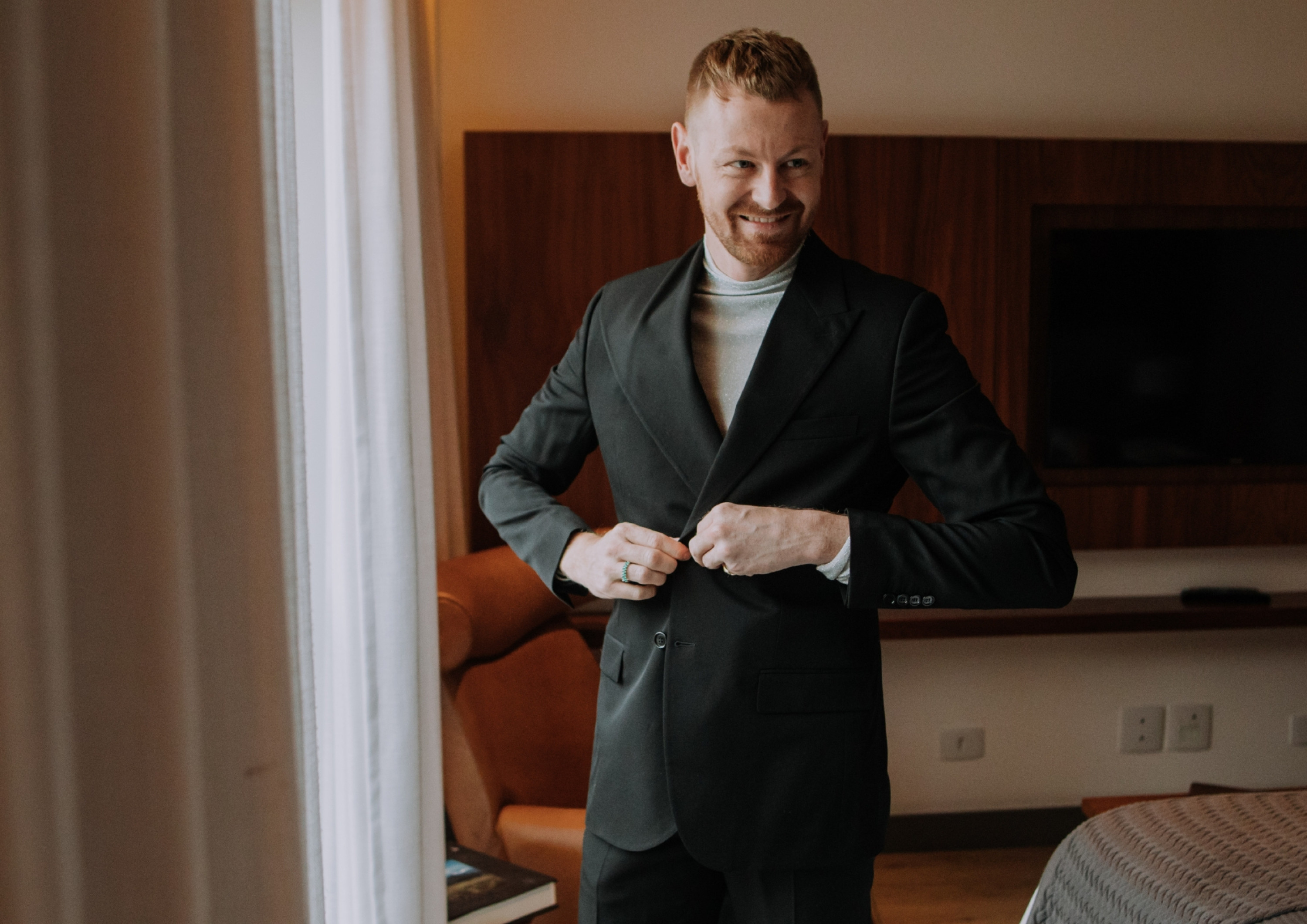
Cristo Stuart: I have been a buyer at Harrods for four years, initially for the accessories division on the ground floor and now in womenswear, specifically our international designer section. I work across both concession and own-bought, operating channels for the business and managing a remit of around 70 brands with the support of an incredible team. In buying we act as the commercial face of the company, working with a huge network of external vendors and stakeholders to drive commercial actions and maximise the business either directly or in collaboration with internal teams.
What’s your career background and what makes you passionate about what you do?
I didn’t study fashion, so my passion for the industry is self-driven. I studied Chinese at university and my dissertation was in the success of luxury goods companies in China. It was this draw to the luxury industry which then led me more specifically to soft luxury and the
world of fashion.
I adore the craft of fashion and what goes into making a garment. I am not gifted with the skill set of a designer or dressmaker that can actually conceive products. I do, however, have an intense appreciation for the side of the consumer and buying. My 'eye' for aesthetic and detail coupled with business acumen ended up being perfect for buying.
How has your sexuality and/or gender identity been a source of strength on your journey into your sector?
For me, being gay and the emotional journey one navigates in coming out results in a certain unique brand of resilience and adaptability, which has been of great benefit traversing the luxury fashion industry.
The industry is wildly competitive and the tenacity needed to handle the rejection and challenges faced is supported by this transferable resilience. This is of course more a residual benefit from a trauma I would rather have avoided. I am aware this is something which might be related to my generational specific experience, however it is a reminder that any trauma can lead to something beneficial.
My experience has fundamentally impacted who I am today; it has given me the tools and awareness to help shape the landscape for the next generation and defines how I lead my teams. I wouldn’t change that and it’s a work ethic of which I am immensely proud.
Have you ever faced negativity towards your sexual orientation within your career – and, if so, what effect did that experience have on you?
I have been fortunate that I have never experienced homophobia from colleagues, however there was an incident when I was verbally abused by a member of the public when travelling. My managers and team were incredible in supporting me during this incident and I am thankful to work in a place where discrimination is not tolerated even beyond the bounds of the office.
Do you think attitudes towards the LGBTQ+ community have shifted in your time in the industry?
I do. On the whole, I think attitudes towards the LGBTQ+ community are improving. What I think needs to be avoided is a sense of complacency; improvement is often misconstrued as completion and equity isn't a nirvana-like state companies can simply achieve with policies and a handbook.
I think the primary task is to continually challenge the industry to genuinely integrate DEI practices into its business for the long term gain, and that isn't LGBTQ+ specific but will benefit all underserved communities.
What’s a significant obstacle for members of the LGBTQ+ community in the workplace that you feel isn’t talked about enough - and why is it important to highlight?
I think the complexity of being vocal or being open and proud in the workplace is not generally discussed with enough nuance. I fundamentally believe it is important to be the representation you wish to see, however this is caveated with many additional factors.
This openness can only be achieved if there is the psychological safety to do so, nor should there be the expectation for individuals to be the spokesperson for all LGBTQ+ experience – which can often be the case.
The assumption that its easy or a natural fit for LGBTQ+ to work in fashion specifically can be associated to the prominent visibility of cis gay men across the industry in top creative roles. But this can lead to sweeping generalisations for LGBTQ+ experience as a whole, many of which are vastly different.
Is there any policy work that needs doing to evolve and ensure workplaces are more inclusive to LGBTQ+ people?
The industry is generally accepting of the community, but I do feel there is a sway in policies and support towards cis gay men. Comprehensive policies on trans rights are less developed in most cases, so in the short- to mid-term, I feel companies would benefit from ensuring their trans communities are as protected in policy and served in line with cis gay men.
Is there a person in your industry or sector from the LGBTQ+ community who inspires you or has helped you on your journey?
Jamie Gill – who has worked in many senior executive roles in the industry in addition to founding The Outsider's Perspective (a mentorship programme for people of colour looking to transition into the fashion industry) – has been a huge inspiration to me. Jamie invited me to speak at a cohort of TOP having known each other through our respective work with designer Roksanda.
Jamie is an exceptional example of what can be achieved within fashion without taking a typical pathway. His capacity to then extend that success to others is energising and mesmerising to witness. It is important to find others in the industry against whom you can soundboard ideas, get excited about developments and debrief about frustrations. In becoming a more vocal, proud gay professional, I have Jamie to thank.
What career advice do you have for younger members of the LGBTQ+ community who are entering your industry?
If you feel there is an absence of representation then you have the opportunity to be that representation for someone else. If it is safe to do so, speak up and speak out. Change in businesses is only instigated when the issues are brought to the table. The sooner you can reach the point of being your authentic self in the workplace, the stronger a professional you will become.
What does Pride in the workplace mean to you?
Pride in the workplace to me is having the psychological safety and the surrounding supportive infrastructure to allow LGBTQ+ people to be authentically themselves and protect them in the (hopefully rare) circumstances where support and protection is required.