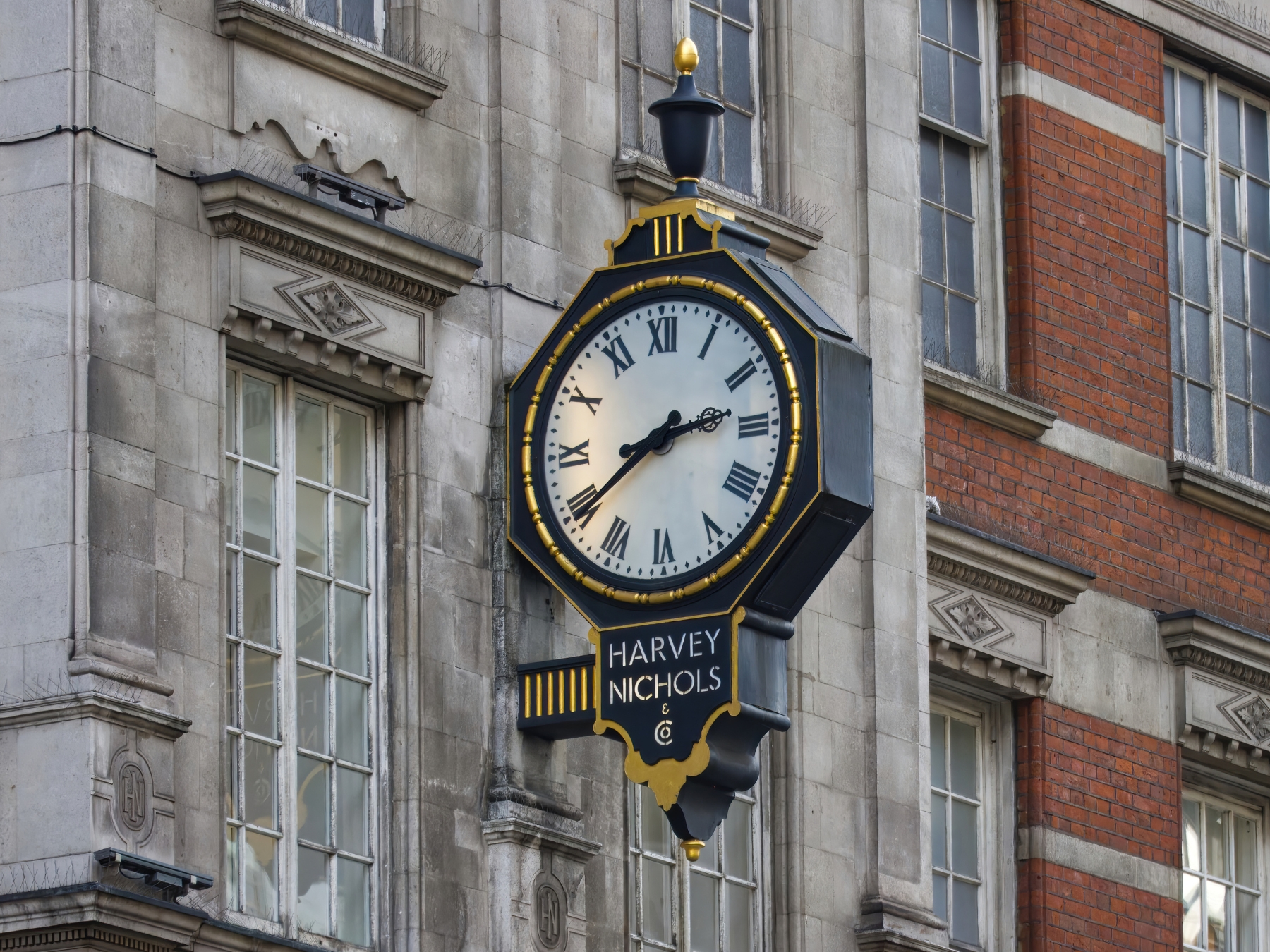
There are plenty of people who can afford luxury. The challenge is persuading them that they want it. I’ve been thinking about that rather a lot this week, prompted by the news that Harvey Nichols is for sale and by Mike Ashley’s characteristically restrained description of the business as being in a “death spiral”.
It’s a matter of record that Harvey Nichols hasn’t made a profit since the pandemic and its recent financial performance has unquestionably been difficult. However, I’m not sure a troubled business and a dead brand are necessarily the same thing: Harvey Nichols is an interesting case in point.
I have particularly fond memories of 'Harvey Nicks' in the Nineties because I worked for Mary Portas when she was at the store and I was advertising director of the in-house magazine. Back then, Harvey Nichols wasn’t simply somewhere that sold fashionable things. It was fashion.
Its windows became cultural events. The Fifth Floor was a destination. It collaborated with photographers, artists and designers. Absolutely Fabulous turned Harvey Nicks into the spiritual home of Patsy and Edina and we all piled in to see how fabulous it was for ourselves.
As Mary Portas recalled in The Times last week, it became “a cultural venue that happened to sell fashion and style”.
Fast-forward 30 years and that description sounds surprisingly contemporary, not least because one of the most important lessons from the luxury market right now is that simply having desirable products to sell will no longer cut the mustard. Global wealth continues to grow, yet Bain estimates that luxury has lost around 70 million consumers since 2022, taking its active customer base back towards 2013 levels. The money hasn't disappeared. What has happened is that attention has become so much harder to earn.
As Gabrielle Chanel (apparently) once said, “luxury is a necessity which begins where necessity ends”. Luxury is an entirely discretionary consumer category. Nobody needs another handbag, watch or pair of shoes. And nobody needs to cross London to visit a department store when almost anything it sells can arrive at the front door tomorrow.
All of which means, as it has always done, it’s the responsibility of brands to create the longing.
Look at some of the businesses currently doing that exceptionally well: CHANEL's Creative Director Matthieu Blazy has created such excitement (it's a brand that's well and truly on fire). Burberry's recovery has been built around rediscovering what makes Burberry distinctive. Fortnum & Mason keeps finding joyful new ways of making Piccadilly somewhere people actively want to visit. And to call Harrods a department store is an entirely inadequate description of its global power: it’s both a luxury ecosystem and a destination in its own right.
These are very different businesses, but the common thread is that they are on the front foot. They know who they are. They invest in that identity. And they use creativity, experience and imagination to give customers a reason to care. Or, to use the phrase I seem incapable of going more than a fortnight without saying: they make their own weather.
The irony is that Harvey Nichols once understood this in its bones. One could almost say it was a pioneer when it came to making your own weather. It didn't wait for customers to turn up wanting something. It gave them reasons to come in. It surprised them, it entertained them, it introduced them to things they didn't know they wanted and left them with the nagging suspicion that life might be slightly lacklustre without them. Occasionally it did things that possibly made very little sense on a retail spreadsheet, but generated enormous cultural capital as a result.
So perhaps the most interesting question about Harvey Nichols isn't whether the department-store model can survive. Physical luxury retail is plainly capable of thriving when it gives people sufficient reason to leave the house.
The more intriguing question is whether the next owner of Harvey Nichols can rediscover the attitude that made the brand matter in the first place: not by recreating the 1990s, but by understanding what made them possible.
Heritage, reputation and affection are wonderful assets, but none of them relieves a luxury brand of the obligation to be interesting in the here and now.
That feels like the bigger lesson here. Luxury in the UK is full of businesses demonstrating that there is still enormous appetite for the exceptional: for creativity, craftsmanship, experience, beauty and joy. However, in a discretionary market, none of us is entitled to the customer's attention simply because we have a famous name above the door, however fondly it may be remembered.
The money is there. The desire has to be created.
Harvey Nichols once understood that brilliantly. Perhaps its greatest opportunity now is to remember how.