How British luxury is redefining its craft through sustainability

Sustainability Stories
Editorial Partnership
3rd September 2025

'Manifesting Sustainability' is a series of insight features exclusively for Walpole readers and members, developed in partnership with Walpole Associate Partners, FINN Luxe – the dedicated luxury offering of FINN Partners. Embracing the “global boutique” model, FINN Luxe offers integrated communications solutions across lifestyle sectors including travel and hospitality, design, F&B, beauty, fashion, jewellery, watches, automotive, and art.

Luxury stands at an important crossroads, driven by rising consumer expectations for authentic sustainability and evolving regulatory landscapes. While the sector pioneered qualities such as craftsmanship, durability, and timelessness – principles that naturally align with circularity – the introduction of stringent new regulations like the European Green Deal's Ecodesign for Sustainable Products Regulation highlights the ever-changing regulatory landscape. Digital product passports (DPPs) exemplify this shift, bringing unprecedented transparency to products' environmental impact, lifespan, and sourcing. 

Navigating these changing standards presents a meaningful opportunity for luxury brands committed to staying ahead of the curve. Brands that weave circularity into their DNA today are already setting tomorrow’s pace: re-imagining design, supply chains and customer relationships. 

The circular economy also means different things for different sectors. Textiles and fashion brands might put an emphasis on repairing, reusing and recycling, as well as full oversight over supply chains. For jewellery brands, supply chain visibility is key in sourcing precious metals and stones. For auto brands, circularity often translates into innovations around low carbon materials and modular design, component reuse, and second-life applications for vehicle parts and batteries.

Whichever the industry, circularity lies at the core of luxury’s sustainability movement – it is also the very first aspiration outlined in Walpole’s British Luxury Sustainability Manifesto. Here, we highlight some of the creative approaches from Walpole member brands leading the way in redefining luxury through circularity.

Designing with end in mind 

Incorporating circular principles is an end-to-end journey and begins at the design stage. In the jewellery space, Anabela Chan (a graduate of Walpole's Brands of Tomorrow programme) is pioneering an innovative design approach that is reshaping the approach to fine jewellery. 

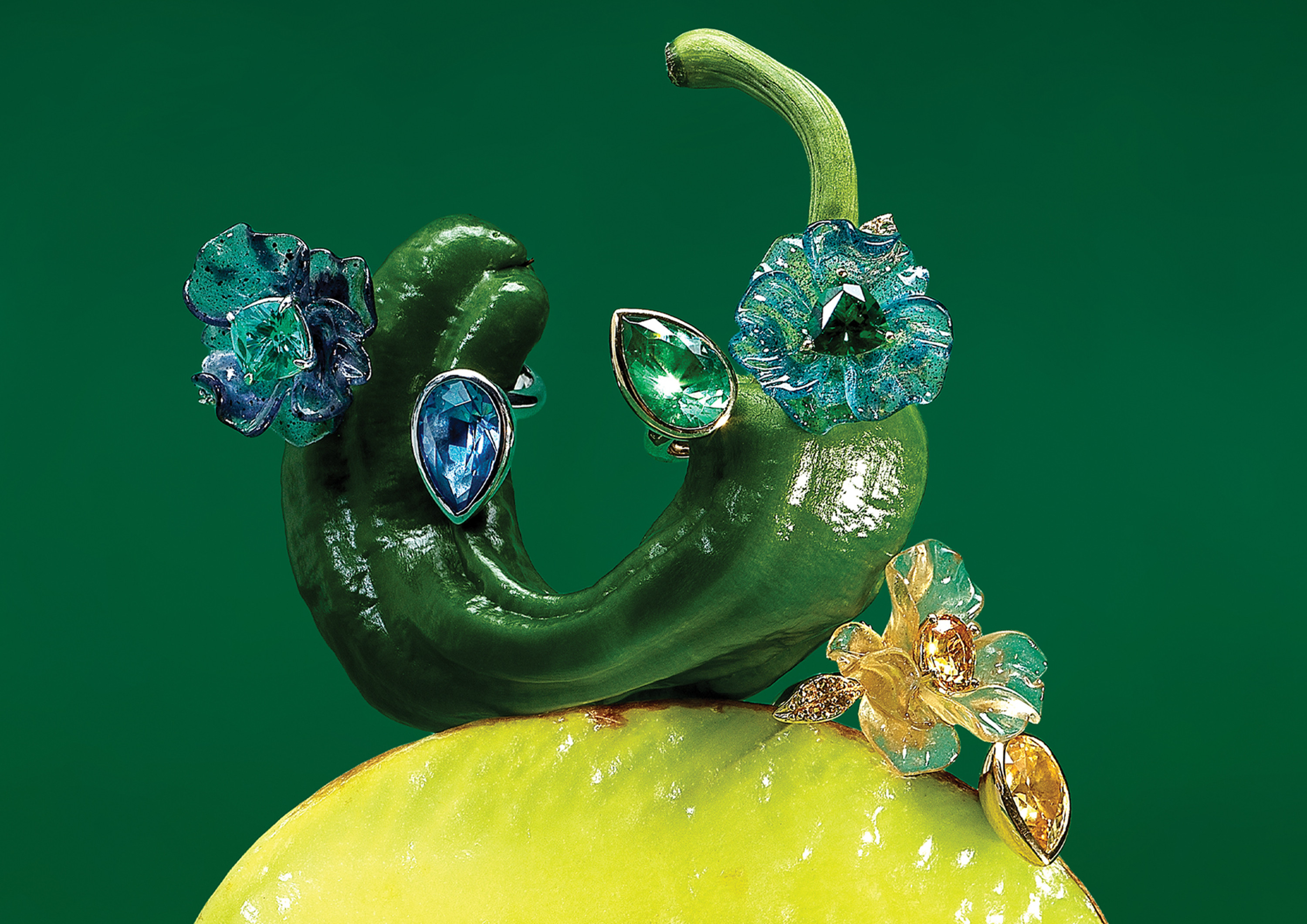
Every design decision at Anabela Chan is guided by the 'Waste to Wonder' concept. The London-based brand pioneered the refinement of aluminium from discarded soda cans, transforming everyday waste into precious metal. This innovative approach emerged following two years of dedicated research and development, underscoring the necessary investment required to truly commit to circular principles. This commitment includes sourcing salvaged precious metals from technological waste, working with diamonds synthesised from captured CO2 and, most recently, creating a new genre of gemstones from overripe fruit (this 'Fruit Gems' line is pictured above). Each piece is designed for traceability, longevity, and regeneration, as well as aesthetic appeal. 

Garrard also adopts innovative design principles to amplify its luxury offering while employing circular ethics. Products are designed with the finest responsibly sourced materials, including mostly recycled gold and silver. Garrard is the official silverware supplier to Royal Ascot and has incorporated AgAIN silver (a fully traceable metal extracted from recycled X-ray films) into each new Royal Ascot trophy. The brand also partnered with Belo Bags to create a limited-edition Royal Blue tote, crafted entirely from reclaimed materials. Each bag was made using 12 metres of decommissioned seatbelts, ten recycled plastic bottles, and 300g of fabric offcuts. 

These brands’ approach exemplifies how circular principles can amplify the offering of luxury design, and the industry-leading processes deployed by Anabela Chan and Garrard now provide a new appeal. It is not just about the inherent rarity of the material, but the regeneration story. These materials are now underpinned with a transformation narrative: from atmospheric carbon to gemstone or discarded electronics to precious metal. These changes (achieved only through innovative and forward-looking techniques) provide a narrative that enhances the luxury offering of these goods, and appeals to a generation of more environmentally conscious consumers. 

Extending the life of luxury 

As well as incorporating circularity in design, luxury brands are also extending the life of their goods and materials. Burberry's 'Remake' childrenswear capsule for the festive season reuses surplus fabrics and yarns from previous seasons in over 30 children's wear styles. The brand also introduced a blended scarf into its accessories collection, which includes Brewed Protein™ fibre, a bio-fabricated material made from fermented plant-based ingredients, which accounts for 30% of the blend with traditional wool and cashmere. 

The company is taking steps to gain further oversight of its supply chain and embed sustainability across its operations. In 2023, Burberry completed the acquisition of a product development business from longstanding Italian supplier, Pattern SpA. "This strategic investment is an important next step in bringing our outerwear category to full potential," Burberry commented at the time. "It will enhance our capabilities, building on our strong foundations in the UK, and provide greater control over the quality, delivery and sustainability of our products."

At Jaguar Land Rover (JLR) (parent company of Walpole member Range Rover), the principle of ‘use less, use longer, use again’ guides vehicle development. The company's Circularity Lab in Gaydon examines each component with over 50 active workstreams – the approach considers the vehicle’s entire lifespan from development to disposal. Emphasising the importance of long-term thinking, the company noted: "The average JLR vehicle is on the road for about 20 years, and if we add development time, this is a 25+ year journey. The materials we decide today will reach end-of-life in 25 years."

Practical applications include redesigned front bumpers with lower polymer counts for easier recycling, modular design principles that allow component replacement rather than complete vehicle disposal, and second-life battery applications. Range Rover and Range Rover Sport PHEV batteries are now powering renewable energy storage at events such as the Glastonbury Festival, demonstrating how luxury products can find new uses across multiple lifecycles. 

Leveraging partnerships for shared goals 

Ensuring circularity is an end-to-end process. This means having strong traceability on supply chains to ensure that sustainable practices are being deployed across the development of all goods. Burberry has championed vertical integration, but partnerships between brands with similar values can also yield positive innovations. As Anabela Chan notes: "If you want to go fast, go alone. If you want to go far, go together."

JLR's collaboration with Dow and Adient helped produce seat foam with closed-loop recycled content, showing how circular innovation necessitates system thinking. The development of cushioning material containing 20% closed-loop repolyol content demonstrates technical feasibility while laying the groundwork for broader application. "This way of working represents a collective commitment to doing things differently, challenging us to rethink our approach from all angles to find the solutions needed to design and build the cars of the future," said Andrea Debbane, Chief Sustainability Officer, JLR.

Anabela Chan's collaboration with Moyo Gems, GIA, PACT, and Everledger provides blockchain-based traceability for all of the brand's natural gemstone creations. This transparency technology allows miners in Tanzania and Kenya to receive 95% of export prices, which is a three-to-tenfold increase over traditional arrangements. A byproduct of this is community development, with educational workshops, safety training, and healthcare facility investments benefiting mining communities. 

Redefining the meaning of luxury 

These examples reflect a broader cultural transformation within British luxury. Circularity has become a creative challenge rather than a constraint, pushing brands toward innovations that would not have emerged from traditional approaches. 

Burberry's ReBurberry services exemplify how luxury brands can create circular consumer journeys rather than merely circular products. The comprehensive offering – Repair, Refresh, Remake, Resale, and Rental – transforms the traditional purchase model into an ongoing relationship that extends product life while deepening customer engagement.

Anabela Chan’s ethos denotes that luxury should not cost the planet and people. This philosophy positions responsibility not as a burden but as a design principle that enhances rather than diminishes luxury's essential qualities. 

The shift is evident in how these brands communicate their innovations. Rather than positioning sustainable practices as compromises, they present circular approaches as evidence of superior craftsmanship and forward-thinking design. This maintains the fundamental quality offering of luxury goods while ensuring a more long-term sustainable approach. 

Circular innovation shaping industries 

The UK's luxury sector, through Walpole and its members, is demonstrating that adaptation and reinvention can occur simultaneously. The circular economy implementations explored here represent genuine transformation rather than incremental adjustment. 

Individual companies’ successes can help form a template that influences entire sectors. When fine jewellery brands achieve 100% traceability, automotive manufacturers design for multiple products' lives, and heritage fashion houses integrate bio-fabricated materials, they establish benchmarks that shift sector expectations. 

The takeaway is clear: circularity is most effective when designed in rather than added on. The most successful implementations begin with fundamental questions about purpose and value creation, leading to innovations that strengthen rather than compromise luxury positioning. With British Luxury brands designing with the circular economy in mind, they can develop a competitive advantage that defines the future of the sector. 

To learn more about how Walpole’s members are investing in circularity – and to explore the full set of pillars and aspirations guiding our members toward more sustainable and inclusive operations – read the Walpole British Luxury Sustainability Manifesto.

If you would like to get involved in the series or have any questions you think we should explore, we would love to hear from you
Contact the team

Enquire about Joining

Forename*
Surname
job title
email*
Brand*
TURNOVER
message*
Thank you. This form has been submitted

Membership Fees

Membership Tier
01
02
03
04
05
Brand Turnover
£5-10m
£10-20m
£20-40m
£40-100m
£100m+
Membership Fee
£7,000
£10,000
£15,000
£22,500
£36,000

Membership Guide

Please provide your details to download this document

Forename*
Surname
email*
SUBMIT
Thank you. This form has been submitted
Oops! Something went wrong while submitting the form.
Get the latest luxury talking points, sector news and industry insights in your inbox each day by signing up to our newsletter, the Daily Luxury Digest.

Daily Luxury Digest

Sent every working day, the Daily Luxury Digest is your essential news source for the latest developments in the luxury sector both in the UK and around the world.

Thank you! You have been subscribed to the Daily Digest