For International Trade Week, we have partnered with the Department for Business & Trade (DBT) to support our Made in the UK honour at our upcoming Walpole British Luxury Awards 2023. Find out more information here.

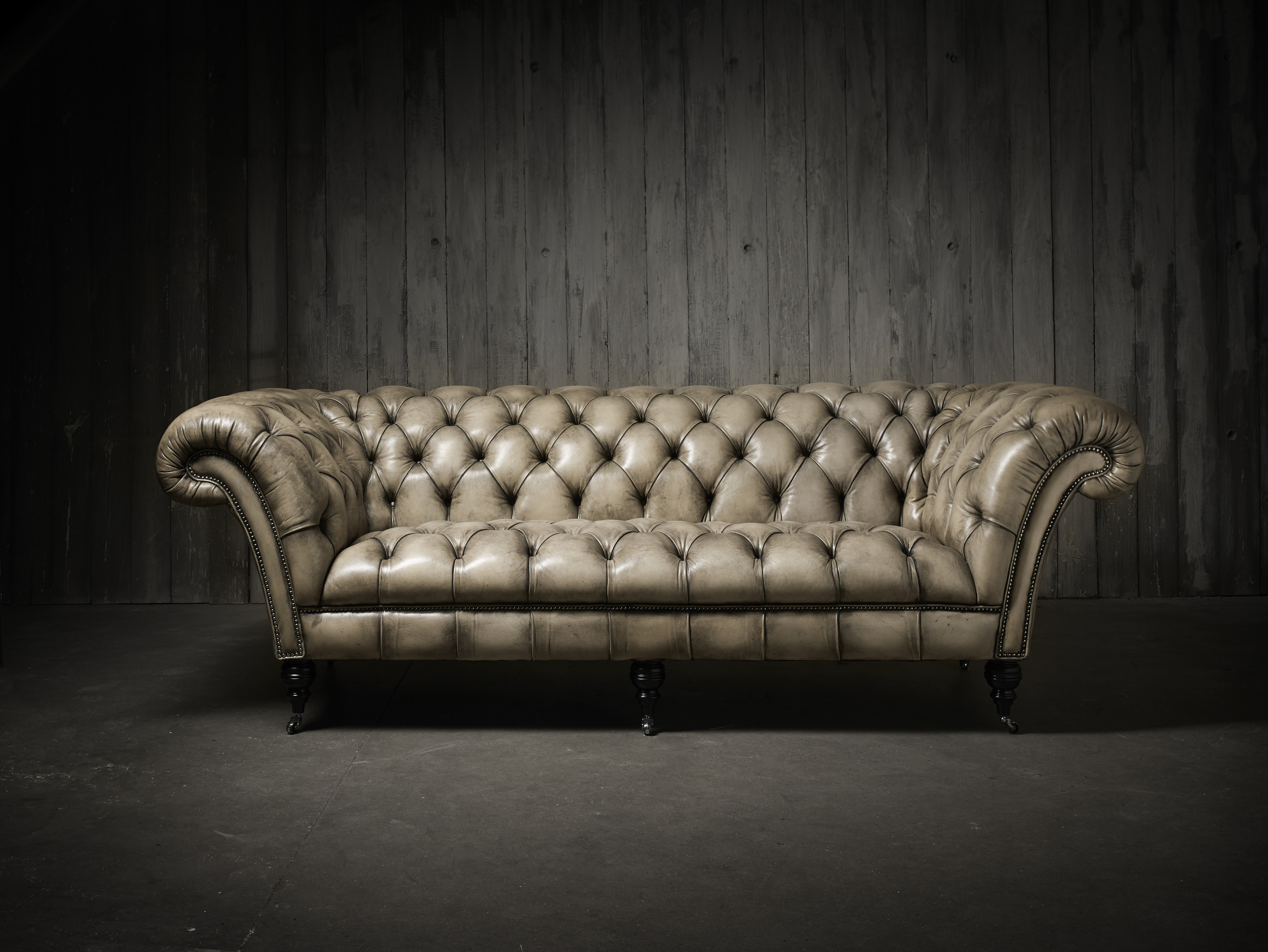
While many brands pay lip service to notions of integrity and craftsmanship in their work, English upholsterer Fleming & Howland is a true champion of these values. Known for its iconic Chesterfield sofa, the brand has a deep dedication to delivering the very best in bespoke British luxury – not just domestically, but worldwide.
For Managing Director, Paul Fleming (pictured below), producing properly with time-honoured artisan skill is in his and the brand’s DNA. “We like to think of ourselves as heirs to these age-old techniques,” he says. With a storied legacy that dates back to 1780, it’s easy to understand why there’s such a high value placed of certain ideals within the company.
Upon taking over the business, Paul was convinced of a new, more elevated approach for the business that echoed the spirit and taste of smaller, yet highly-skilled European ateliers. Adopting a direct-to-consumer model meant debunking the higher volume, mass strategy the company had been used to in the 1970s and 1980s. Crucially, though, it meant reviving some of its founding craftsmanship principles.
It’s a move that’s proved wholly justified. Combining its revived low volume, high profit structure – powered by British design icon, the Chesterfield – has meant fruitful results in pound, positioning and perspective, both in the UK and around the world.
Fleming & Howland is enjoying considerable growth in the US in particular. For Paul, there’s an appreciation of classic British culture and heritage across the pond, and the evocative, timeless silhouette of the Chesterfield in particular speaks to that appreciation. In the brand’s direct-to-consumer (DTC) approach there’s also an ease of communication that resonates well with customers; nurturing relationships and garnering extremely positive feedback.
“Imagine selling a sofa to someone in California, dealing directly with them – there’s no middleman,” he says. “It’s so efficient, the margins are wonderful and the appreciation of our work feeds straight back through to the factory. Makes it all worthwhile.”
As well as a quintessentially British taste that resonates internationally, he also states that localisation of content when the business first changed to a DTC strategy was crucial to driving export - initially in Europe. “Our first real taste of export was with the French,” he says. “As soon as we localised our website, brochures and marketing into the local language we turned a corner. They really do appreciate the artisan side of furniture. If I was to give any advice to anyone starting up, it’s to localise.”
Manufacturing in the UK is not easy to maintain – it takes integrity and passion, and it means certain sacrifices. Preserving brand message and values is imperative too, particularly when scaling up and scaling out. On the importance of ensuring their made in Britain principles, Paul is steadfast: “The last thing on my mind is to outsource any part of the production process because of that control. We must protect our bubble. What I’m realising now, more than ever, is that you have to double-down on quality and be confident with your pricing. Never discount.”
It’s clear that the brand’s international clients associate Fleming & Howland with a sense of prestige and sophistication that aligns with the classic image of British heritage and culture. In addition to this, Paul tells us, in his experience the universal driver seems to be, “to have something that you can’t get anywhere else.” He adds, “People don’t just buy our furniture, they are looking at it very much as a long term investment.”
In opting for a no-middleman, truly bespoke approach, it encourages something fundamentally important: to buy less, but to invest wisely in things that will last – a sentiment that is shared by any modern luxury consumer wherever they are in the world.