Torsten van Dullemen on Mandarin Oriental's creative approach to sustainability

Sustainability Stories
7th March 2024

Walpole: You started your career in front-of-house, working up to the position of General Manager and Group Director of Sustainability. What prompted your interest in the environment?

Torsten van Dullemen: My biggest inspirations have been my children, now aged 19 and 21. From their earliest years, they instilled in me a deep appreciation for sustainability. Our time spent in Asia, where we were intimately connected with nature and witnessed firsthand the impacts of climate change on local communities and biodiversity, shaped my perspective. As a luxury operator, I felt the responsibility to contribute positively.

During my tenure in Hong Kong, I engaged in frequent discussions with the corporate office about sustainability. I was driven to demonstrate that sustainability and luxury can coexist harmoniously. This led to the implementation of innovative initiatives at one of the most luxurious hotels in the region. For instance, we repurposed plastic bottles into our Christmas tree and transformed discarded items into tasteful canapés for a cocktail reception. These initiatives were just the beginning.

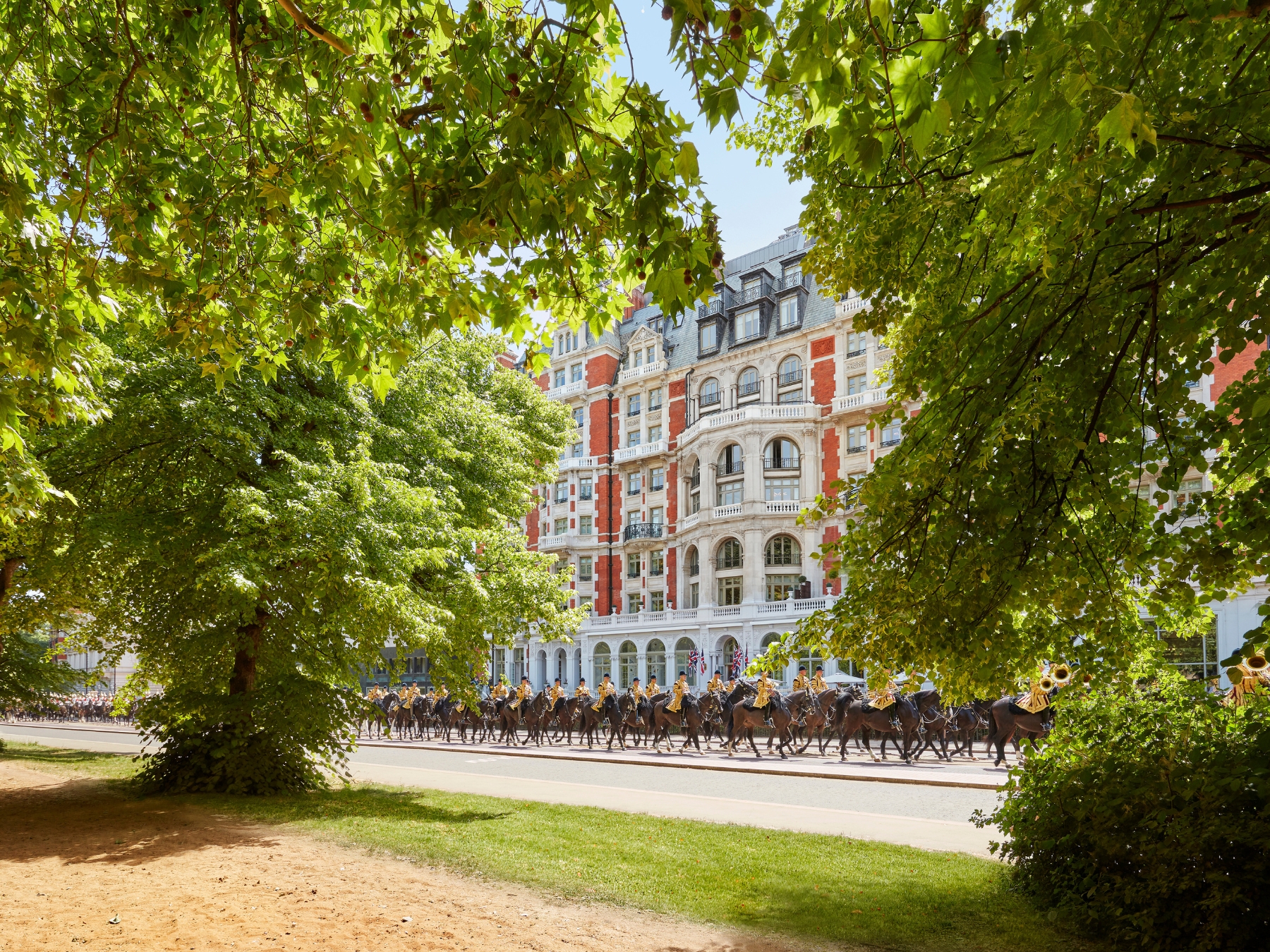
When I joined Mandarin Oriental Hyde Park, London, we took significant strides forward. We completely eradicated single-use plastics and became the first hotel to remove all endangered species from our menus. These accomplishments fuelled my passion further.

When the opportunity arose to serve as Group Director of Sustainability, I couldn’t say no. The chance to drive sustainability initiatives on a global scale for a prestigious company like Mandarin Oriental is both a personal and professional honour. I am committed to making a meaningful impact, leveraging my experience and dedication to advance sustainability practices worldwide.

What is the biggest sustainability achievement of the last year, and how does it fit within your broader sustainability strategy?

I am incredibly proud of contributing to a culture that attracts individuals both within and outside of Mandarin Oriental. It is a privilege to inspire those around me. There is a great resource of energy in our guests, our suppliers, and our stakeholders, who all want to help us towards our goal – people have taken their own initiative and are 'pulling the cart' faster than I could ever imagine.

How do you communicate your sustainability strategy to your guests and have they given you feedback on this?

The concept of luxury has evolved over the last decade, which is a crucial development in guests' responses. Luxury used to be more closely associated with excess; now, the idea that sustainability and luxury cannot coexist has gone. In fact, sustainability has become a crucial element of luxury.

Lately, we have expressed our sustainability priorities in some wonderfully creative ways. Our two Michelin star restaurant, Dinner by Heston Blumenthal, has created a lunch menu that explores the sustainability practices of past societies and embraces an approach to food that minimises waste. Across all aspects of the hotel experience, we are becoming more comfortable with integrating sustainability into our storytelling. The next step is to engage our guests in our sustainability process: how can Mandarin Oriental help guests to choose more sustainable options on our menus and at our spa to ensure that their footprint is as light as possible?

Batalia Pie from The Luncheon menu at Dinner by Heston Blumenthal

What is the biggest challenge for Mandarin Oriental Hyde Park when it comes to sustainability and how are you working towards a solution?

Our greatest constraint is that we are just one step in the ladder. Everything we engage with has a process that begins much earlier. Where do we get our uniforms from? Where do we get our fresh produce from? How can we make sure that everybody that we deal with in our various supply chains works together towards the same goal? Sustainability is a global problem, but, unfortunately, the world isn't set up to solve global problems – we're governed by countries, and every country has their own priorities.

There isn't yet a global sustainability standard for the hospitality industry. As a result, we have to collectively acknowledge that we don't have most of the answers yet, and that's ok. We know the general direction: we want this world to exist for much longer and, therefore, we need to start problem-solving. Thankfully, there are a lot of helpful organisations. Mandarin Oriental follows the United Nations Global Compact - an agreement which encourages businesses and firms worldwide to adopt sustainable and socially responsible policies, and to report on their implementation. We also recently acquired Global Sustainability Tourism Council recognition, which certifies the sustainability of almost half of the Mandarin Oriental Hotel Group. We work together with a consultancy called GreenView that helps us make sense of our carbon footprint, identifying the simple changes we can make, and the more complex challenges.

We must continuously update our own definition of what it means to do the right thing, and to continuously educate ourselves. We can only do this with the help of others and the support of our guests, suppliers, owners, and the organisations that are set up to facilitate the dialogue.

Is there another luxury company’s sustainability strategy that you find particularly inspiring or creative?

Somebody who really inspires me is King Charles. He has always been ahead of the curve and at the forefront of the the discussion around sustainability. When I was Food and Beverage Manager, we used to buy vegetables from his farm at Highgrove.


What’s a great resource you’d recommend to a peer in the luxury sector that has inspired you on your sustainability journey?

Firstly, I would like to highlight Juliet Kinsman, she is at the forefront of sustainability journalism, and she helped us with our annual sustainability report. Sue Allchurch is UN Chief of Outreach and Engagement who helps companies like us to not only follow the UN Global Compact, but through their learning academy and community, she accelerates collaboration across companies, countries, governments, and industries. She is doing enormous work.

The suppliers we use, really inspire me. We are surrounded by people who are willing to proactively work with us, and to promote seasonality, to use reusable packaging, and to use electric transportation. All our suppliers are incredibly open to engage with us to do whatever it takes, to be more sustainable.

What’s one thing the British luxury sector doesn’t talk about enough when it comes to sustainability?

I have most of my suits made, and some people may think it’s pretentious, but they last over a decade. Often in the luxury sector, changing trends encourage customers to buy new things often, when the things they already own are still in perfect condition. It’s not just the throwing away, but it’s the fabrication in the first instance. It’s okay to enjoy luxury – we want you to enjoy luxury – but do it responsibly. That is the responsibility of luxury companies, not just the consumer.

Visit the Mandarin Oriental Hyde Park, London Walpole member profile

Enquire about Joining

Forename*
Surname
job title
email*
Brand*
TURNOVER
message*
Thank you. This form has been submitted

Membership Fees

Membership Tier
01
02
03
04
05
Brand Turnover
£5-10m
£10-20m
£20-40m
£40-100m
£100m+
Membership Fee
£7,000
£10,000
£15,000
£22,500
£36,000

Membership Guide

Please provide your details to download this document

Forename*
Surname
email*
SUBMIT
Thank you. This form has been submitted
Oops! Something went wrong while submitting the form.
Get the latest luxury talking points, sector news and industry insights in your inbox each day by signing up to our newsletter, the Daily Luxury Digest.

Daily Luxury Digest

Sent every working day, the Daily Luxury Digest is your essential news source for the latest developments in the luxury sector both in the UK and around the world.

Thank you! You have been subscribed to the Daily Digest