Forty years ago, Peter York, a writer at Harper’s & Queen magazine, and Ann Barr, the deputy editor, immortalised “Sloane Ranger” in a book inspired by Lady Diana Spencer’s style before she became the Princess of Wales. It described a tribe of upper-middle-class Londoners who lived and socialised around Sloane Square.
York says, “Ann Barr’s and my original picture of them in The Official Sloane Ranger Handbook, published in 1982, was of an upper-middle-class world, conservative and fairly homogeneous, united by old attitudes and institutions.”
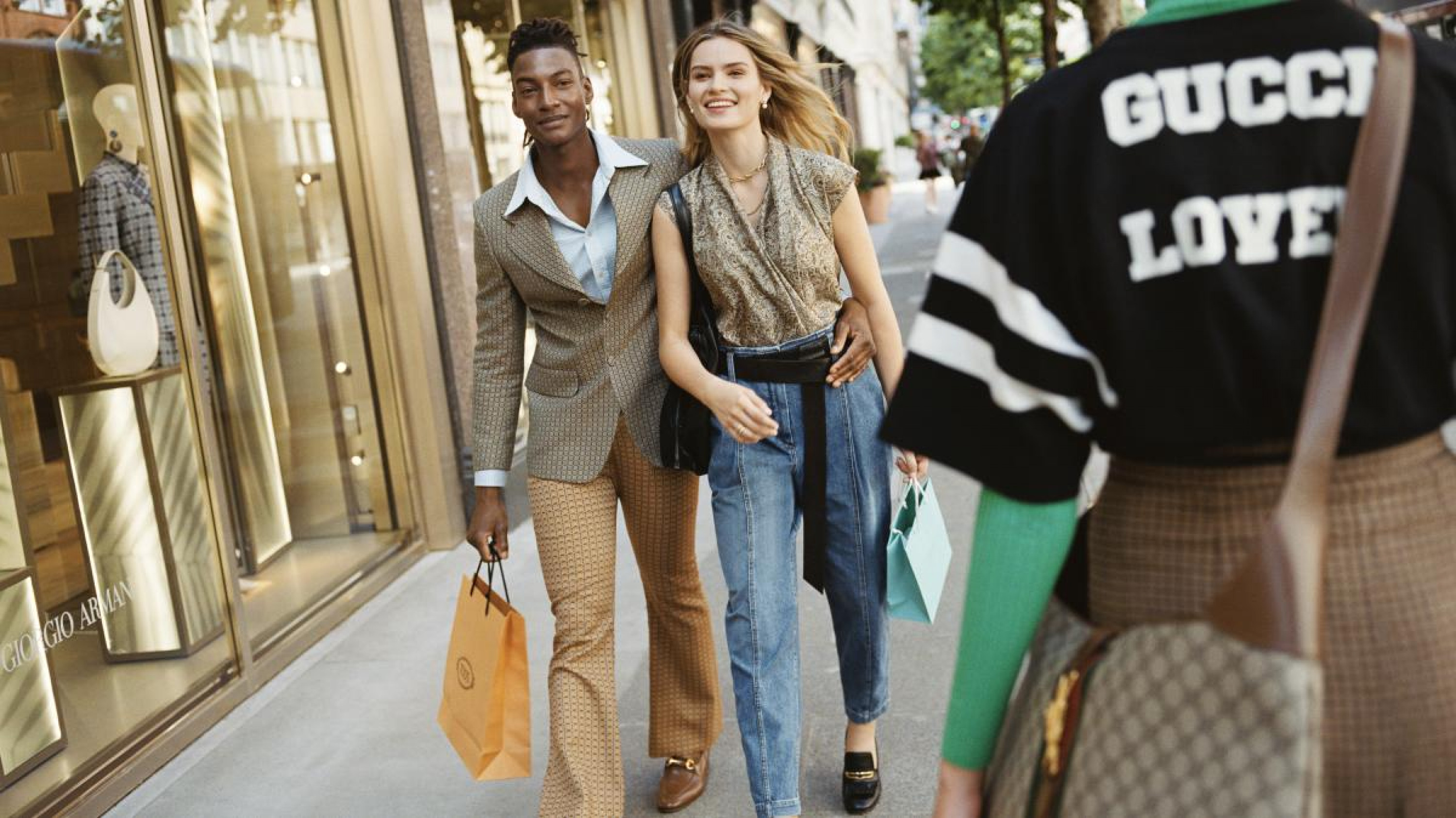
In this respect, today’s Sloane Rangers have little in common with their ancestors. Understated conservatism has been replaced by an encyclopaedic knowledge of luxury brands, and their habitat has become a cornucopia of international design and boutique homegrown labels. And as concerns about the pandemic recede and people rediscover that shopping is not purely a transaction but also a pastime, Sloane Street is working hard to give us good reason to get out and shop.
The evolution of the luxury shopping experience was well under way before coronavirus forced us all to stay inside. The off-the-peg global temples to high-end consumerism had begun to give way to an approach that favoured local character. Paul Smith was early in his determination to make his shops chime with the area – a London townhouse would do for Notting Hill, while a pink concrete sound-stage-like construction would bring his brand of quirky British design to Los Angeles.
The rise of shopping online forced the off-screen purchasing experience to be different and memorable. Gucci opened a shop and museum in Florence, in a palazzo dating back to the 14th century, where almost all the products are exclusive to the store and there is a Massimo Bottura restaurant. Gucci’s boutique in Soho, New York, has a bookshop where customers can pick up the perfect tome for their coffee table.
On Sloane Street, there appears to be a recognition among the designer alumni that if bricks-and-mortar retail is to survive, let alone thrive, it must be compelling. Gucci is here, too, at No 18, whose theatrical interior, all vintage rugs, velvet mannequins and wooden cabinets, is complemented by the Gucci DIY personalisation service and a discreet VIP room.
It could be that Covid has helped us to appreciate the joys of spending time browsing in person, trying things on and breaking a shopping trip with a coffee or a meal with friends. Brunello Cucinelli, at No 159 Sloane Street, says, “At this time we are witnessing a welcome comeback of local customers, driven by the desire and pleasure to resume a friendly relationship with our sales staff.” And, as you might expect from this Italian designer-philosopher, who is given to espousing the virtues of humanism, he believes that human interaction holds huge value. “Here, then, is the great value of kindness: we would like the people staffing our boutiques to be always polite and amiable so that we can be prompt advisers to our customers and make them feel at home and at ease.”
Domenico Dolce and Stefano Gabbana, at No 175, agree. “The boutique is the place where human interactions take place and, for us, this is an irreplaceable added value,” they say. Like Cucinelli, they see stores as places that can make people feel “at home and at ease”. A physical shop is also a home to the brand, the key to introducing customers to the universe of a label. A jacket online is a product to be bought. A jacket in store is an experience. “We are absolutely convinced about the importance of embracing the multisensory experience that our customers can live in the physical stores: for us, this is the place where the Dolce & Gabbana identity and our distinctive Italian spirit is fully expressed,” they explain.
This shopping district has its roots in the late 18th century, when the 1st Earl Cadogan allowed Henry Holland, Capability Brown’s architect son-in-law, to develop almost 100 acres of fields on his estate in Chelsea. The area, then known as Hans Town, included Sloane Street, Sloane Square and Cadogan Place. It was a fashionable area, with locals well catered for by milliners, drapers, hosiers and tailors. Thus the blueprint for a luxury shopping destination was established. To this day, unlike many of the world’s fashion retail destinations, Sloane Street boasts a high proportion of locals as customers (more than half). This local spirit is echoed by the presence of boutique British labels including Anabela Chan, Cassandra Goad and Emilia Wickstead alongside international behemoths such as Dior, Prada and Saint Laurent.
One long-standing fan of the street is Giorgio Armani. “I opened my flagship store on Sloane Street in the Eighties because I saw it as an elegant shopping boulevard, both very Chelsea and British, but with the grandeur that you might find in Paris or Milan – perfect for Giorgio Armani,” he says. “Then a couple of years ago I decided to add an Armani/Casa interiors store to my fashion boutique, and today they sit side by side and are interconnected. This is the only place in the world where there is this combination of Armani stores, and it reflects the clientele, many of whom are local and so are looking for interiors for their homes.”
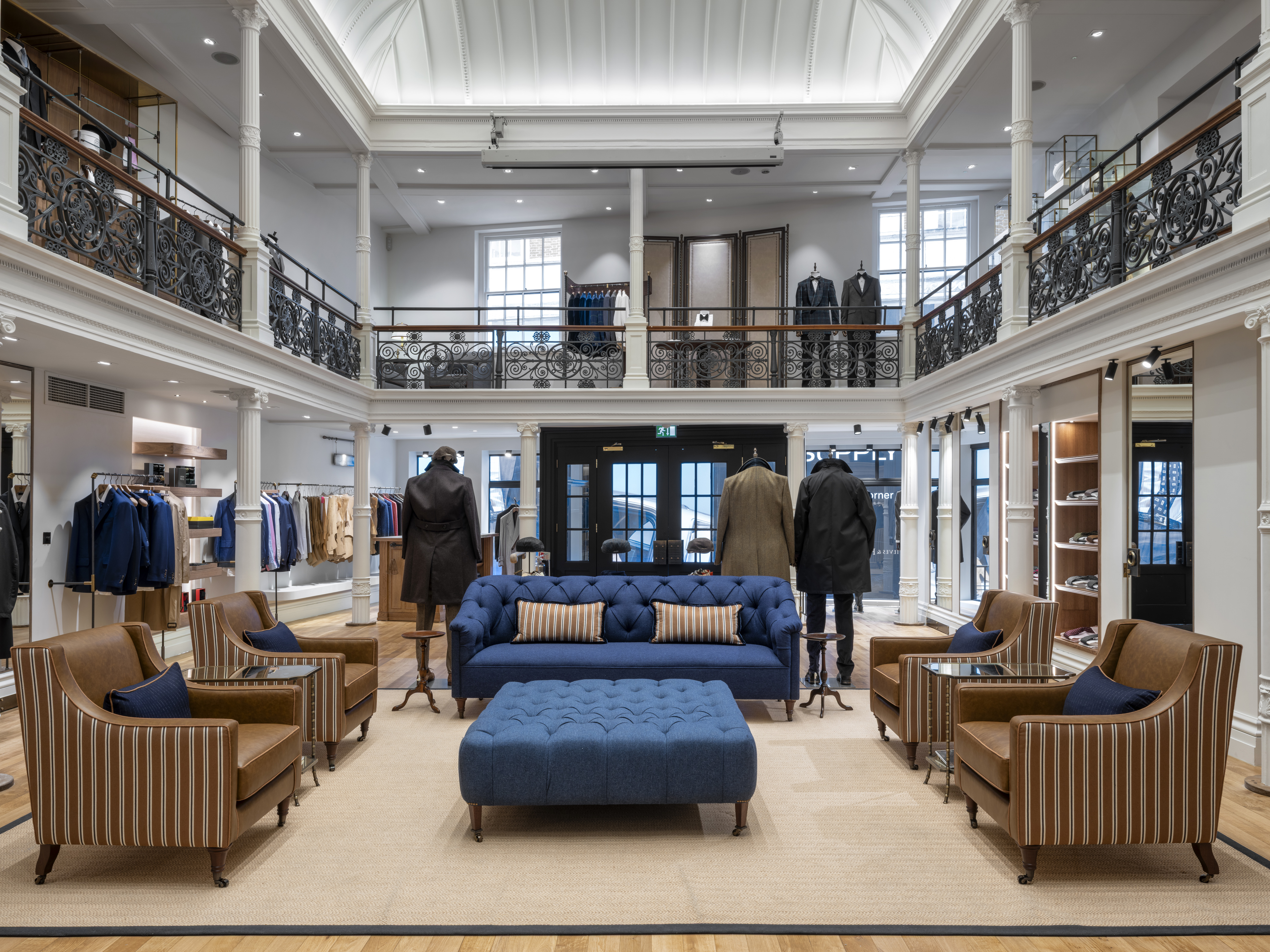
Perhaps if you have a local and regular customer base it empowers you to try new things because you can assume a degree of loyalty. The designers on Sloane Street certainly seem to be ringing the changes. Anya Hindmarch has just opened Anya Village, which has an all-day café, bespoke gift shop and a flexible space that can be anything from a hair salon to a greengrocer’s. Burberry has launched a flagship at No 1 Sloane Street, designed in collaboration with the architect Vincenzo De Cotiis. The store marks something of a shift away from the brand’s recent championing of the digital sphere: the tactile ceramics and concrete and the mohair carpets focus on a connection with the physical world.
At the same time the American designer Virgil Abloh’s Off-White label has opened its only store in the UK at 32 Sloane Street, while Ralph Lauren has a new place too, at 32-33 Sloane Square. Meanwhile, some designers that have been here for years are busy doubling their space (Balenciaga and Emilia Wickstead, for example). Others are refurbishing and reimagining their stores in search of footfall instead of clicks, including Hermès, Louis Vuitton, Chanel and Tod’s.Services on the street have been launched to fit around customers’ lives: personal shopping, after-hours appointments, kerb-side pick-up, a rewards scheme and even a try-it-on-at- home facility. And the landlord, Cadogan, is spending some £40 million widening the pavements, planting trees to green the place and doubling the number of restaurants on the street to give people a reason to spend more time there. Already there are new places to eat and drink, such as the recently opened Beaverbrook Town House and Jumeirah’s refurbished Carlton Tower hotel.
Donatella Versace (179-180 Sloane Street) dressed Princess Diana during the original Sloane era, and sees a very simple reason why the luxury boutique should survive. “If you make beautiful, perfectly tailored, statement dresses like Versace always has, you need to try them on,” she says. “You can’t get fitted for the red carpet online.” Sometimes someone just needs to tell it like it is.
sloanestreet.co.uk
cadogan.co.uk