Read the other articles in our series...
In the first instalment of this series, I covered the case for investment in brand. Essentially, it sought to make the case for investing in brand building – in other words, the long-term strategic and creative process of creating and nurturing audience perceptions, loyalty and growth of your brand through culture and commerce. But what exactly does that mean, and how do you go about it?
The most resilient and impactful brands are built on solid strategic and creative foundations - an intentional blend of commercial direction, purpose and creative storytelling, giving brands a meaningful role in the lives of their audience that goes way beyond the purchase moment.
There’s no hard and fast rule book – in fact, I’m fairly against a prescribed formula or process as every brand and every business/organisation is so different – but there are some basic principles and big questions that are foundational regardless of size, shape or age that ensure you’re setting up for long term success.
Whilst foundational, these big questions are never completed, done and packed away never to be considered again – you have to view your brand as a living organism that needs constant monitoring, nurturing, recalibrating and assessing. Especially as more people engage, react and begin to shape the role your brand plays in their lives. Periodic reviews and refinements should be fundamental part of the brand building process.
First and foremost, much like anything in life, you have to make sure you’re building from solid strategic foundations, whether you’re a luxury brand with 150-year heritage or a new brand about to launch.
"I don't design clothes, I design dreams." – Ralph Lauren, designer
Defining a brand strategy essentially means making a decision on a direction and getting clear on a few key things to help realise it...
That sounds obvious but is often the least considered. It’s no great revelation that in the luxury realm especially, people are not driven solely or even primarily by rational decision making. It’s the irrational and the intangible but that doesn’t need to lack substance or rely on provenance stories. What’s the lifestyle, dream world, mission, plight you’re inviting them into?
“We don’t value things; we value their meaning. What they are is determined by the laws of physics, but what they mean is determined by the laws of psychology.” – Rory Sutherland, Chairman, Ogilvy
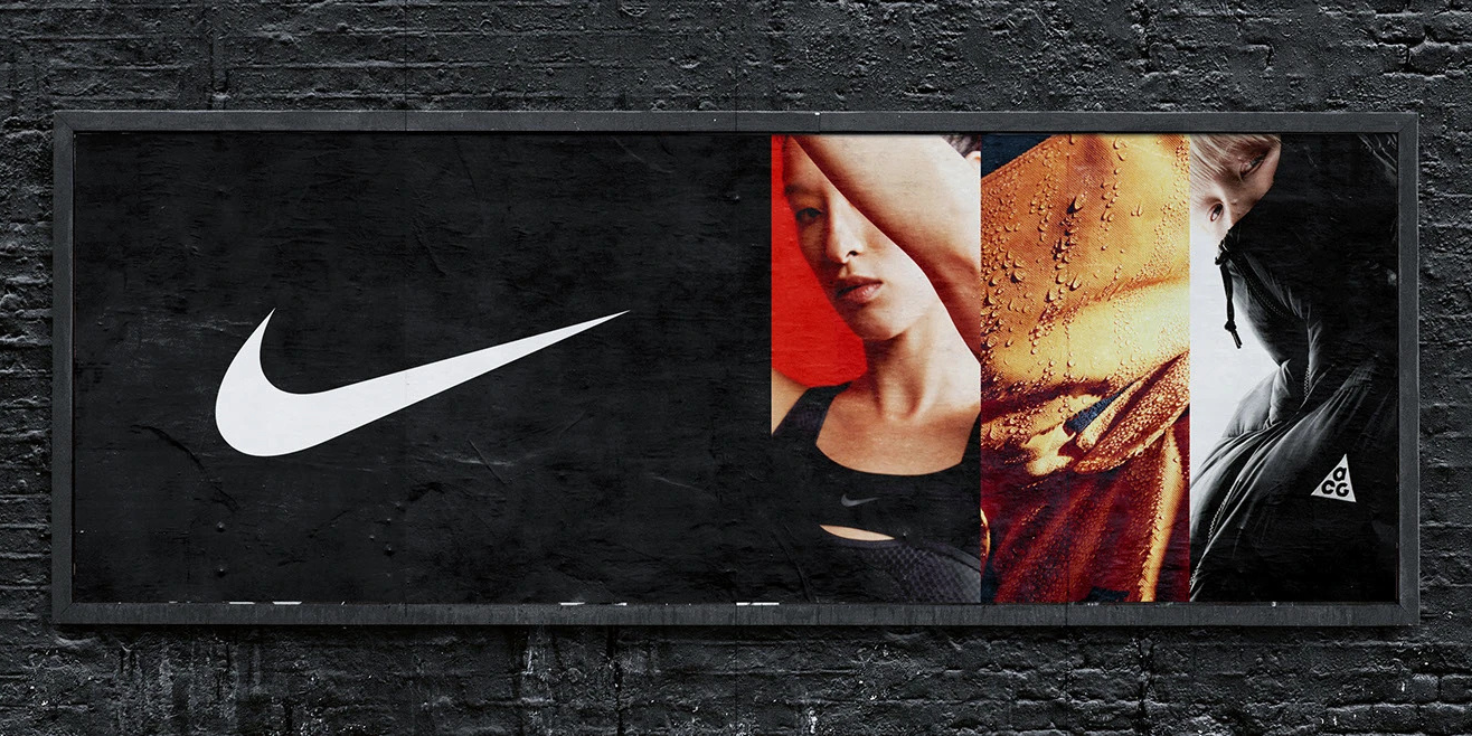
For me, Nike still has one of the strongest and clearest brand strategies out there. Most brand strategy decks I write and most workshops I run use the Nike example as inspiration being clear on what you do and why, using Simon Sinek's Power of Why and Golden circle model as a broad framework.
I should say, there are lots of different models out there, all with strengths and weaknesses, the key is simplicity and executability that is applicable to your organisation and the specificity within. This model feeds into a broader strategic framework (more on that later).
“Bring inspiration and innovation to every athlete in The World*" (*if you have a body you’re an athlete)
The Nike strategy is emotive, can inspire differentiation, and has the ability to motivate audiences as well as internal stakeholders to not only get up in the morning and come to work, but believe in something beyond a commercial transaction. Most importantly, the brand can inform creativity, from tone of voice to product innovation, with a story that goes way beyond the realms of just selling sporting goods. 'Hello Nike Running Club' for example.
(Note: Nike is also a cautionary tale of what happens when you don’t continue to fuel your brand, but more on that later).
It’s easy for the luxury category to focus on heritage, provenance and quality, but these are no longer enough in today’s climate. According to a recent Bain-Altagamma report, the global luxury sector is currently facing its most far-reaching disruptions and biggest potential setbacks for at least 15 years amid mounting economic turbulence, and complex social and cultural shifts completely changing attitudes toward luxury consumption.
“People don’t buy what you do, they buy why you do it.” – Simon Sinek, business speaker and author
Many brands confuse the 'why' with a CSR strategy or philanthropic ‘purpose’. Naturally, your brand's ‘why’ should certainly inspire both of those, but shouldn’t sit separately to the overarching strategy.
In tandem with defining what you do and why you do it (even at product innovation stage) is the importance of defining your target audience – understanding them as people as opposed to marketing profile or data points – and making it a continuous pursuit. I covered this in detail in an article I wrote for Walpole on Gen Z last year.
The industry makes it very easy to consider audiences as sweeping generalisations; cohorts to be clumped together who all think, feel and act the same way. Of course, certain assumptions have to be made – especially when, for example, buying certain media placements, innovating for certain profiles or engaging in certain partnerships – however when it comes to defining your story and how to articulate it, it is incredibly important to go beyond the obvious. You need to understand your target audience as people first, not segments or cohorts.
That brings us on to the notion of ‘target’ audience itself. Luxury brands especially have a much bigger playground; the ability to inspire the 15-year-old girl reading a magazine as much as the 44-year-old looking to make a purchase. Both are equally important and in the world of brand building (versus direct sales activities) its important to consider the audience in two broad ways:
Your cultural audience. These are the people who buy into the world your brand is creating: they follow you on social media, sign up to your newsletters, and buy tickets to brand events that are accessible. This includes people of influence. This bucket won’t necessarily immediately add to your bottom line, but they will add to the overall brand value, reach and influence. It’s also a bucket that’s an investment in your future: younger generations who will have all the purchasing power in the next ten to fifteen years.
Your commercial audience. These are people actively in the purchase cycle, now and for the immediate future – people for whom engagement has a higher probability of yielding a purchase.
The two can overlap, but it's easier to justify brand-led activities if you're clear about what its role is.
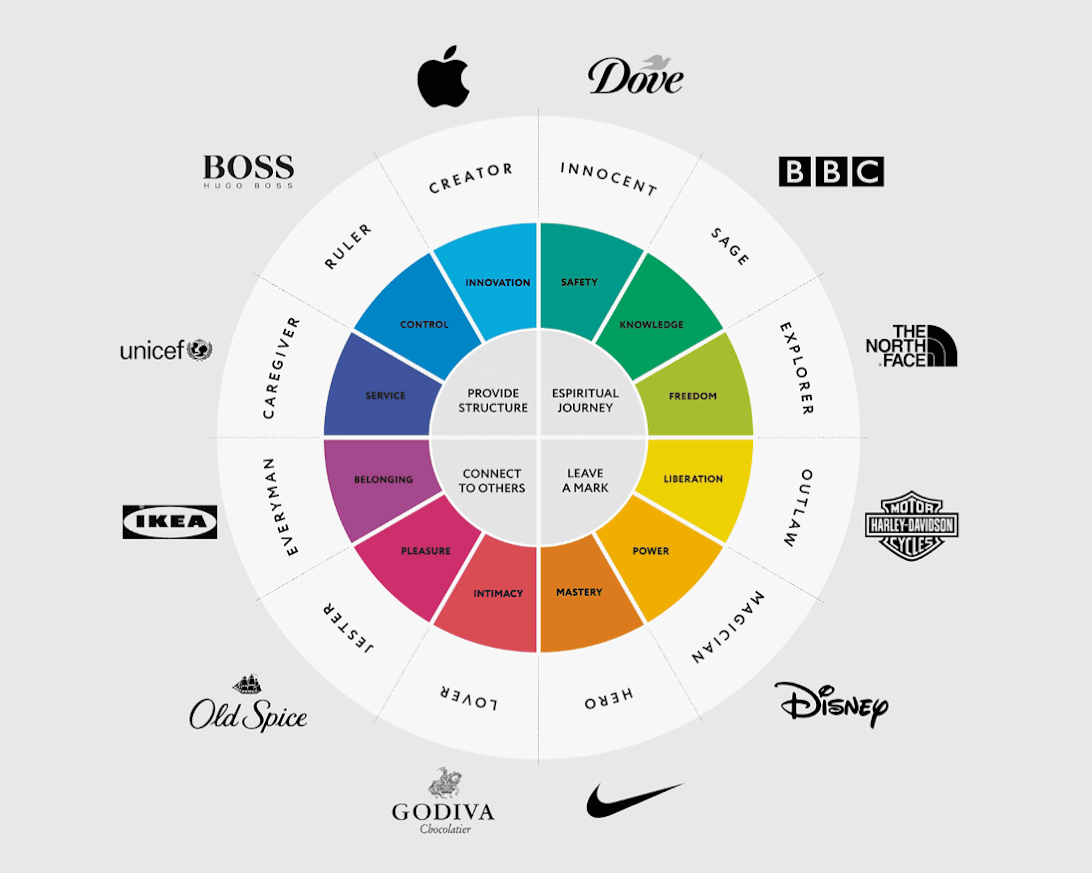
You need to define a clear tone of voice and broad behavioural principles as a brand. This is often forgotten until creative development begins, but it's a crucial part of the process which begins to bridge with creative development, and is a key differentiator in defining which how and where it shows up in the world. Defining your brand archetype is often a good place to start. Brand archetypes can provide a handy framework based on human psychology to help your company build a worthwhile and valuable relationship, using 'Jungian archetype theory'.
In 1919, Swiss psychologist Carl Jung developed a set of common personality archetypes. Jung believed these were innate and hereditary, representing a model image of a person that transcends language, culture and time. As individuals, we can all inherently recognise and relate to the archetypes. They play a role in influencing our behaviour on a subconscious level, leading to typical behavioural patterns, desires, values and motivations all driven by a single dominant goal.
Again, there are lovers and haters of this model – and I’m definitely not advocating a literal commitment to the framework – but it can serve as inspiration in workshop sessions to define your tone of voice and behaviour as a brand.
Lastly, it's important to consider your brand architecture, whether you have two products or 500 products, ensuring the strategy has been considered across the board is crucial. An architecture is essentially a strategic framework that defines the relationship between a company’s various brands, products and services, helping to organise a portfolio and establish a clear hierarchy, creating a cohesive experience for audiences. The importance lies in clarity, maximisation of brand equity, mitigation of risk and maximisation of reach. Common models include creating a branded house (e.g. Google), or a house of brands (e.g. Unilever).
Equally applicable for brands of a much smaller scale is being clear on the role of your product portfolio if you sell more than one thing, and separating different products for different markets and needs, linking equities where valuable. However, it’s crucial not to overcomplicate this.
As brand leaders, you need to invest in brand building: it yields cultural and commercial gains for the long-term and builds valuable equity. To be able to do that, first and foremost you need to begin with setting strong strategic foundations:
Who you are and what you do,
Who your audience is and who they really are,
Your tone of voice and brand behaviours (what's the register, and where and how do you show up ?),
And, lastly, your architecture: being clear on the role of each of your products, businesses, and sub-brands, no matter how small or large you are.
This can feel like a lot, especially if you’re a small brand with a small team or a big brand with a lot to manage. The art is in the distillation and I often like to get to a strategic one pager that then serves as ‘The North Star’ to guide the creative development. The below is an example that can be adapted as per your specific needs.
The audience section should for the purposes of this summary be a psychographic label/ definition that gets to the heart of what unites all your various audiences groups, not a demographics or socio-graphic overview.
So where next? How does all this actually inspire creative development? How do teams work together to deliver impactful work and what is impactful work? How do you continually assess and recalibrate the brand’s foot print?
All this to come in the last of the series in November.
I hope you tune in.
P.s Back to Nike’s cautionary tale. Nike is investing heavily in brand marketing under its "Win Now" strategy to re-establish its connection with audiences and return to growth after a period of soft demand and declining revenue where they focused on tactical and short term sales activities to drive immediate returns on the bottom line but in so doing, began eroding their equity at the top. Proof that even with a strong strategy, if you don’t execute with the right mix of activities that build brand and drive sales you’ll lose resilience in the long term. This Forbes article is a good overview. Enjoy.
Nimi Raja has had a storied career working with iconic brands such as Balmain, Augustinus Bader, Rolls-Royce, Google, the Guardian and De Beers, as well as working with established talent in building their ventures from Rankin to Gillian Anderson and, most recently, acclaimed Bollywood veteran Anil Kapoor. She has her own creative consultancy, Lola6, which works at the intersection of entertainment, talent and brand.
Daily Luxury Digest
Sent every working day, the Daily Luxury Digest is your essential news source for the latest developments in the luxury sector both in the UK and around the world.