Read the other articles in the series below...
Part One: Why you need to invest in your brand
Part Two: How to find your brand's North Star
Here we are, the last chapter of my marketing masterclass – and possibly my favourite (though I think I have said that each time): how to ensure strategy inspires great creativity, what that looks like and designing a team and/or organisational structure to deliver.
I realised very early on that I'm a strategist that likes – no actually needs – to be involved in the creative process (so much so, that I lasted 18 months in management consultancy before moving to marketing). I don’t separate the two disciplines, especially in today’s ever-evolving and complicated landscape that is ultimately rooted in inspiring people (real people) to think, feel and/or do something. In fact, I’ll go as far as to say in the last two years I’ve had somewhat of an identity crisis as “strategist” no longer does justice to how I think or work. But more on my existential half-time later.
Back in 2006, I was still a very green strategist, in the very early stages of my career, and I read a book that set the foundations for how I think and how I believe brands should think: The Brand Innovation Manifesto by John Grant. At the time I was also working at St Luke's, the agency where Grant cut his cloth and shaped some of his most pioneering thinking. St Luke's was also the place that did the same for me, based on one central tenent...
Strategy and creative are bedfellows
A brand cannot be built without strategy or creative; both are in service of the cultural and commercial impact a brand has. The Brand Innovation Manifesto took that conceit into a world beyond advertising. As Grant himself said, "A brand is a (cluster of) (strategic) cultural ideas" – molecules that were essentially built on four main principles. (Remember this was in 2006, so he was way ahead of his time).
The four key ideas in this book are as follows:
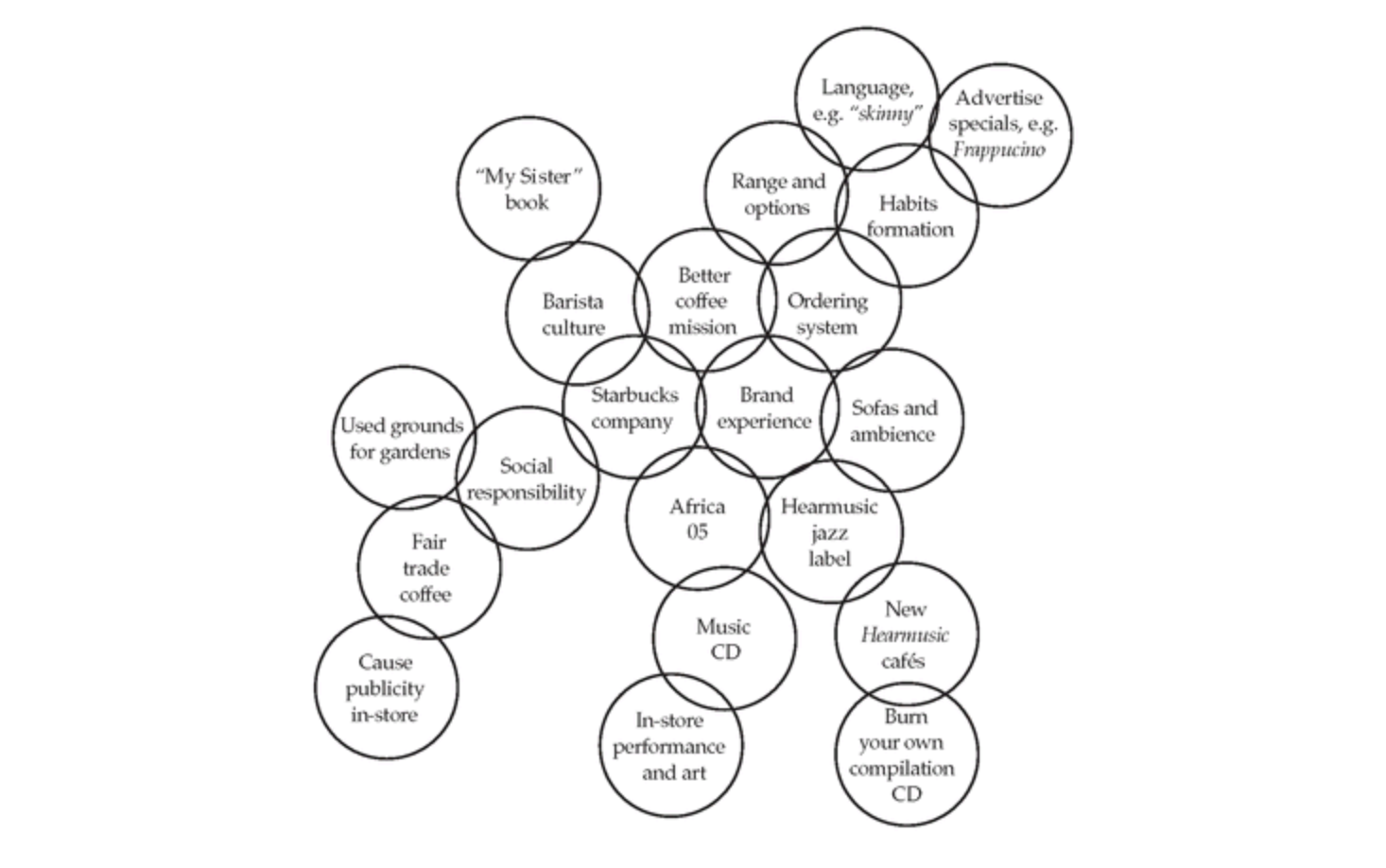
A brand is nothing abstract, like some mysterious essence – it is simply the sum of the great ideas used to build that brand. That starts with great product ideas, like the basic Starbucks experience. But it can extend into all sorts of cultural additions, like Starbucks and Fair Trade, music CDs, Africa 05 and so on. All of these initiatives are real: making a difference, tangible, close to people's lives. None is there "for image".
Over time, the brand becomes like a molecule, built up of successive and connected ideas. Each new idea can add to a brand's interest and keep it alive in people's minds. When you look at a brand like Nike, what you need to consider is not (as many have claimed) some timeless values to do with "winning", but rather the actual cultural ideas that Nike has created, including Run London, Nike Free, Nike iD, plus other "brands" it is associated with, like the Brazilian soccer team.
The way to manage brands is coherence, not consistency. Consistency is the idea that you need to make your marketing all look the same. But the most interesting brands, like people, are authentic (true to themselves) and can afford to be freer in their range of activities. Only liars need to be consistent. The ideas do not even have to be about the brand. They can be about bigger issues (Dove and the Campaign for Real Beauty) or can be ideas with an independent existence, like iPod with the rock group U2.
Brands, like stories, are supposed to have a point. Branding is a means not an end. And the molecular structure is still supposed to be coherent. It should be driven by a singular cultural logic (with a watertight business case). Otherwise you will end up with a ragbag of ideas without any unifying theme, ethos or purpose.
These four ideas inspired his ‘molecule theory'. As a young strategist, I was always obsessed with Starbucks for making CDs, signalling Christmas with its red cups, and creating a whole new language and culture around coffee. Grant’s model made it make sense – if the molecules were built around an intention (the strategy), that enabled people to be actively involved, engaged and interactive with the brand.
In the last 15-plus years of my career, this theory has held true and shaped how I’ve approached every brand I’ve worked on from Augustinus Bader to Balmain, The Guardian, De Beers and the likes of Mills & Boon and Turkish Airlines. More so in the luxury realm as it has the ability to transcend its product and a responsibility to go beyond the safe confines of legacy and craftsmanship.
There are still very few brands that do this well; it takes a commitment to a vision, a risk to justify spend that doesn’t always directly hit the bottom line, and a steadfast and authentic foothold in culture – authentic being the operative word.
Dishoom: a case study in authenticity
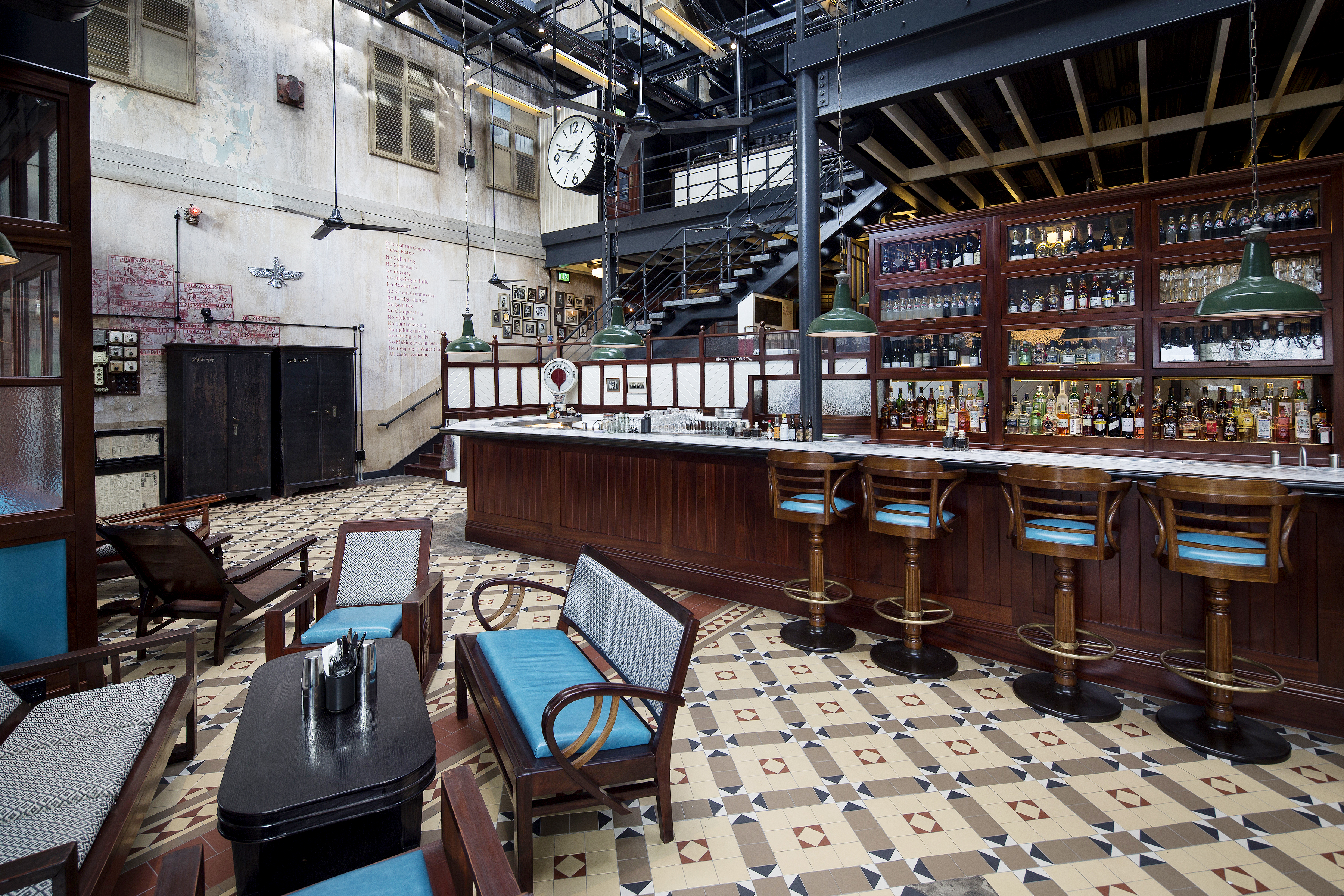
Dishoom is a brand that, whether by design or not, has lived the molecule theory from the outset. I’m an obsessive fan girl not only of the food (of course), but also of the brand world they’ve baked into every facet of their product experience from the design of the restaurants, the brand partnerships, their events and, more recently, their growth into new formats (see: the new Dishoom Permit Room concept). It still all stems from the same core.
Over a short but impactful zoom, I had the privilege of speaking to the brand's Co-founder and now Chair Shamil Thakrar about the vision, journey and approach to building this almighty cultural brand. I came away with some key learnings on how he’s built Dishoom so far, strategically and creatively, that I'm keen to share with you below...
Design creatively for profitability
“Firstly, my job was to create a concept, so I couldn’t really separate this creative concept from the strategy. For me, the creative concept and how you make money need to be the same thing, whereas I think people often look at it the other way (i.e. here’s a business model, we sell some stuff, here are the margins and we’ve got some brand building budget). That sounds terrible to me.”
Bake your marketing in
"For a while I used to say that marketing should be dead because the story should actually be baked into the proposition. Your product should market itself. That was the heady days of 2010/2011 when I immersed myself deeply into books like Purple Cow and Lovemarks, even Tipping Point. This was a moment where, of course, social media was new and cool and free – it was all organic. So, all you needed was to create something as remarkable as Purple Cow postulated, then it remarketed itself. So, from that point of view, if that's your way of thinking, you've got to bake the marketability into the proposition. Even though we have to work harder now, I still believe in creating a concept that inherently still has the story baked in. Our approach to each café is the embodiment of that."
Ask the right questions
"We wanted to be a Shoreditch/East London brand, so launching in Covent Garden was probably a mistake in hindsight. However, our second restaurant was Shoreditch and it's also where our HQ is today. We were working with a brand consultant at the time and I said to her, 'How do we get the hipsters in?'. We had thought a lot about our target market and the vibe we wanted to create, so I thought that was the way to look at it. In response, she quite rightly said, 'That’s a bad question. The right question is: how do you be your authentic self? Then the hipsters and, eventually, everyone else will come!' After that, that thinking directed every choice we made. For example, we put a ban on doing any marketing to the City and we worked on campaigns that would attract that creative hipster crowd credibly – such as including stories of the old cafes onto the plates – and went on to win prestigious awards in the marketing world."
Have a central tenent/vision
"All the development was very creatively led, but around a central vision or 'North Star'. We did some work with another brand consultant on how to articulate that and came up with our tagline, From Bombay with Love. While this was a good start, as time went by and the business grew we needed more – further principles that guided the business strategically and creatively, but that were still true to Dishoom. A central vision that that gave direction to the business, but was also inspirational and gave way to a company culture. That's when we developed our Articles of Faith™; principles that outline what makes Dishoom 'Dishoom' and why it works. They are our highly confidential secret sauce that has kept us on track whilst allowing us to explode out the experience all in service of our vision to create an inclusive, cultural brand that gives a new perspective on Indian culture. They have been written specifically to go beyond the generic wordplay ‘brand values’ can sometimes fall prey to."
Don’t create a world and narrative that just sells – go beyond advertising
"India is that one country in the world that's young and growing and getting wealthier, so Indian soft power is increasing massively. And yet, there seems to be a complete absence of Indian brands on the global stage that make the culture accessible or cool. So when you want to consume a little bit of Italy, you can buy a Ferrari. The UK has Burberry, Germany has BMW etc. There was no way for people to consume Indianness in an inclusive way – and that’s what we set out to do; make the culture cool, accessible, and excite the diaspora in the UK. Even with the chai, we’re taking something so symbolic and recontextualising it in the heart of Shoreditch where the aunties are next to the hipsters in a building with distressed walls. It just opens out the story and lets people in, on their own terms.
"Ultimately, the representation of Indianness is still limited. Our vision has been to create a cultural experience through the lens of a very open, secular narrative, which is inclusive of different religions and cultures, and creates a narrative that stems from understanding the history and rooting it in the present day.
"I think one benefit of being a founder-led brand is that you can have a very clear and distinct vision. You can do stuff which takes risks, but ultimately if it's in service of that core vision, you can’t go too far wrong.
"I am on the politics of capitalism – that’s what we do – but we’ve started with the love of it. That makes us authentic: I'm not trying to sell to you, I'm trying to bring you into our world. Even when we do an event that marks 75 years of partition in India, it's because, as a punter, we’re creating the narrative that contextualises who we are. But ultimately I'm cool with monetising it because I’ve started with the love first. You can’t fake that authenticity – you need to care about it, and you need to hire people who really care too."
I came away from my chat with Shamil enthused and (re)inspired by the impact brands can have creatively and commercially, but it doesn’t happen without consideration and design – especially in terms of getting the right people around the table. So to round out the creative development case and bring all three of our chapters together, I’m passing the mic to a brilliant strategist who was part of my team for two-and-a-half years. I hired him specifically for his ability to ensure strategy inspired creativity, his humanity, and for the way he went beyond the confines of a keynote presentation into the real world, Leo Kaspar Simonsmith.
“I have been lucky enough to work with Nimi on many brilliant projects. I’m sure she would agree that the transition from strategic thought to creative action tends to be both turbulent and satisfying in equal measure. Below are ten principles I come back to when embarking on this most perilous and exciting part of the journey of brand-building journey.” – Leo Kaspar Simonsmith
It all starts with empathy. The most powerful creative ideas come from a genuine understanding of what your brand, product, or service means, or could mean, for the human beings using them. This is the framework for everything else that follows.
Define the problem as your audience would. Translating business goals into the human language of changing what people think, or feel, or do will help reveal how creative output will make a business impact.
Creativity flourishes within constraints. So set parameters on your research that serve your direction instead of drowning it. You don’t need all the answers before you start creating.
You need vision, but you also need to be able to communicate it. Once you’ve figured out what you want to do, you need to work harder than you think to get people on the same page, whether that’s through a clear brief or great references. Your team can’t help you execute a vision they can’t see or aren’t inspired by.
Creativity doesn’t live in one department; it’s a conversation and a collaboration. Don’t let teams become siloed into separate functions. Sparking a conversation throughout your organisation helps align different ways of thinking to get to the best ideas out of the creative process. Get different disciplines around the table from the start.
Creativity thrives on simplicity. So embrace complexity and nuance as part of your process, but make sure that the final expression is single-minded and pure. Whether it’s a brief, copy or UX, clarity always wins.
Risk isn’t just a good thing, it’s the whole point. Creativity is inherently a risk, strategy is about creating upside risk. The creative process is about experimenting to end up somewhere new.
There are good answers, but never right answers. Creativity is about making choices, not chasing certainty. Trust your intuition to tell you when you’re onto something, and discard the rest.
Don’t overwork the clay. Every successful creation has byproducts, so don’t be tempted to hold onto everything you’ve gathered through the creative process. If something’s not working, strip it back and iterate.
Set the work free and learn from it. Putting out creative work is always a risk, and the job of measurement is both to see if that risk has paid off, and to inform what you do next.
Leo Simonsmith is the Director of Kaspar Studio, a strategic growth consultancy that partners with founders and in-house brand teams to elevate brand performance. His clients range from global names such as Bloomberg and Heinz to innovative startups shaping the next generation of business.
Thanks, Leo. Hopefully there were some digestible takeaways above to inform your thinking and development. I hope you’ve enjoyed the series. Until next time.
P.S. Back to my existential crisis. After some soul-searching (read: inability to let go of my core role and label as strategist), I’ve subsequently fully lent into the ‘multihypenate’ label, especially given my new world order that spans entertainment (film and tv), talent and brand-building. Much like today’s brands themselves, and the demands placed on anyone leading a brand building initiative.
Daily Luxury Digest
Sent every working day, the Daily Luxury Digest is your essential news source for the latest developments in the luxury sector both in the UK and around the world.