Why you need to invest in your brand

Editorial Features
26th June 2025
Luxury Marketing Masterclass is our three-part series where Nimi Raja, Chief Strategy Officer and Founder of Lola6, breaks down what it means to build a modern luxury brand in today’s increasingly complex, interconnected and fluid media landscape. This series will cover everything from developing brand strategy, audience understanding and creative development, to structuring and running a modern day marketing team – all the key facets a modern day marketer needs to be thinking about.

Read the other articles in our series...

The case for building a brand

This is probably one of my favourite things to talk about, write about, postulate about – basically not shut up about! It’s the reason I chose the career path I did, without fully understanding quite why I was so obsessed with certain brands. As an 8-year-old, my bedroom was Coca-Cola through and through: curtains, bedding, even the bin. I didn’t even really like the drink. As a 14-year-old, my collectibles were anything BMW-related (badges, key rings, magazines – I’d beg my dad to take me around the car showroom on a Sunday afternoon) or anything Guns N' Roses (badges, T-shirts, concert tickets). These are all examples of incredibly powerful brands that made me feel part of something. We all have them; think about the brands that are ingrained deep in your psyche and why that is.

That's why, out of the series of three I'll be writing for Walpole, this one will be the most personal. For almost twenty years, it has been the very reason for my professional being.

Building a brand is one of the most important things a company can do to succeed in the long term culturally and commercially. 

In the realms of culture and commerce, few sectors evoke as much fascination, admiration, and aspiration as the luxury industry. However, it's also the sector that’s at most risk of resting on its laurels, usually heritage and product/designer stories or relying on tactical planning and flash in the plan sales growth. However, as audience preferences evolve and new generations enter the market, brand building needs to have a constant and committed place in how marketeers budget, plan and execute their strategies.

Investment in brand building works – it’s that simple

According to a recent report by Kantar BrandZ – the brand valuation and ranking service that provides insights into the financial and consumer-driven value of brands – 2024 saw Apple continue to reach dizzy heights with a 15% increase in brand value. In doing so, Apple also became the first brand in history to surpass $1tn in total brand valuation, setting a new benchmark for the possibilities in growing a brand-led business, even when there are arguably superior products. Apple invests heavily in marketing to build brand awareness, develop and promote its products, and, importantly, to design ways for the brand to show up in culture (hello AppleTV+). Reports suggest it spent over $775mn globally on marketing in 2023 and has recently committed a $500bn investment into development in the US. 

"Despite fierce competition from Android, which arguably have a much better tech spec, the majority of people still go for Apple because of the brand reputation," said a tech specialist I spoke to in Manchester.  "An iPhone is more than a phone, it's a symbol of status, of cool, of a certain lifestyle – creative, connected, progressive. There’s a prestige associated with it. People don’t even get deterred when the year-on-year innovation offers very little tangible difference because it's Apple."

The power of brand building 

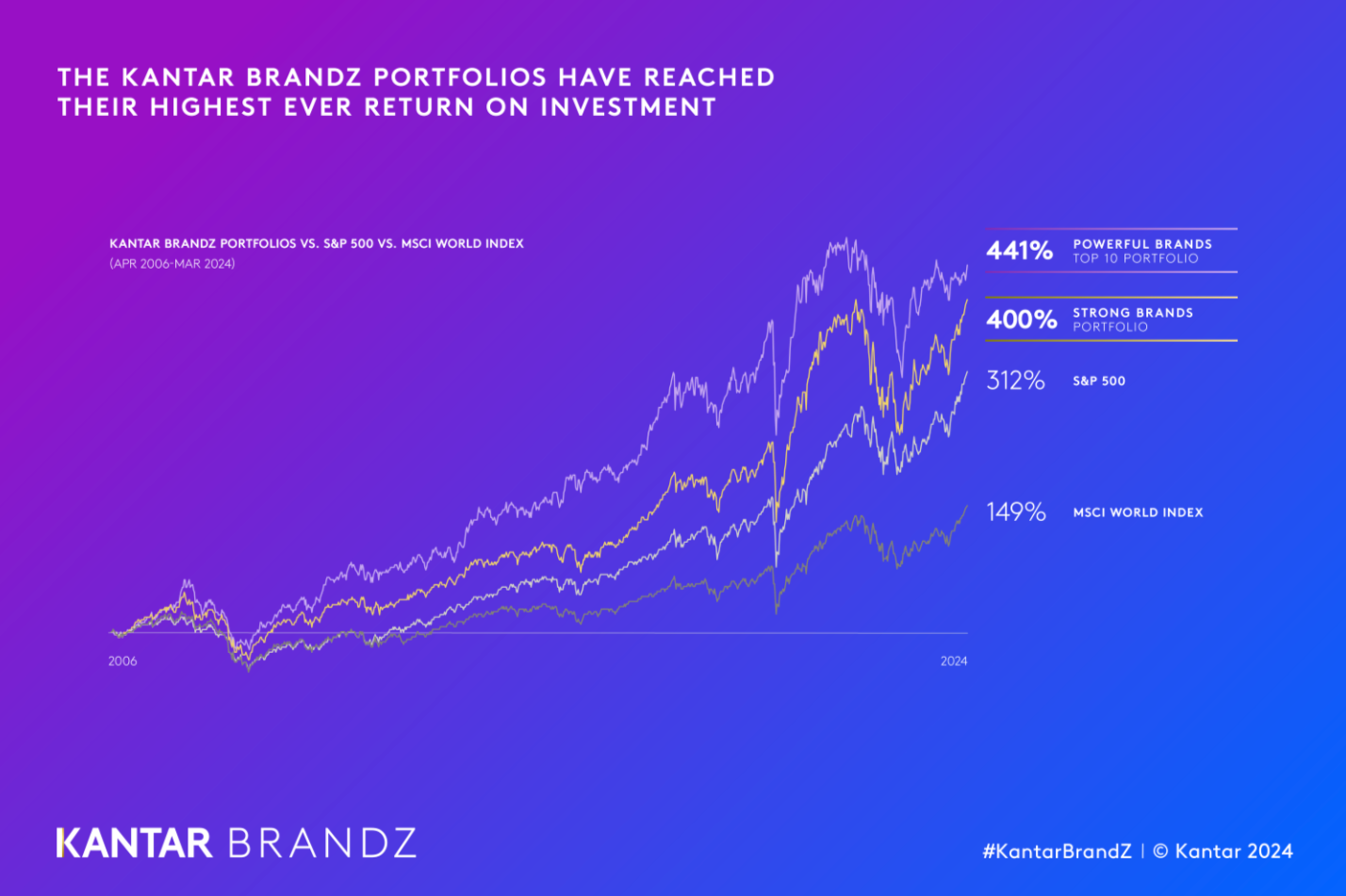
Kantar BrandZ data follows the share price performance of the world's most valuable brands, illustrating how brands that consistently invest in their brand equity outperform those that do not. By comparing the share price performance of companies with strong brands against the average (illustrated by the S&P 500 and MSCI World Index of 1500+ stocks) the chart provides a visual and statistical testament to the power of branding.

Source: Kantar BrandZ Most Valuable Global Brands 2024 report

Beyond the purchase funnel – investing in a flywheel

I still find myself in meetings where marketeers talk about the purchase funnel: get someone in, get them to buy, off they go through the funnel possibly never to be seen again (until the point at which they’re served a repeat purchase email at best). 

However, that's a dated model, even for products with an infrequent purchase cycle (cars, diamonds). In today's complicated, but increasingly boundless world, people are more willing to have brands as part of their lives, if you add value to their lives. Brand building activities need to be designed around engaging people inside and outside the purchase moment to drive loyalty. That means allocating spend that won’t have an immediate impact on the bottom line, but will impact your brand’s footprint, share of voice and audience base.

This is a flywheel approach – using brand and culture-led marketing to bring people in, and drive sales at the right moment, but most importantly, keep people engaged and part of your world. The result is that the flywheel should begin to turn through the power of your audience and decrease the reliance on media spend. Your brand becomes a part of your audiences’ life. 

Becoming a positive habit in peoples’ lives is powerful

Building a brand, having a defined strategy and point of view, and having a tone and presence that differentiates and engages, together open the possibility for people to build a relationship with your company far beyond the purchase moment. This has been exemplified by the recent surge in brands flocking to Substack – not because it is an email marketing tool to drive sales, but because it is a community tool to build your brand.

Hot on the heels of TheRealReal, Hinge is the latest brand to dive into Substack with a series that "explores refreshingly real dating". Each episode will be available on the platform, as well as physical books penned by established writing talent.

“We’re laser focused on helping creators own their relationship, whilst we appreciate that brands are starting to see the magic of Substack, we always advise that success comes from bringing a strong original perspective - not just using the platform as a promotional tool.” – Christina Loff, Head of Lifestyle & Writer Partnerships, Substack. 

Case study: Depop as more than just a tech platform

Working with Depop and twentyfirstcentury brand back in 2020 really solidified my thinking in what the modern day rules of engagement need to be and how a brand needs to show up in people’s lives, if it wanted to stay a part of people’s lives. That's about moving the flywheel from an idealised theory to a practice that works. 

Depop wasn’t just a piece of tech designed to facilitate transactions; it was a space designed to make people think, feel and act differently in an industry of ingrained behaviours. The platform inspired a sense of community, idea exchange, creativity and, most importantly, connection. It was a place where people felt they could show up as themselves.

It also became a home and habit for people to connect way beyond the purchase moment, tapping into something emotional. Importantly, the company invested in articulating what that was and what that meant for how it should operate moving forward. Depop is a brand that stands for something: a fashion system that’s good for people and the planet, and a community that champions a sense of self. That clear vision meant the company didn’t chase every cultural trend or meme, but invested in long-term brand transformation. The result? Fashion trends, styles and habits now originate on Depop as it has become one of the most influential forces in fashion.

Building your own audience

Investment in brand is also an incredibly powerful way to grow beyond your core purchase audience. In the luxury realm this opens a world of possibility to inspire, engage and, where relevant, authentically  commercialise people well beyond the core product purchase moment. 

In 2017, I was working with Balmain – a house founded in 1945, with heritage, power, influence and status. Under Olivier Rousteing’s reign it had broken boundaries on social media, opening access to Rousteing and the house in unprecedented ways. Rousteing had begun to create a world where he inspired a spirit, ethos and lifestyle people wanted to engage with beyond buying their products. For most fashion houses, the brand's strategy is intrinsically linked to the vision, direction and ambition of the designer. Balmain was in a unique position with an incredible legacy, but with a unique place in culture that Rousteing had begun to shape on social media.

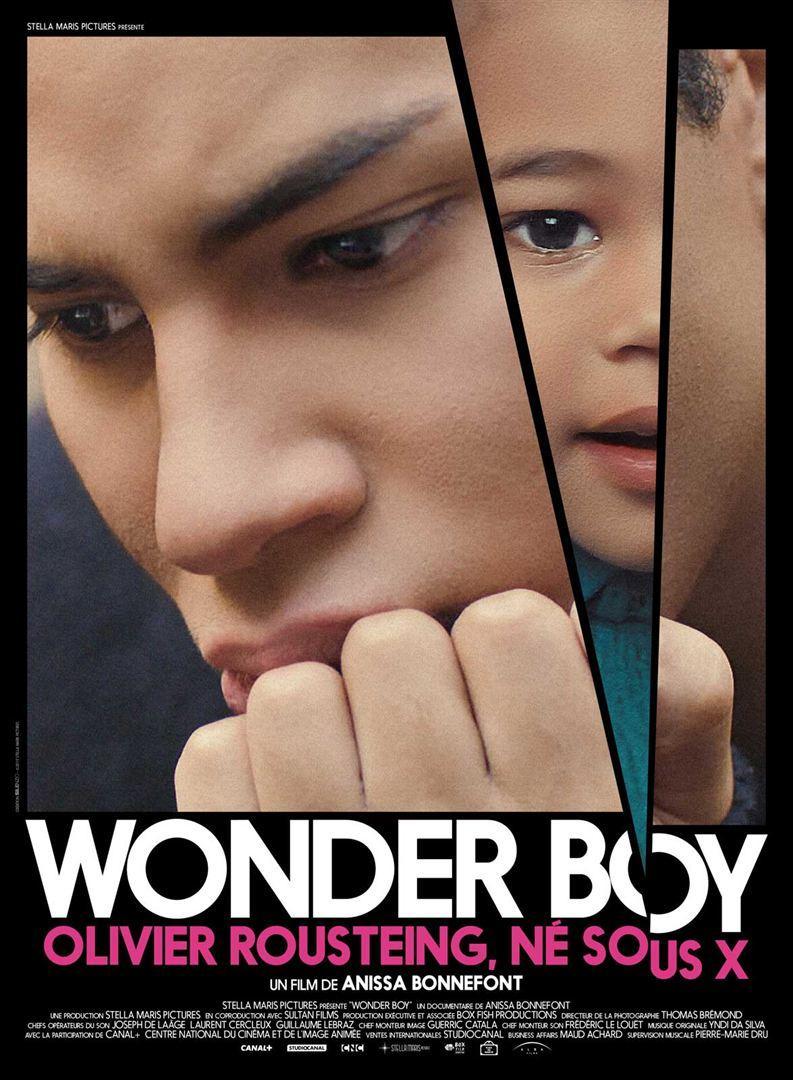
Because of this, Balmain found itself in a unique position where the size of its audience had become bigger than the size of the brand and so the team made the decision to invest in the brand’s first ever Chief Marketing Officer (the inimitable Txampi Diz) who designed a team and strategy to really break the fashion rule book. Diz dedicated time and resource to to define the past, present and future through a unified strategy – anchoring and articulating the narrative to inspire new content formats from film (Wonderboy, a feature-length documentary about Rousteing, was released in 2019) to fictional short-form, new retail spaces, new product innovations, and, most importantly, to galvanise the Balmain team itself around a defined mission and vision. It moved them way beyond the fashion collection cycle into culture. 

Whilst Balmain doesn’t have the might of some of its peers (yet), Olivier’s tenure has seen it grow from annual sales of €20 million to €300 million. 

A focus on long term value

The luxury sector counts in its number some of the most powerful, iconic and influential brands in the world, from CHANEL to Gucci and Hermès, as well as relative newcomers such as Augustinus Bader which achieved a $1bn unicorn valuation in 2022, just under five years after launching.

In the dynamic world of brand management and marketing it can be challenging to make the case for continuous investment in brand, but, moving beyond a showcase of creative prowess, it is about proving the long-term value that robust branding brings to the bottom line, as well as to the lives of its audiences and culture at large. 

A powerful tool to unlock cultural and commercial growth

Investing in brand-led activity can feel indulgent, especially when up against short term KPI targets and limited spend. However, the long-term gain is disproportionate in setting solid foundations for growth that inspire...

  • Brand love

  • Brand loyalty

  • Differentiation in ever-more competitive landscapes

Coca-Cola, BMW and Guns N' Roses managed to create worlds, narratives and stories that I wanted to be a part of when I was a child – from signalling the start of Christmas to being a symbol of 80s Britain, and simply one of the coolest car brands in the world. They did this because they thought about a world beyond the point of purchase. 

"Without brand building (measured as major brand equity shifts – awareness, image and so on), there are no price elasticity improvements. The correlation between improved price elasticity and enhanced brand standing is strikingly linear. No amount of short-term sales activity will produce the broad brand strengthening necessary to enable firmer pricing. Brand-building activity may be slow but it is essential for the optimum profitability of most brands."  – Les Binet and Peter Field, 'The Long and the Short of it: Balancing Short and Long-Term Marketing Strategies'

So the next logical question is what does 'investment in brand’ actually mean and how do you go about it as a marketeer? From the foundational strategic development to the real world application and regular ‘maintenance’, this is what I'll be covering over the course of the next two articles in this series.

Next up: setting the foundations, defining a brand strategy and applying it to the real world through powerful culture defining creativity.

I hope you tune in.

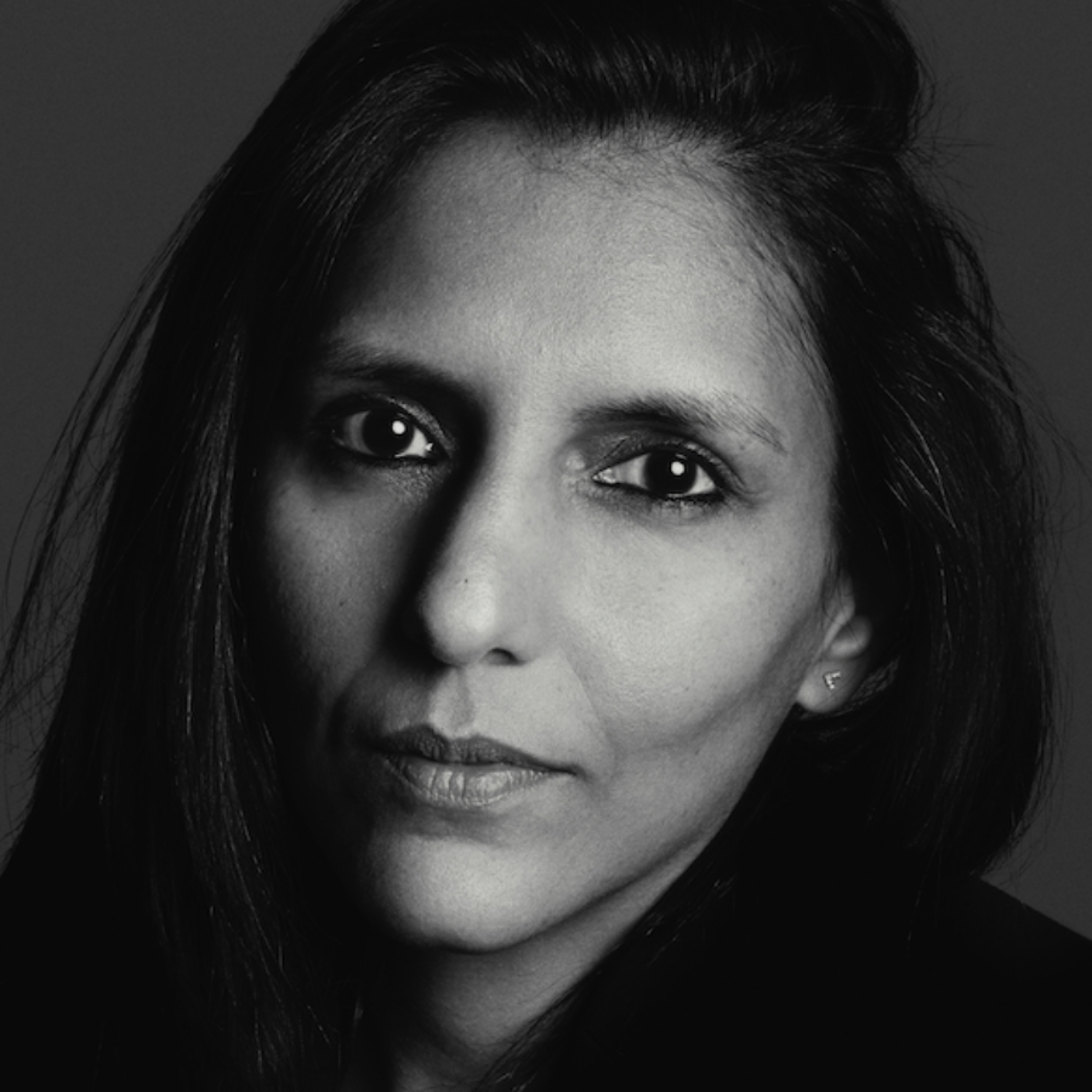
Nimi Raja has had a storied career working with iconic brands such as Balmain, Augustinus Bader, Rolls-Royce, Google, the Guardian and De Beers, as well as working with established talent in building their ventures from Rankin to Gillian Anderson and, most recently, acclaimed Bollywood veteran Anil Kapoor. She has her own creative consultancy, Lola6, which works at the intersection of entertainment, talent and brand. 

Enquire about Joining

Forename*
Surname
job title
email*
Brand*
TURNOVER
message*
Thank you. This form has been submitted

Membership Fees

Membership Tier
01
02
03
04
05
Brand Turnover
£5-10m
£10-20m
£20-40m
£40-100m
£100m+
Membership Fee
£7,000
£10,000
£15,000
£22,500
£36,000

Membership Guide

Please provide your details to download this document

Forename*
Surname
email*
SUBMIT
Thank you. This form has been submitted
Oops! Something went wrong while submitting the form.
Get the latest luxury talking points, sector news and industry insights in your inbox each day by signing up to our newsletter, the Daily Luxury Digest.

Daily Luxury Digest

Sent every working day, the Daily Luxury Digest is your essential news source for the latest developments in the luxury sector both in the UK and around the world.

Thank you! You have been subscribed to the Daily Digest